There is something quietly powerful about a bracelet. Unlike a loud accessory or conspicuous label, it wraps itself around the wrist with understated confidence, often saying far more than expected. For today's man, a bracelet is not only a matter of style but also a subtle expression of values, heritage, or even memory. It may be leather worn to recall adventures abroad, or polished silver marking a significant date. But this isn't a recent phenomenon. The bracelet's story stretches far beyond fashion, drawing from deep cultural roots and historical symbolism.
The notion that a bracelet is merely decorative misses its layered origins. In tribal societies, men wore bracelets fashioned from wood, bone, and shell not for show but as talismans. These objects carried spiritual weight. A woven band might signify a rite of passage, a carved bone, or ancestral protection. The warrior's cuff was as much armour for the soul as for the body.
That link between status and adornment was carried forward by the ancient civilisations. In Egypt, bracelets served as markers of both rank and protection in the afterlife. The blue glint of lapis lazuli on a pharaoh's wrist was not a flourish—it was a coded message of divine power. Greek hoplites wore leather bands on the battlefield, while Roman senators flaunted ornate gold cuffs to display influence. These items were social cues in metal and hide.
And while the West was refining its luxury codes, the East continued to imbue bracelets with spiritual purpose. In India, sacred threads tied at the wrist during Raksha Bandhan express a bond of protection between siblings. In China, the tradition of jade as a guardian stone runs deep, with green bangles worn as amulets for health and fortune. Every culture has its own language.
Fast-forward to modern times, and these archetypes persist in quiet ways. A heavy gold bracelet still signals success. A beaded cord retains its earthiness. A leather wrap calls back to raw masculinity. The contemporary man doesn't just wear a bracelet for aesthetics—he channels something older than himself.
From Factories to Fashion Icons
The Industrial Revolution changed the equation. As bracelet-making left the workshop and entered the factory, access widened. Once reserved for the powerful, bracelets became affordable enough for the everyday man. Metal chains and leather straps could now be found on the wrists of railway workers, not just royals.
But the real resurgence came with cultural shifts of the late 20th century. Celebrity influence shaped everything. David Beckham's layered wrist accessories brought masculine jewellery into locker rooms and boardrooms alike. Tom Hardy's beaded pieces gave street credibility to stones once reserved for yoga retreats. These high-profile examples helped dismantle the myth that wristwear was effeminate.
Social media poured fuel on the fire. Platforms like Instagram became stage sets for visual storytelling. A bracelet could now be broadcast, its design, meaning, and context shared with thousands. Men saw others styling themselves effortlessly with denim, suits, or even black tie. Demand followed, and so did innovation.
Fashion itself had entered a paradox. Minimalism and maximalism rose together. On one hand, the market exploded with oversized chains and engraved cuffs. These made bold statements—pieces to anchor a look, not blend in. On the other hand, brands like Le Gramme offered slim, silent statements in brushed silver, precision-designed for architectural purity. The contrast gave men options. The bracelet was no longer a niche choice but a fully fledged category in personal style.
Fun Fact: The name "bracelet" comes from the Latin "brachium", meaning "arm". It originally referred to the armour worn on the forearm, not the wrist—a detail that hints at its martial beginnings.
The Styles That Shape a Wrist
Understanding the types of men's bracelets available today is more than knowing what looks good. Each style has evolved from a distinct cultural or material legacy and appeals to a different sensibility.
The Leather Bracelet
Leather has always been synonymous with masculinity, and it remains one of the most popular choices. There's a tactile honesty to leather. It weathers. It changes colour. It grows softer. Like a leather jacket or pair of boots, it becomes more personal over time.
Key styles include:
- Cuffs – Wide and often fastened with buckles or snaps, these command attention and are best-worn solo.
- Braided or woven designs – More casual, these add texture and work well in mixed-material stacks.
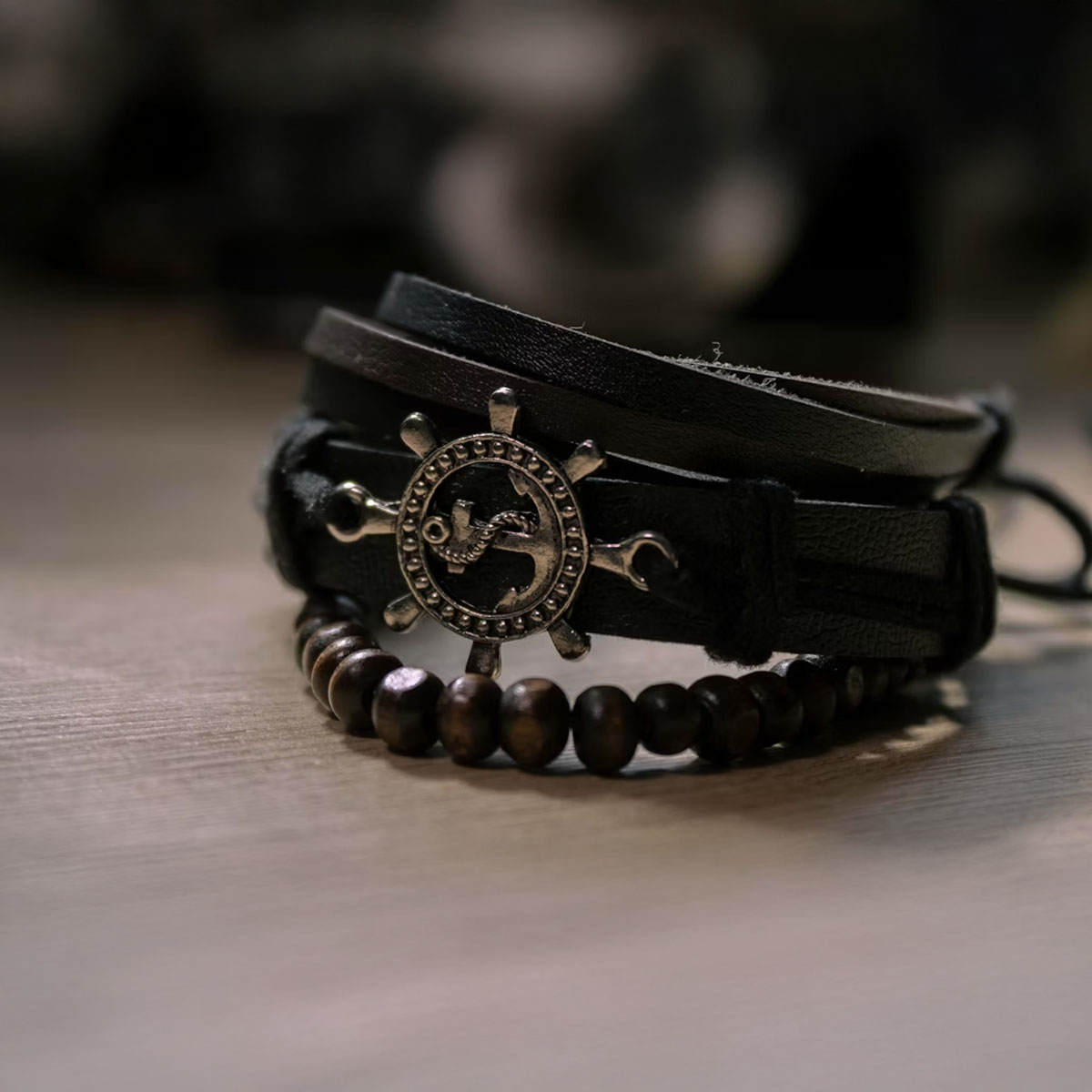
- Wrap styles – Long strips that coil around the wrist two or three times. These offer a layered look with minimal effort.
Perfect for weekends and informal wear, leather works particularly well when combined with metal or beads, lending contrast and warmth to colder materials.
The Beaded Bracelet
This is perhaps the most personal category. Every bead can carry a story. Stones are not just about colour—they're about energy, intention, and symbolism.
Common materials include:
- Lava stone – Black, porous, and primal. Often used to represent resilience and stability.
- Tiger's eye – With its golden shimmer, this stone is believed to encourage courage and clarity.
- Onyx – Sleek and black, favoured for its associations with strength and discipline.
Beads can be subtle or bold. A single string of matte black beads works under a suit cuff, while layered multicoloured designs scream individuality. The stackability of beaded bracelets also makes them ideal for casual expression.
The Metal Bracelet
If leather is rugged and beads are expressive, metal is the language of confidence. There's weight and sheen to metal that makes it feel substantial. Styles range from industrial to refined.
Notable chain styles include:
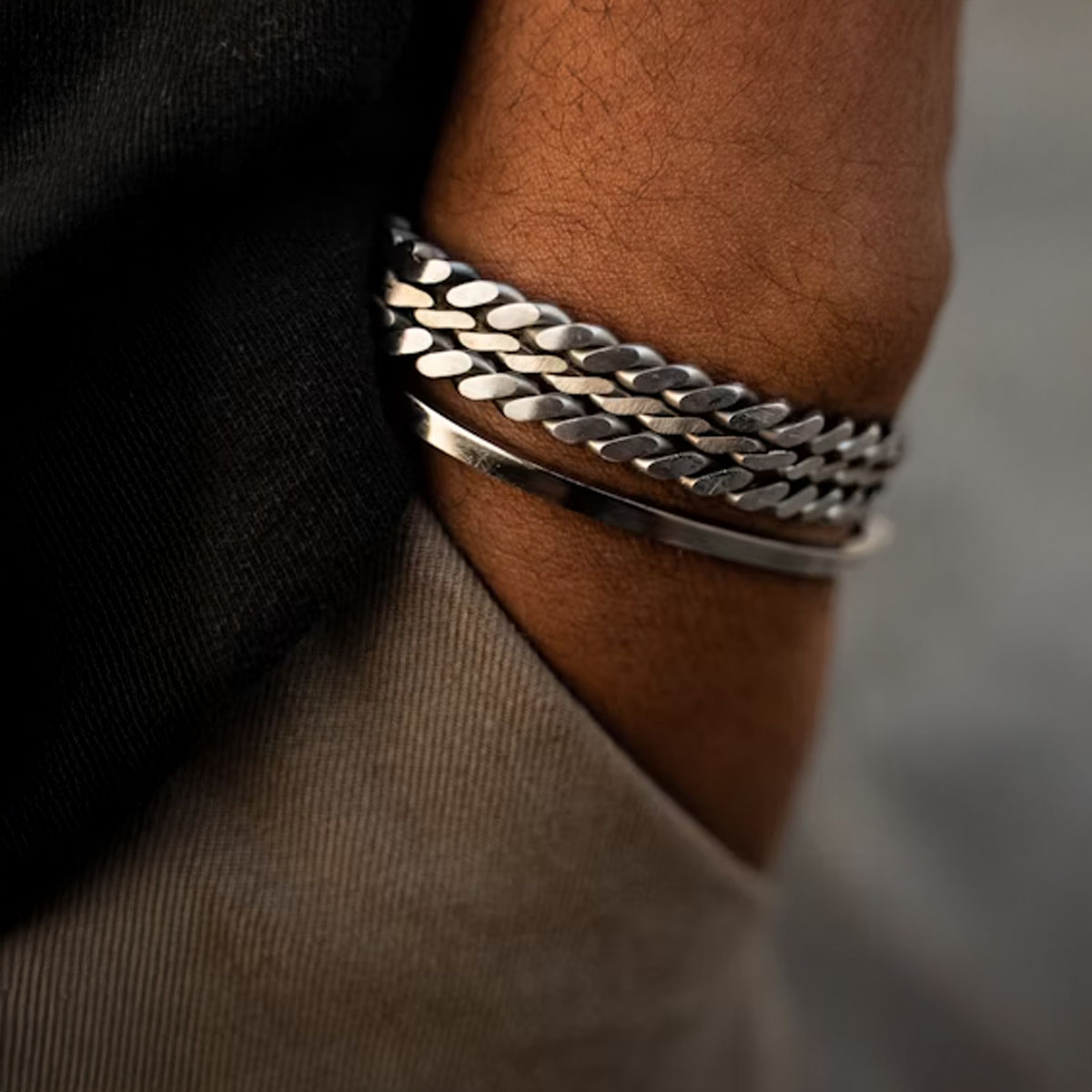
- Curb – Flat, interlocking links that lie flush against the skin. Versatile and timeless.
- Cuban – Thicker, denser, and designed to draw the eye. A staple in streetwear and hip-hop fashion.
- Figaro – Alternating short and long links. Decorative yet understated.
For those seeking luxury, gold remains a favourite. But stainless steel and titanium offer more wearable alternatives without compromising on polish.
The Cuff
Defined by its rigid form and open design, the cuff sits in its own category. It does not close with a clasp but rather slips on and hugs the wrist.
Styles range from minimal to sculptural. A thin brushed silver cuff feels clean and modern. A hammered bronze cuff leans into a more bohemian or rugged aesthetic. These are best worn alone and fitted properly—too loose, and they rotate uncomfortably; too tight, and they risk cracking under pressure.
The Cord or Woven Bracelet
Lightweight and typically inexpensive, woven bracelets are often worn for their meaning rather than their material value. They evoke freedom, travel, and sometimes nostalgia.
Common types:
- Nautical styles – Fabric cords fastened with metal anchors or clasps. Often navy, red, or white.
- Paracord – Originally developed for military use, these are rugged and functional.
- Friendship bracelets – Woven by hand, often colourful, and sometimes exchanged as symbols of connection.
These are excellent for stacking and for adding colour to a neutral outfit.
What It's Made Of Matters
The style of a bracelet might catch the eye, but it's the material that determines how it feels, how it wears, and how long it lasts. From the practical to the luxurious, and now increasingly to the sustainable, modern bracelet materials tell their own story—about ethics, endurance, and identity.
Organic Materials
Leather remains one of the most commonly used materials in men's bracelets. It is prized for its comfort and natural flexibility. Over time, it darkens, softens, and adapts to the wearer. While it's durable in everyday use, leather is vulnerable to water and sunlight. Full-grain leather offers the best quality and develops a rich, characterful patina. For those seeking cruelty-free alternatives, vegan leathers made from polyurethane or plant-based sources replicate the look with less environmental impact.
Wooden beads offer a quiet, natural presence. These are extremely lightweight, with subtle textures that feel organic and grounding. They are often selected for symbolic reasons, but also for aesthetic ones—especially when paired with linen, hemp, or other natural fabrics. The main drawback is fragility; wood can crack or splinter with repeated wear.
Eco-friendly cords and textiles are part of a new wave of sustainable design. From bracelets made using recovered ocean plastics to those woven from recycled cotton, these materials speak to a desire for conscious consumption. Brands such as 4ocean and artisans on platforms like Etsy have led the charge in making sustainability stylish.
Industrial and Precious Metals
Stainless steel is practical, resilient, and resistant to corrosion. It's often used in chain-style bracelets and suits minimalist or industrial aesthetics. It is also hypoallergenic and requires little maintenance.
Titanium, being lighter than steel yet even more durable, is the material of choice for those who favour comfort without sacrificing strength. Its grey hue gives it a stealthy, modern finish. Unlike gold or silver, it does not tarnish and rarely scratches.
Sterling silver is a traditional favourite. At 92.5% purity, it has a bright shine and a weight that feels luxurious. The trade-off is its softness. Silver requires polishing and care, especially in humid environments.
Gold remains the symbol of classic prestige. Available in yellow, white, or rose tones, it is best suited for formal wear. While undeniably elegant, it is expensive and soft—better worn as a statement piece than an everyday accessory. Gold-plated alternatives offer the look at a lower cost but can fade over time.
The modern consumer is also looking more closely at how these metals are sourced. Recycled silver and gold are now widely available, offering a more ethical alternative to newly mined materials.
Fun Fact: The environmental impact of producing recycled gold is more than 90% lower than that of mining new gold, making it one of the most sustainable precious metals in the jewellery industry.
The Meaning Behind the Stone
Natural stones continue to appeal to wearers who are drawn to both symbolism and surface texture. Popular choices include:
- Lava stone – Symbol of grounding and rebirth
- Tiger's eye – Confidence and protection
- Onyx – Strength and mental clarity
- Jasper – Stability and resilience
- Lapis lazuli – Wisdom and friendship
Wearing these stones can carry personal meaning or simply serve as a tactile link to nature in an increasingly digital world.
Sustainability and Transparency
There is a growing demand for supply chain transparency. Consumers are asking who made their bracelet, how it was produced, and under what conditions. Labels that are certified by the Responsible Jewellery Council or use recycled materials are becoming standard among mid- and high-end brands. From lab-grown gemstones to reclaimed cords, today's bracelet is often as much about conscience as it is about craft.
How to Wear It
Owning a bracelet is one thing. Wearing it well is another. The best accessories feel intuitive, not forced, and a well-fitted bracelet should move with the wrist, not slide up and down it like a bangle.
Get the Fit Right
- A chain or beaded bracelet should have a little movement, enough room to slide one or two fingers between the wrist and the bracelet
- Cuffs should sit just below the wrist bone, snugly enough that they do not rotate
- For wraparound leather styles or cords, a secure clasp is key to maintaining a neat fit
Referencing a sizing chart can help avoid disappointment, especially when purchasing online. Most brands will list wrist circumference in centimetres and the corresponding bracelet length.
Stacking with Style
Bracelet stacking is where personal flair comes in. Done right, it looks natural and curated. Done wrong, it can feel chaotic.
Guidelines include:
- Stick to one wrist for stacking
- Limit the number to three or four bracelets
- Vary texture and thickness (e.g., a chunky beaded bracelet paired with a slim metal chain and a woven cord)
- Keep within a theme—whether it's colour, material, or mood
It's often best to choose one "anchor" piece and build around it. For example, a black onyx beaded bracelet could be paired with a braided leather band and a silver cuff for contrast and cohesion.
Pairing with a Watch
This is where real finesse lies. The safest bet is to wear bracelets on the opposite wrist to your watch. But wearing both on the same wrist can work beautifully when executed with care.
Tips for success:
- Always place bracelets below the watch (closer to the hand)
- Match metals if possible, or contrast textures instead of colours
- Avoid scratch risks—don't pair a hard metal bracelet with a high-gloss watch case
A silver watch can work with a leather bracelet or a subtle string of dark beads. The look should feel balanced, not over-planned.
When and Where to Wear One
Context matters. While bracelets are more accepted than ever, they should suit the occasion.
- Casual – Stack freely. Beads, leather, and cords all work.
- Smart-casual – One or two pieces maximum. Refined textures and muted colours help.
- Business/formal – Stick to a slim chain or a dark leather band. Avoid anything that jingles or distracts.
A man's bracelet should feel like an extension of his outfit, not an accessory bolted on at the last moment.
The Brands Defining the Category
Not all bracelets are created equal. From accessible British labels to high-concept luxury brands, the market offers something for every man.
Under £100
- Alfred & Co. – British basics in tarnish-resistant steel
- CRAFTD London – Well-made classics with good finish
- Harbour UK – Handmade nautical styles from a London studio
- Trendhim – Danish online hub with vast variety across styles and budgets
£100–£500
- Miansai – American with a European flair; known for anchor cuffs
- Tateossian – London-based, globally inspired, and deeply detailed
- Stephen Einhorn – Sustainable, handcrafted in the UK with recycled metals
- James Newman – Birmingham-based artisan focused on ethical production
£500+
- Le Gramme – French, minimal, and architectural
- Tom Wood – Norwegian, clean lines, and responsibly made
- Bottega Veneta – Leather woven to perfection
- David Yurman – Iconic twisted cable design with a luxe edge
Whether one seeks personal symbolism or a polished statement, these brands offer consistent quality and style.
More Than Decoration
A bracelet can mark a birthday, celebrate a relationship, or capture a moment in time. As personal gifting becomes more meaningful, bracelets have stepped into that role.
Popular gift occasions:
- Milestone birthdays
- Graduation
- Work promotions
- Wedding anniversaries
Custom engraving is increasingly available—from names and initials to dates and geographic coordinates. Many opt for symbolic motifs or a short message that only the wearer will understand. For those who want to wear their story, this is the ultimate form of adornment.
Caring for What You Wear
A well-made bracelet will last for years, but only if looked after.
Basic care tips:
- Store each bracelet separately to avoid scratching
- Keep them dry unless rated for water use
- Clean metal with a soft cloth and mild soap
- Use conditioner on leather to prevent cracking
- Let beaded and cord styles air-dry thoroughly after cleaning
Treat it as you would a watch or shoes: not just an accessory, but an investment in your personal presentation.
Final Thoughts
The modern man's bracelet is not a novelty. It is a versatile, expressive, and culturally rich form of self-styling that draws from ancient symbols, global influences, and modern design sensibilities. Whether worn for fashion, faith, or sentiment, a bracelet has the power to do what good style always does—say something without speaking.
Continue Reading
The Hatton Gazette
Delivered weekly to your inbox
Join 12,000+ Hatton insiders