Most mechanical watches bought new at retail will trade below their purchase price within five years. This is not a pessimistic conclusion; it is the observable secondary market reality for the broad mass of production watches, including many made by brands whose marketing heavily implies otherwise. The question of which luxury watches hold their value in any meaningful, evidence-based sense is a narrower and more specific inquiry than it is often presented as, and it deserves a more careful answer than watch retail platforms are positioned to provide.
What follows is an analysis of the secondary market conditions that produce value retention, the specific brands and reference categories where the evidence for retention is strongest in the UK context, and the honest picture of where the “watches as investment” narrative oversells what the data supports. The analysis draws on observable UK secondary market pricing, publicly available auction results from Phillips, Sotheby’s, and Christie’s, and the general pattern of grey market premiums over the 2019 to 2026 period.
What value retention actually means and what it does not
Value retention in the watch context has two distinct meanings that are routinely conflated. The first is holding value: a watch that trades at or near its retail price in the secondary market over a multi-year period. The second is appreciation: a watch that trades above its retail price. These are not the same performance category, and treating them as equivalent is the primary source of inflated expectations in watch investment discussions.
Most watches in the first category are there because of controlled supply combined with persistent demand at a specific brand and reference level. Most watches in the second category have benefited from at least one of: genuine scarcity at the retail level, creating grey market premiums; collector consensus about a specific reference that has elevated its desirability beyond its production cost; or discontinuation, driving demand from buyers who want an unavailable reference.
A watch that traded above retail in 2021 and 2022 during the period of acute secondary market inflation may no longer trade above retail in 2026, as supply and demand have partially rebalanced. Citing a 2021 grey market price as evidence of long-term value performance without acknowledging the subsequent correction is a selective use of available data.
Rolex references with documented UK secondary market performance
Rolex is the brand with the strongest and most consistent documented secondary market performance in the UK across the reference categories where collector and buyer demand is concentrated. The Submariner Date, GMT-Master II in both Jubilee and Oyster bracelet configurations, and the Daytona in stainless steel have all maintained grey market premiums above UK retail pricing through 2026, though the magnitude of those premiums has reduced from 2021 and 2022 peaks.
The stainless steel Daytona reference 116500LN, which carries Calibre 4130, has consistently traded above its UK retail price of approximately £12,600 (as of early 2026) in the secondary market, with grey market premiums observed at between 40% and 70% above retail across the 2022 to 2026 period. This premium reflects a combination of genuine retail scarcity, strong collector demand for the chronograph complication, and the reference’s position as Rolex’s most sought-after sport watch.
[INTERNAL LINK: pre-owned Rolex in the UK buying overview | pre-owned and certified]
Patek Philippe references and long-term auction performance
Patek Philippe occupies a distinct position in the secondary market, characterised by reference-level specificity that is more granular than any other watchmaker. The Nautilus reference 5711/1A in stainless steel, discontinued in 2021, had an official retail price of approximately £24,700. By 2022, secondary market pricing had reached multiples of this figure. By 2026, pricing had moderated but remained substantially above retail for clean, documented examples.
The Calatrava reference 5196, a dress watch in white gold, presents a different picture: it trades at a modest discount to retail in the secondary market for most examples, because demand at the Patek Philippe level is concentrated in the steel sport references rather than the dress watches, despite the dress watches representing the historical core of the Manufacture’s output. The Patek Philippe Seal, a proprietary accuracy standard requiring assembled watch performance within specific tolerances, applies across the range; the secondary market does not reward it uniformly.
Auction performance adds a further dimension: the hammer prices from Phillips Geneva Watch Auction and Sotheby’s Important Watches sales for vintage Patek Philippe references, particularly early Nautilus examples and 1960s Calatrava references with original dials, have consistently outperformed their pre-sale estimates across the 2020 to 2026 auction season data available. This is a different market from the contemporary secondary market and requires separate analysis.
Audemars Piguet Royal Oak and the complications premium
The Audemars Piguet Royal Oak reference 15500ST in stainless steel carried a UK retail price in the region of £16,400 in 2026. Secondary market pricing for current-generation examples in full-set condition has traded at a modest premium to retail, though the margin is narrower than the Rolex sport references in equivalent configurations. The Royal Oak Chronograph and Royal Oak Perpetual Calendar references attract premiums reflecting the complication content as well as the core design desirability.
The Royal Oak Offshore in non-standard materials and limited configurations has historically shown more variable secondary market performance, reflecting the difference between references with stable, concentrated collector demand and those whose desirability depends on the fashion cycle of a particular colour or material treatment.

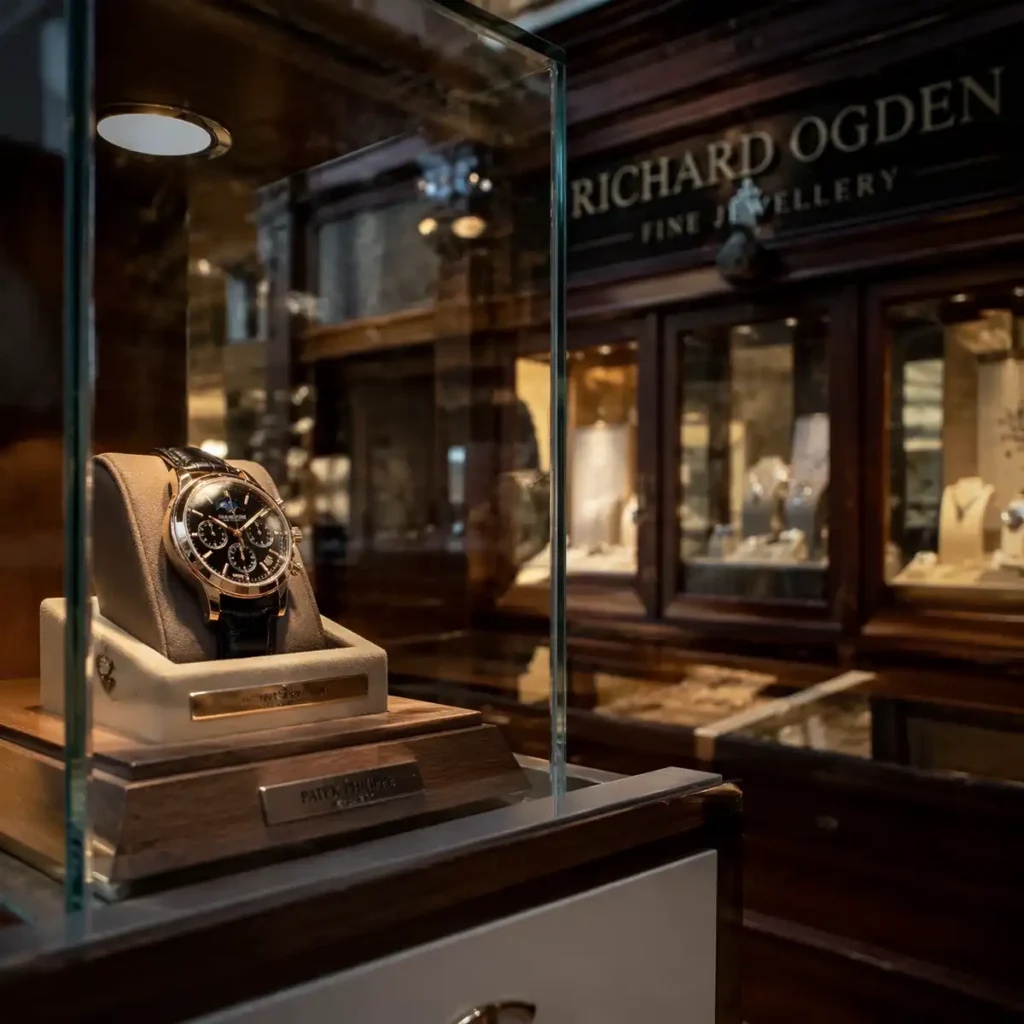
Fun fact: The Patek Philippe Nautilus was designed by Gerald Genta and introduced in 1976 at a price that was deliberately set higher than comparable dress watches of the period, a strategy intended to position a steel sport watch as a luxury object rather than a tool; the reference 5711/1A discontinued in 2021 reached secondary market prices nearly 5 times its retail value in the period immediately following discontinuation.
What the secondary market does not reward and why this matters
The following categories consistently show secondary market discounts relative to retail, based on observed UK pricing. Independent watchmaker pieces below the recognised top tier (Voutilainen, F.P. Journe, Greubel Forsey at the highest levels trade differently from the broader independent sector). Dress watches outside the Patek Philippe and A. Lange and Söhne top references. Swiss sport watches from brands outside the primary collector concentration at the Rolex, AP, and Patek level.
German watchmaking from Glashütte, including A. Lange and Söhne, presents an interesting secondary market dynamic: top references (the Lange 1, the Datograph) retain value well among collectors who know them, but the collector base is smaller and less liquid than the Swiss sport watch market, which affects resale timing and achievable price.
Japanese watchmaking from Seiko and Grand Seiko shows concentrated secondary market performance in specific references (limited editions, historical reissues of the Seiko 5 and Marinemaster families) but not across the broader production range. Grand Seiko spring drive references have a growing collector following in the UK that has produced more consistent secondary market performance than it had five years earlier.
The honest 2026 picture for UK buyers considering value retention
The secondary market conditions that produced extreme premiums in 2021 and 2022 were exceptional. Supply disruptions, speculative demand, and a specific macroeconomic environment combined to create pricing that was not sustainable and has not been sustained. Buyers who purchased watches at 2021 grey market prices as a near-term financial position and sought to exit in 2023 or 2024 generally received less than their entry cost.
For buyers with a 10-year or longer ownership horizon, the primary Rolex sport references in stainless steel have demonstrated the most consistent performance. The mechanism behind this performance is supply constraint combined with persistent global brand demand, not the watches’ investment characteristics per se. Both of those conditions could change; neither has shown signs of changing in the near term.
Conclusion
Luxury watches that hold their value in the UK market are, in practice, a specific and limited set: primarily Rolex stainless steel sport references, the highest-demand Patek Philippe configurations in steel, and the Royal Oak in its primary steel references. This is not a comprehensive list of quality watches; it is a description of where supply constraint and collector demand happen to intersect.
The honest ownership framework is this: buy watches you intend to wear for at least a decade, from brands with documented secondary market depth, through channels that provide authentication and service history. Secondary market performance, where it is positive, should be understood as a potential outcome of ownership rather than the primary reason to own. Watches bought as watches and maintained properly have a longer track record of value preservation than watches bought as financial positions. The evidence supports this conclusion consistently.