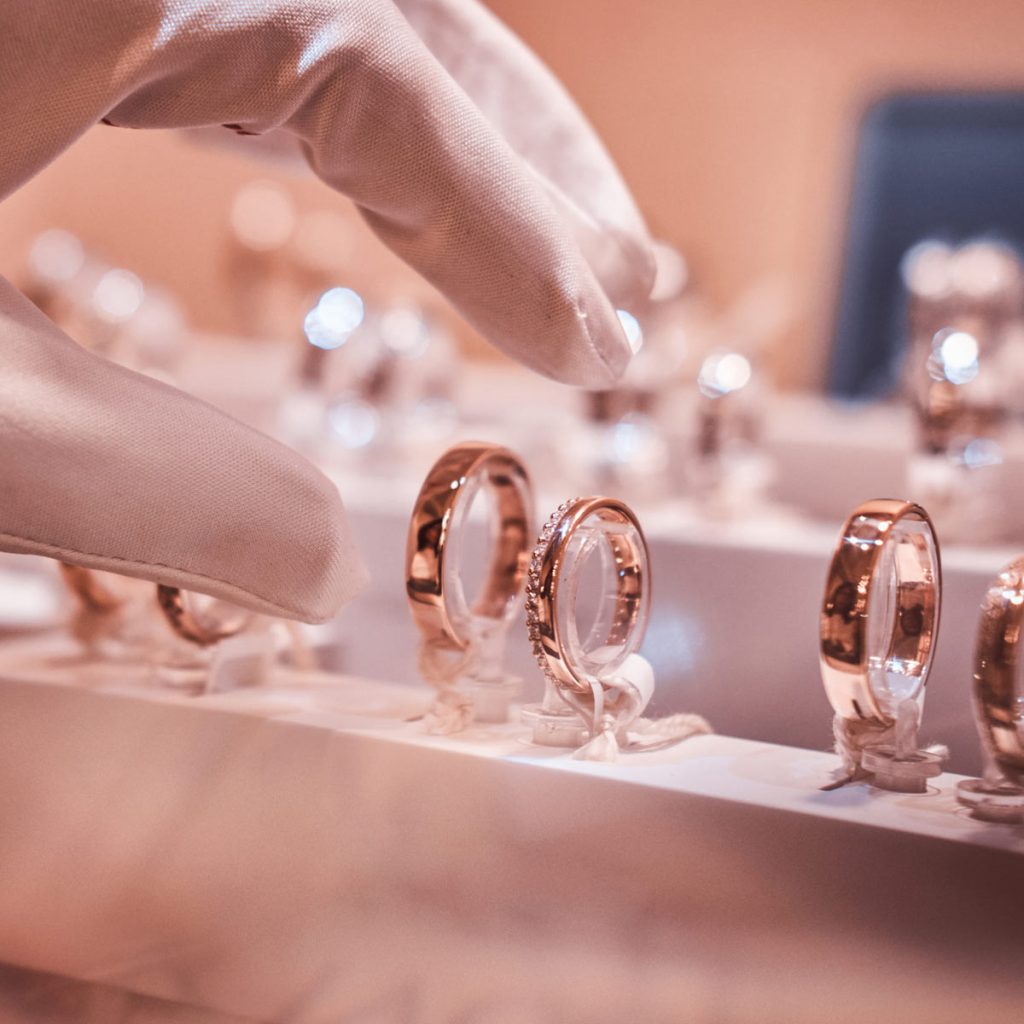
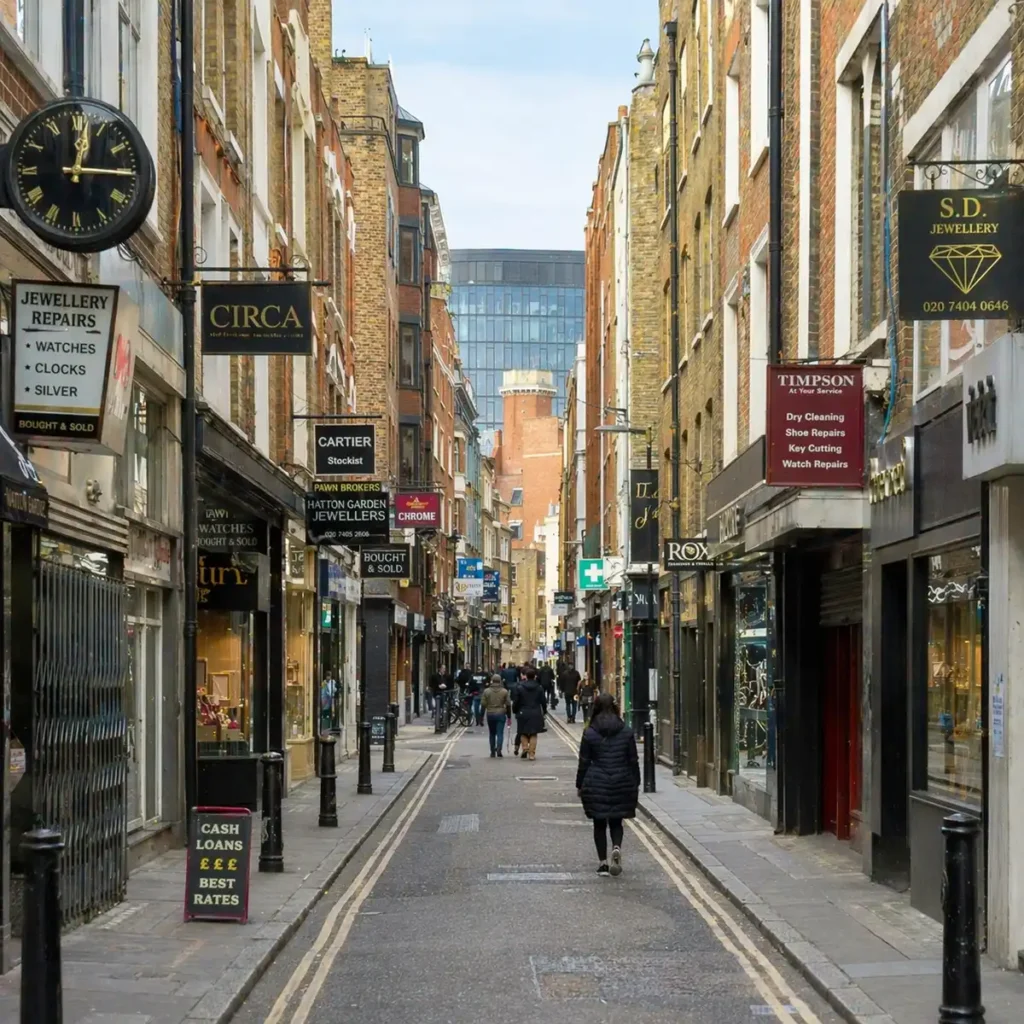
The first thing most people notice when they arrive in Hatton Garden is that it is considerably smaller than they imagined. For a street with this much commercial and historical weight behind it, EC1N is compact: a concentrated quarter of the City of London fringe where more than 300 jewellery businesses operate within a few minutes’ walk of each other. It is not a shopping centre. It is a trade district that has been selling fine jewellery for over 100 years, and it functions accordingly.
Smith & Green Jewellers sits at 9 Hatton Garden, on the main street, and the business has been part of this particular patch of London since founders Chris Smith and Josh Green established it in 2011. What visitors tend to find when they arrive is not the transaction-focused experience they might have anticipated. It is something more like the kind of conversation that used to happen with a craftsperson who had worked with a material for years and genuinely wanted to help you make a good decision.
Getting There and What the Area Looks Like
Hatton Garden is accessible from 2 underground stations and the Elizabeth line. Chancery Lane on the Central line is the most direct route, bringing you out on High Holborn a short walk from the top of Hatton Garden. Farringdon on the Circle, Metropolitan, and Elizabeth lines drops you at the southern end of the quarter, near the junction with Greville Street and Bleeding-Heart Yard, and the walk up through the side streets is short.
The area itself is a working jewellery district. You will pass wholesale suppliers, stone dealers, tool shops, and independent retailers on the same street as national chain names. The mix is genuine and the density is useful. Visiting Hatton Garden gives you the ability to compare across multiple businesses in a single afternoon, which is not something a high street shopping trip can offer.
Leather Lane Market, which runs parallel to Hatton Garden on the western side, operates on weekdays and is a good indicator of the neighbourhood’s un-precious, working character. This is not a sanitised luxury precinct. It is a district where people make things, sell things, and know what they are talking about.
What Happens When You Walk Through the Door
The expectation many first-time visitors carry through the door is that they will be expected to buy something quickly and under pressure. This expectation is wrong, at least in any serious independent establishment, and it is worth setting down before you arrive.
At Smith & Green, the consultation is the point. Not the transaction that ends it. The initial conversation is about understanding what you are looking for, what your partner wears, what matters most in a ring, and what the budget is. It is not a sales presentation. It is a process of elimination that, when done well, narrows a very large universe of possible rings down to a small number of genuinely good options for your specific situation.
Come prepared to have that conversation rather than to point at things in a display case. You will find that knowing 3 things before you arrive makes a significant difference: what budget you are comfortable with, roughly what your partner’s aesthetic preferences are, and what date the ring needs to be ready by if timing matters. Everything else can be discovered in the room.
The Range of Options You Will Encounter
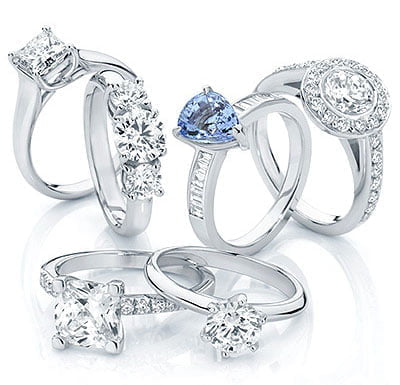
A Hatton Garden jeweller of Smith & Green’s standing holds both ready-to-wear stock and bespoke commission capability simultaneously. Ready-to-wear pieces are finished rings available for purchase, viewing, and trying on immediately. They include a full range of solitaires, halos, trilogies, and coloured gemstone pieces, all hallmarked and certified where applicable.
Bespoke commissions begin with a consultation and produce a ring made entirely to your specification: your choice of stone, setting style, metal, and design detail, constructed over a period of 6 to 10 weeks or longer for complex pieces. The advantage of bespoke is precision. The ring reflects exactly the choices you made, with no budget absorbed by design decisions you did not make.
Both routes are valid. The consultation will tell you quickly which one is right for your situation, budget, and timeline.
Diamond and Gemstone Viewing at Close Range
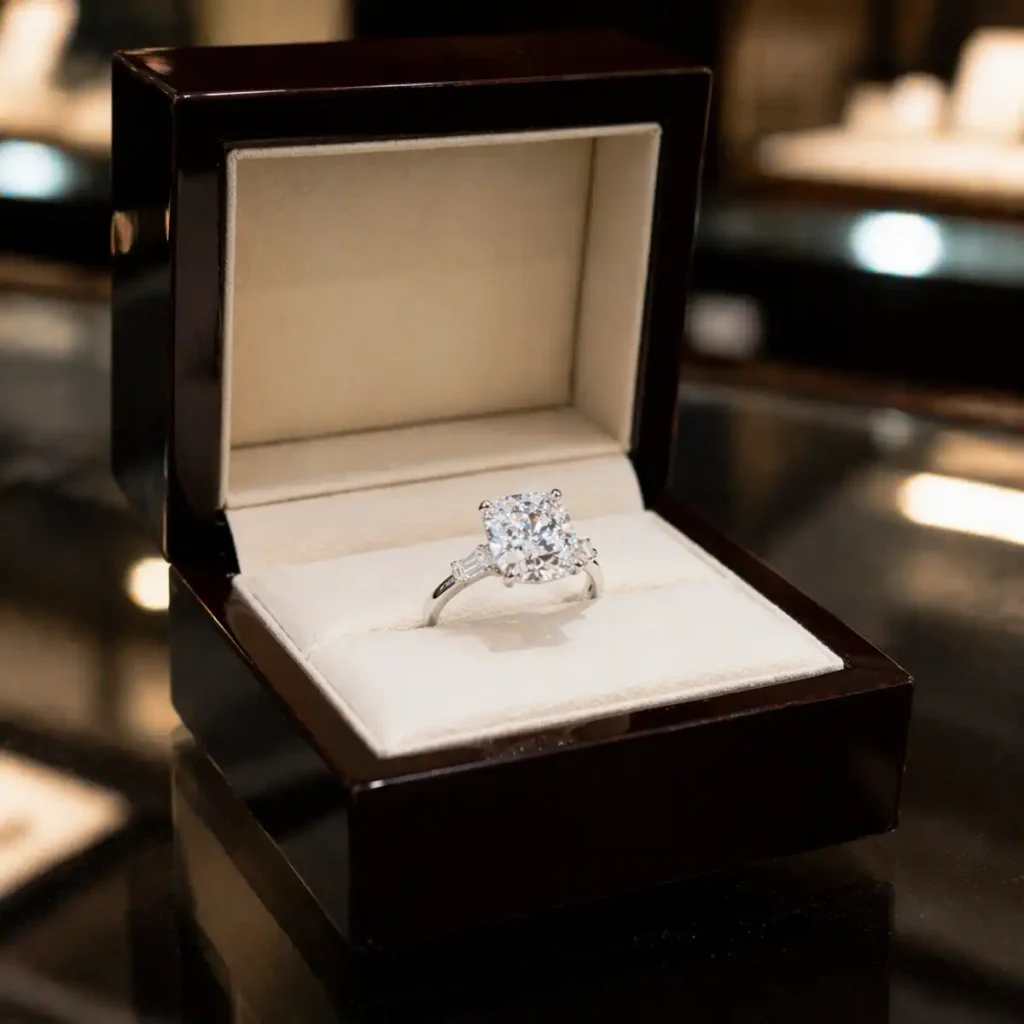
One thing that visiting in person delivers that no screen can is the direct comparison of stones under the same light conditions. Grading reports describe quality in standardised language. The stones themselves communicate through light return, colour as it appears at wearing distance, and the specific character of inclusions in a way that a paper assessment cannot fully translate.
Ask to view any diamond you are seriously considering outside, in natural daylight, or at least near a window. The difference in how a stone with an Excellent cut grade reads compared to a Very Good or Good cut is visible and significant. Colour grades that read identically on a report may separate visibly when placed side by side in the same light. You are not expected to be a gemmologist. You are expected to use your eyes.
Smith & Green carries GIA and IGI graded stones and can walk you through what the grading report for any stone you are considering actually contains: what the clarity plot is showing, what the colour grade means at this stone’s size and shape, and what the cut grade tells you about the light performance you are seeing in front of you.
What to Ask During Your Consultation
There are 4 questions worth bringing to any serious engagement ring consultation, regardless of where you are visiting. What certificate does this stone carry, and can I verify it online before I leave? What is the metal fineness, and does this ring carry a UK hallmark? What is the lead time if I want to make changes or commission bespoke? And what aftercare and servicing does the business offer after purchase?
A jeweller who is worth buying from will answer all 4 without hesitation and with specific information rather than generalities. If the answers are vague on any of them, that is useful information too.
Fun fact: Hatton Garden takes its name from Sir Christopher Hatton, the Lord Chancellor under Elizabeth I, who built a grand residence on the land in the 1570s. The jewellery trade arrived much later, consolidating in the area during the 19th century as London’s financial and professional services districts expanded around it.
After Your First Visit
Most buyers do not purchase on their first visit to Hatton Garden. They look, ask questions, take information away, and return when they are ready to decide. This is entirely normal and entirely welcome. A jeweller who pressures you toward a decision on a first visit is telling you something important about how the business operates.
Come back when you are ready, having thought about what you saw and what you want if you have questions that arose after the first appointment, email or call ahead. A good Hatton Garden jeweller maintains the relationship beyond the appointment.
Visiting Hatton Garden to buy an engagement ring is not an ordeal to be survived. It is a preparation that, done well, makes the proposal itself considerably more confident. Smith & Green Jewellers at 9 Hatton Garden EC1N 8AH, open Tuesday to Saturday from 9:30 am, is the right place to begin that preparation. The conversation is worth having in person.