The first thing to understand about a genuine Art Deco engagement ring is that its geometry is not decorative. The stepped platinum mounts, the calibrated sapphire and emerald baguettes, the pierced gallery work that allows light to reach the pavilion of a transitional cut diamond — all of it reflects a specific set of bench techniques and material preferences that belonged to one period and cannot be convincingly reproduced without leaving traces that a trained eye will identify within seconds. Hatton Garden has been the centre of the London antique jewellery trade for over a century, and the dealers on Greville Street, Hatton Place, and the surrounding lanes have seen more period rings pass through their hands than almost anywhere else in the UK. For a buyer considering an antique engagement ring, the quarter offers both the widest selection in the country and the depth of expertise to authenticate what is being offered.
The antique trade sits alongside the modern engagement ring business in Hatton Garden rather than separately from it. Walk from the Farringdon Elizabeth line exit along Greville Street toward the northern end of Hatton Garden, and the shopfronts alternate between contemporary workshops and specialist period dealers, often within the same building. A.R. Ullmann at 36 Greville Street specialises in Georgian through Art Deco pieces. Farringdons Jewellery at 32B Greville Street covers the same period range with particular strength in Victorian and Edwardian rings. Hirschfelds at 7 Bleeding Heart Yard has traded since 1875 and maintains one of the deepest antique diamond ring inventories in London. For a buyer new to the period market, these addresses are where the research begins.
What Distinguishes An Antique Ring From A Vintage Or Reproduction Piece
The trade uses three terms with specific meanings that consumer content often conflates. An antique piece is typically over 100 years old, which at the time of writing places the boundary at rings made before 1925. A vintage piece is at least 50 years old but under 100. A reproduction is a modern piece made in a period style using contemporary techniques, and a good one can be beautiful in its own right, but should never be sold as an antique.
The markers that separate a genuine antique from a reproduction are consistent across the periods that a Hatton Garden dealer will typically show. Setting techniques are the first tell. Georgian rings use closed-back settings with foil backing beneath coloured stones to amplify colour in candlelight. Early Victorian pieces retain closed backs; later Victorian settings transition to open backs as electric lighting removes the need for reflective amplification. Edwardian rings introduce platinum in quantity, with pierced gallery work and knife-edge shanks that no modern mass-production method replicates economically. Art Deco settings use calibrated coloured stones in millegrain-edged mounts with geometric symmetry that tends to be tighter and more architectural than Art Deco-influenced modern pieces.
Hallmarking is the second tell, and in the UK, the hallmark is often decisive. A British-made ring carries a sponsor’s mark, a fineness mark, and an Assay Office mark; on antique pieces from before 1999, a date letter is also present and identifies the year of testing precisely. The London Assay Office at Goldsmiths’ Hall uses a leopard’s head for its mark. A Victorian ring tested in London will carry the Victorian leopard’s head, which differs in engraving style from the modern mark, and a date letter that fixes the year of manufacture within a 25-year cycle. No reproduction can fake this easily without committing an offence under the Hallmarking Act 1973.
How To Read A Period Hallmark In Practice
A Hatton Garden dealer will typically produce a 10x loupe and walk a buyer through the hallmark on any antique piece being considered. The sponsor’s mark, struck first, identifies the maker or the business that submitted the piece for assay. On period rings, some sponsors’ marks correspond to workshops that have not operated for 80 years and are now catalogued as reference material for antique specialists. The fineness mark states the metal purity, with 18 for 18ct gold, 22 for 22ct gold, 950 for platinum, and 925 for sterling silver on period pieces that occasionally used silver for stone backing.
The Assay Office mark identifies where the piece was tested. London’s leopard’s head, Birmingham’s anchor, Sheffield’s crown (now a rose post-1975), and Edinburgh’s castle are the four currently active offices. The date letter is the most useful mark for antique authentication, because each letter cycle at each Assay Office is publicly documented, and a dealer can identify the exact year of hallmarking from a letter in combination with its font style and cartouche shape.
For a Victorian ring hallmarked in London, a trained Hatton Garden antique dealer can typically narrow the manufacturing date to within a year without consulting any reference. That depth of familiarity is not something an online auction description can replicate, and it is the single strongest reason to buy an antique in person rather than from a remote dealer when the piece is a significant purchase.
What Due Diligence Actually Looks Like
Reproduction quality has improved substantially in recent decades, and the high end of the reproduction market produces pieces that can fool a casual buyer. A Hatton Garden antique dealer applies a layered due diligence process that is worth understanding before committing to a piece.
Stone analysis is the first layer. Antique diamonds are cut to different proportions than modern stones. Old mine-cut diamonds from the Georgian and early Victorian periods have a cushion-shaped girdle with a high crown and small table. Old European brilliants from the late Victorian and Edwardian periods move toward a round girdle but retain high crowns. Modern brilliant cuts have the shallow crown and large table that characterise the Tolkowsky-derived proportions that entered the trade in the 1930s. A period ring set with a modern brilliant cut is either a period ring that has been re-set, which reduces its value, or a reproduction masquerading as an antique. A trained eye identifies this within seconds under magnification.
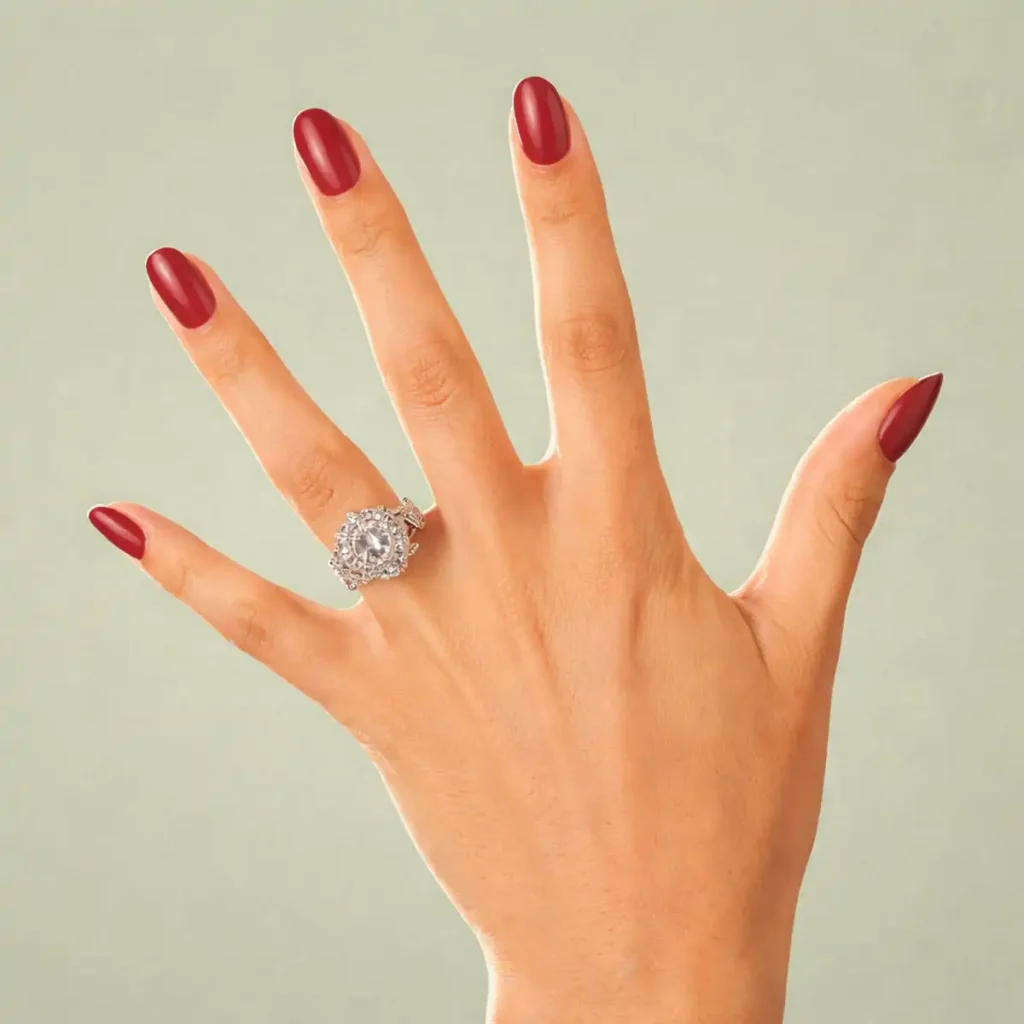
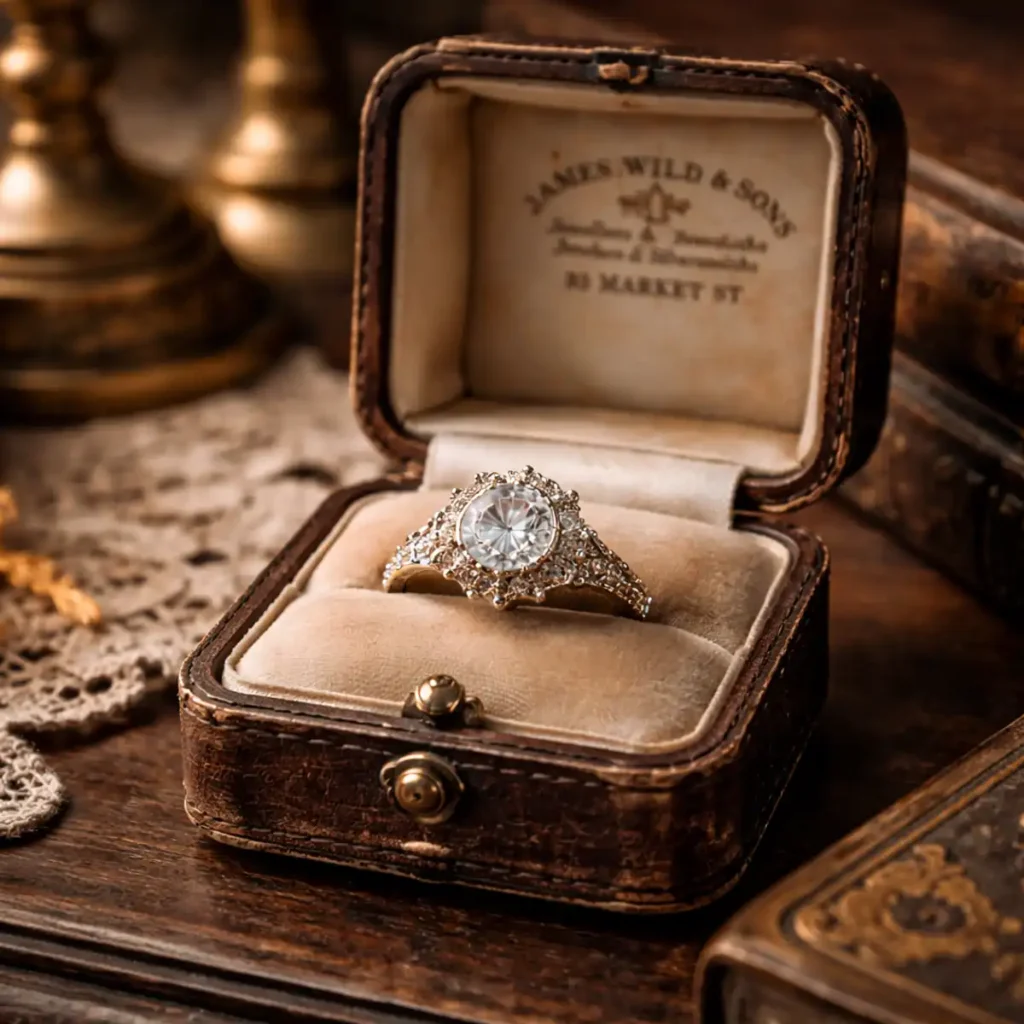
Wear patterns are the second layer. A 120-year-old ring carries wear on the inside of the shank that a reproduction cannot imitate without deliberate artificial ageing. The wear is uneven, concentrated where finger pressure falls during decades of handling, and accompanied by microscopic pitting that reflects long contact with skin oils and the minor impacts of daily wear. A dealer who turns a ring over, looks at the inside of the shank under a loupe, and runs a fingernail along the underside is reading those wear patterns.
Provenance paperwork is the third layer where it exists. Significant period pieces sometimes arrive with auction house catalogue references, family documentation, or earlier insurance valuations that establish ownership history. Paperwork is not required for authentication — many genuine period rings carry none — but when it exists, it strengthens the position materially, and a reputable dealer will provide copies as part of the sale.
Fun fact: The closed-back setting that distinguishes Georgian rings from later periods was not a decorative choice, because 18th-century evening light came from candles and the reflective foil placed behind coloured stones was a deliberate optical technique to amplify colour saturation under low lighting conditions.
Which Periods Suit Which Buyers
For a buyer approaching antique engagement rings for the first time, matching period to personal aesthetic is more useful than approaching the decision chronologically. Georgian rings (pre-1837) are the rarest and most historically distinctive, typically with rose cut or table cut diamonds, coloured stones in foil-backed settings, and heavy construction in 18ct yellow gold or silver-topped gold. The market is thin, and prices reflect scarcity, but for a buyer drawn to pre-Victorian aesthetics and prepared to accept smaller centre stones, the period is compelling.
Victorian rings (1837 to 1901) span a long reign with multiple sub-periods. Early Victorian follows Georgian closed-back conventions. Mid-Victorian introduces open backs and the wider use of diamonds as the De Beers supply from South Africa reached the London market after the 1870s. Late Victorian settings become lighter and more delicate, with the knife-edge and claw settings that characterise the transition into the Edwardian period. Victorian rings are the deepest segment of the Hatton Garden antique market and offer the widest price range for buyers at varying budgets.
Edwardian rings (1901 to 1910, extending in practice to around 1915) introduce platinum as the dominant setting metal, with pierced gallery work, millegrain edges, and the garland and bow motifs that define the period. Centre stones are typically old European brilliant cut diamonds, often supported by smaller diamonds or seed pearls set in platinum lace. The period suits buyers who want the elegance of a classic white-metal engagement ring with a distinctive historical register.
Art Deco rings (1920 to roughly 1935) are the most architecturally distinctive and the most sought after in the current market. Calibrated sapphires and emeralds set alongside transitional cut diamonds in geometric platinum mounts, with the chevron, sunburst, and stepped pyramid motifs that define the period. Prices reflect demand, and Art Deco pieces in good condition command premium prices across Hatton Garden dealers, but the pieces are unmistakable and hold value well.
What To Ask A Hatton Garden Antique Dealer
The single most important question to ask a Hatton Garden antique dealer during a first consultation is this. Which elements of this ring are original to its period and which have been restored, re-set, or replaced? A straightforward question and a straightforward answer are the signs of a dealer worth buying from. Most antique rings have had something done to them over the course of a century, whether that is a resize, a claw retipping, a replaced accent stone, or a centre stone swap. None of those interventions disqualifies a piece from being genuinely antique, but the buyer deserves to know what is original and what is not before agreeing on a price.
Book appointments with 2 or 3 antique specialists rather than walking in during peak hours. Georgian and Art Deco pieces particularly reward a considered approach because the inventory turns over relatively slowly, and a dealer who knows a buyer is serious will often hold pieces back for a second viewing. Bring any family jewellery that might be remodelled alongside the period piece, since many Hatton Garden antique dealers also handle the sensitive work of integrating heritage stones into period settings. Expect to pay a modest premium over comparable modern rings for genuine antique pieces in good condition, and expect that premium to be justified by the combination of rarity, craft, and the wear-and-provenance history that no new ring can offer.