The first thing to know about a real Art Deco engagement ring is that its shape is not just for looks. The stepped platinum parts, the cut sapphire and emerald stones, the open gallery work that lets light reach the diamond — all of it shows specific skills and materials from one time period. These cannot be copied well without leaving signs that an expert will spot right away. Hatton Garden has been the heart of London's antique jewellery trade for over 100 years. The dealers on Greville Street, Hatton Place, and nearby lanes have seen more period rings than almost anywhere else in the UK. For buyers looking at antique engagement rings, this area offers both the widest choice in the country and the expert knowledge to prove what is real.
The antique trade works alongside the modern engagement ring business in Hatton Garden. Walk from Farringdon Elizabeth line exit along Greville Street toward the north end of Hatton Garden. You'll see shopfronts that mix modern workshops with period dealers, often in the same building. A.R. Ullmann at 36 Greville Street focuses on Georgian through Art Deco pieces. Farringdons Jewellery at 32B Greville Street covers the same periods with strong Victorian and Edwardian rings. Hirschfelds at 7 Bleeding Heart Yard has traded since 1875 and keeps one of the best antique diamond ring collections in London. For buyers new to antique engagement rings, these places are where to start your research.
What Makes An Antique Ring Different From Vintage Or Copy Pieces
The trade uses three terms with clear meanings. An antique piece is usually over 100 years old. This puts the line at rings made before 1925. A vintage piece is at least 50 years old but under 100. A copy is a modern piece made in an old style using new methods. A good copy can be beautiful, but should never be sold as an antique.
The signs that show a real antique from a copy are the same across all periods that a Hatton Garden dealer will show. Setting methods are the first clue. Georgian rings use closed-back settings with foil behind coloured stones to boost colour in candlelight. Early Victorian pieces keep closed backs. Later Victorian settings change to open backs as electric lights remove the need for reflective backing. Edwardian rings bring in lots of platinum, with pierced gallery work and knife-edge bands that no modern mass-production method copies cheaply. Art Deco settings use cut coloured stones in millegrain-edged mounts with geometric balance that is tighter and more structured than modern Art Deco-style pieces.
Hallmarking is the second clue, and in the UK, the hallmark often decides everything. A British-made ring has a sponsor's mark, a fineness mark, and an Assay Office mark. On antique engagement rings from before 1999, a date letter is also there and shows the exact year of testing. The London Assay Office at Goldsmiths' Hall uses a leopard's head for its mark. A Victorian ring tested in London will have the Victorian leopard's head, which looks different from the modern mark, and a date letter that fixes the year of making within a 25-year cycle. No copy can fake this easily without breaking the Hallmarking Act 1973.
How To Read A Period Hallmark In Real Life
A Hatton Garden dealer will usually get out a 10x loupe and show a buyer the hallmark on any antique piece being looked at. The sponsor's mark, struck first, shows the maker or business that sent the piece for testing. On period rings, some sponsors' marks match workshops that have not worked for 80 years and are now listed as reference material for antique experts. The fineness mark shows the metal purity, with 18 for 18ct gold, 22 for 22ct gold, 950 for platinum, and 925 for sterling silver on period pieces that sometimes used silver for stone backing.
The Assay Office mark shows where the piece was tested. London's leopard's head, Birmingham's anchor, Sheffield's crown (now a rose after 1975), and Edinburgh's castle are the four active offices. The date letter is the most useful mark for proving antique engagement rings are real, because each letter cycle at each Assay Office is publicly recorded. A dealer can find the exact year of hallmarking from a letter plus its font style and border shape.
For a Victorian ring hallmarked in London, a trained Hatton Garden antique dealer can usually narrow the making date to within a year without checking any reference. That level of knowledge is not something an online auction description can copy. It is the strongest reason to buy an antique in person rather than from a remote dealer when the piece is a big purchase.
What Real Checking Actually Looks Like
Copy quality has improved a lot in recent decades. The high end of the copy market makes pieces that can fool a casual buyer. A Hatton Garden antique dealer uses a layered checking process that is worth knowing before buying a piece.
Stone analysis is the first layer. Antique diamonds are cut to different shapes than modern stones. Old mine-cut diamonds from Georgian and early Victorian periods have a cushion-shaped edge with a high crown and small table. Old European brilliants from late Victorian and Edwardian periods move toward a round edge but keep high crowns. Modern brilliant cuts have the shallow crown and large table that mark the Tolkowsky-based shapes that entered the trade in the 1930s. A period ring set with a modern brilliant cut is either a period ring that has been re-set, which cuts its value, or a copy pretending to be an antique. A trained eye spots this in seconds under magnification.
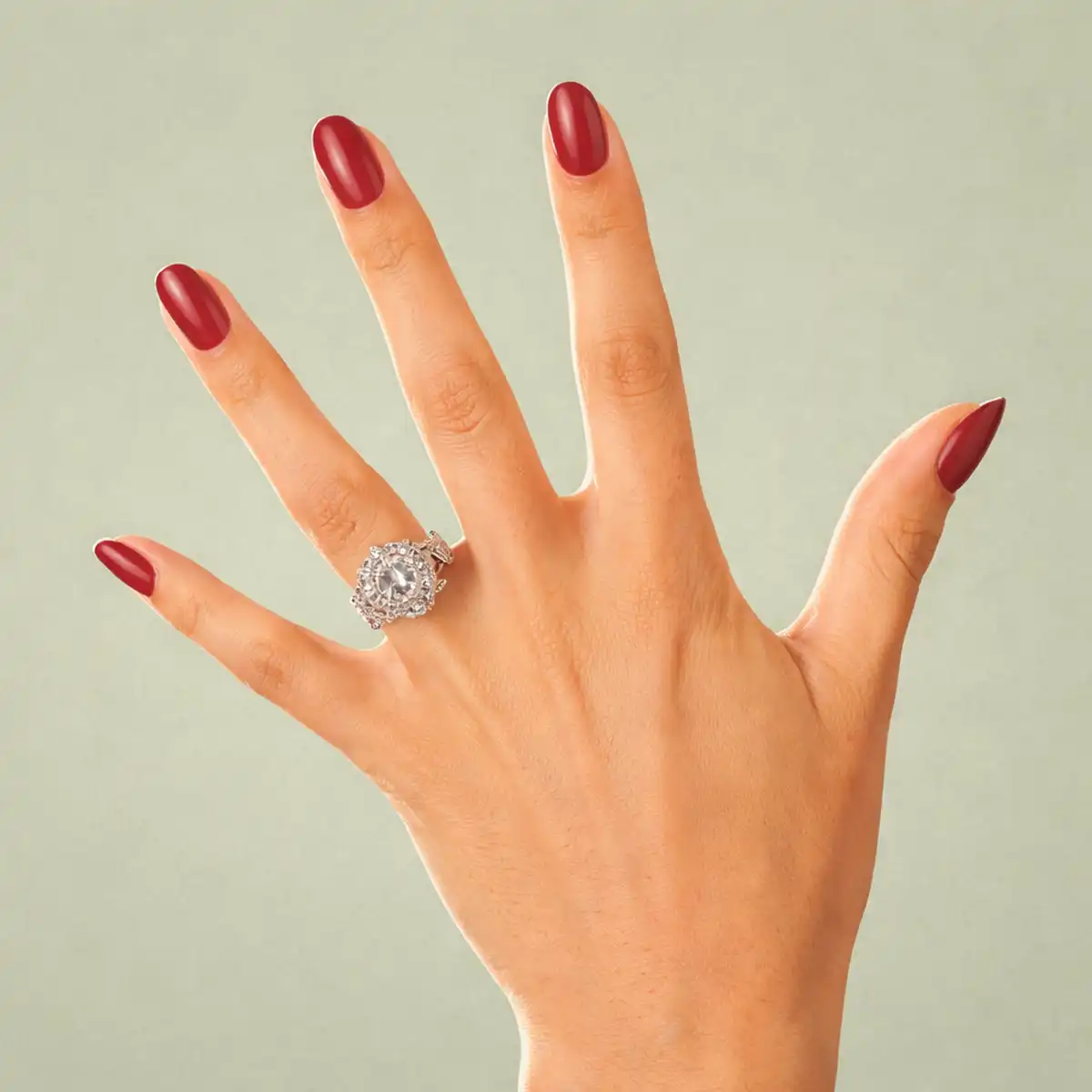
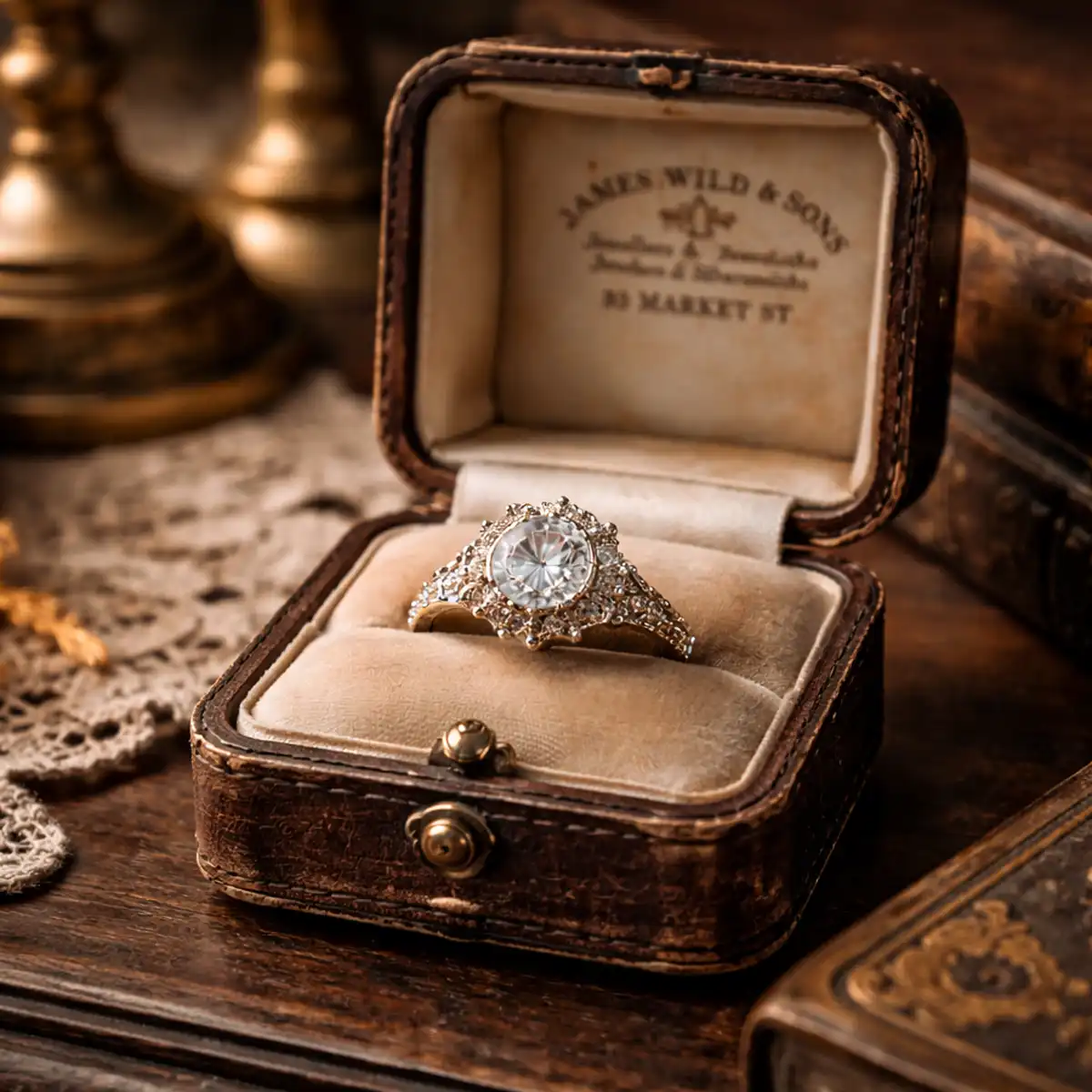
Wear patterns are the second layer. A 120-year-old ring shows wear on the inside of the band that a copy cannot copy without fake ageing. The wear is uneven, focused where finger pressure falls during decades of use. It comes with tiny pitting that shows long contact with skin oils and the small impacts of daily wear. A dealer who turns a ring over, looks at the inside of the band under a loupe, and runs a fingernail along the underside is reading those wear patterns.
History paperwork is the third layer where it exists. Important period pieces sometimes come with auction house records, family papers, or earlier insurance values that show ownership history. Paperwork is not needed for proving authenticity — many real period rings have none — but when it exists, it helps a lot. A good dealer will give copies as part of the sale.
Fun fact: The closed-back setting that marks Georgian rings from later periods was not a style choice. 18th-century evening light came from candles and the reflective foil placed behind coloured stones was a planned optical method to boost colour richness under low lighting.
Which Periods Suit Which Buyers
For buyers new to antique engagement rings, matching period to personal style is more useful than thinking about it by time. Georgian rings (pre-1837) are the rarest and most historically unique. They usually have rose cut or table cut diamonds, coloured stones in foil-backed settings, and heavy build in 18ct yellow gold or silver-topped gold. The market is thin, and prices show scarcity. But for buyers drawn to pre-Victorian looks and happy to accept smaller centre stones, the period is appealing.
Victorian rings (1837 to 1901) span a long reign with multiple sub-periods. Early Victorian follows Georgian closed-back ways. Mid-Victorian brings in open backs and wider use of diamonds as the De Beers supply from South Africa reached the London market after the 1870s. Late Victorian settings become lighter and more delicate, with the knife-edge and claw settings that mark the change into the Edwardian period. Victorian rings are the deepest part of the Hatton Garden antique market and offer the widest price range for buyers at different budgets.
Edwardian rings (1901 to 1910, extending in practice to around 1915) bring in platinum as the main setting metal. They have pierced gallery work, millegrain edges, and the garland and bow patterns that define the period. Centre stones are usually old European brilliant cut diamonds, often supported by smaller diamonds or seed pearls set in platinum lace. The period suits buyers who want the elegance of a classic white-metal engagement ring with a clear historical style.
Art Deco rings (1920 to roughly 1935) are the most architecturally unique and the most wanted in today's market. They have cut sapphires and emeralds set alongside transitional cut diamonds in geometric platinum mounts, with the chevron, sunburst, and stepped pyramid patterns that define the period. Prices show demand, and Art Deco pieces in good condition cost premium prices across Hatton Garden dealers. But the pieces are unmistakable and hold value well.
What To Ask A Hatton Garden Antique Dealer
The most important question to ask a Hatton Garden antique dealer during a first meeting is this. Which parts of this ring are original to its period and which have been restored, re-set, or replaced? A clear question and a clear answer are the signs of a dealer worth buying from. Most antique engagement rings have had something done to them over the course of a century. This might be a resize, a claw retipping, a replaced accent stone, or a centre stone swap. None of these changes stop a piece from being truly antique. But the buyer deserves to know what is original and what is not before agreeing on a price.
Book meetings with 2 or 3 antique specialists rather than walking in during busy hours. Georgian and Art Deco pieces especially reward a careful approach because the stock turns over slowly. A dealer who knows a buyer is serious will often hold pieces back for a second viewing. Bring any family jewellery that might be remodelled alongside the period piece. Many Hatton Garden antique dealers also handle the careful work of putting heritage stones into period settings. Expect to pay a small premium over similar modern rings for genuine antique engagement rings in good condition. Expect that premium to be justified by the mix of rarity, craft, and the wear-and-history that no new ring can offer.
Continue Reading
The Hatton Gazette
Delivered weekly to your inbox
Join 12,000+ Hatton insiders


