In an era defined by rapid change and relentless spectacle, certain objects manage to achieve something rarer than brilliance—they become symbols. The Millennium Star diamond is one such object. Its story is not woven through centuries of royal ownership or mystical curses, but instead through a precise convergence of science, craftsmanship, branding, and high drama at the dawn of a new millennium. With a weight of 203.04 carats, a flawless interior, and the highest possible colour grade, the Millennium Star is not just an exquisite diamond—it is a benchmark of modern gemology, a corporate artefact, and a cultural phenomenon.
This article presents a definitive, evidence-based exploration of the Millennium Star, tracing its discovery, transformation, public unveiling, and the infamous heist attempt that turned it into a household name. Far more than a showcase of statistics, it captures the essence of why this diamond continues to fascinate collectors, gemologists, and the public alike.
From Earth to Legend: The Discovery and Early Journey
The Millennium Star's story begins not in a showroom or museum but in the alluvial diamond fields of Mbuji-Mayi, in the Democratic Republic of Congo (then Zaire). In 1990, miners unearthed a colossal 777-carat rough stone from the region's rich riverbeds. The sheer size of the find instantly set it apart; this was not a typical gem, but the beginning of a once-in-a-generation story.
The Mbuji-Mayi region is famed for producing high-quality diamonds, but is also associated with political and economic instability. This tension between natural wealth and human hardship casts a shadow over many stones from the area—and yet it is also a reminder of the global inequality embedded in luxury industries.
Acquisition by De Beers: Industrial Muscle Meets Opportunity
It did not take long for the rough diamond to capture the attention of De Beers, the world's most dominant diamond company at the time. Their acquisition of the stone marked a turning point. De Beers possessed the financial strength, gemological expertise, and international influence required to transform potential into perfection.
This was not a speculative purchase—it was a calculated investment in creating a cultural and corporate symbol. The company recognised the significance of the raw material and moved decisively to bring it under their stewardship.
Three Years to Perfection: The Cutting of the Millennium Star
Turning a 777-carat rough diamond into a polished 203.04-carat masterpiece is a feat of both art and engineering. This transformation took more than three years, involving advanced laser technology, international expertise, and a network of master craftsmen.
Initial cleaving and shaping began in South Africa, the historical stronghold of De Beers operations. The final stages of polishing were entrusted to the Steinmetz Diamond Group (now Diacore), a firm with a global reputation for handling exceptional stones. This phase likely took place in Antwerp or Amsterdam, centres of diamond heritage and precision.
The use of laser mapping and cleaving tools was crucial in preserving the integrity of the stone. Every millimetre mattered. Ultimately, only 26% of the original rough remained in the final polished gem, reflecting a cutting philosophy that prioritised clarity and optical brilliance over carat retention. The decision was clear: it was better to create a flawless jewel than a slightly larger one with visible imperfections.
This extended process immobilised vast amounts of capital, and one misstep could have rendered the stone worthless. But success meant creating not only a diamond but a legend.
The Anatomy of Perfection: Gemological Specifications
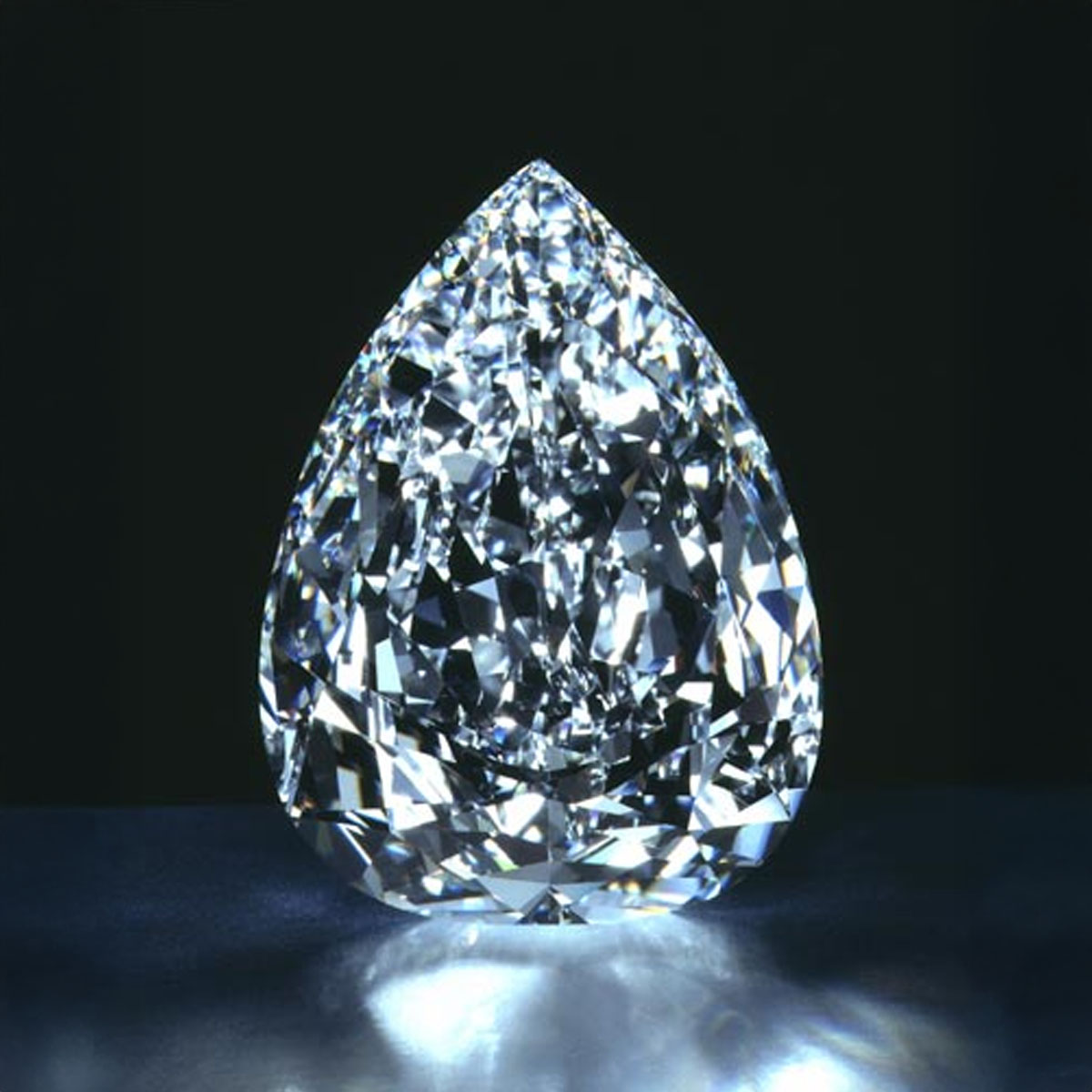
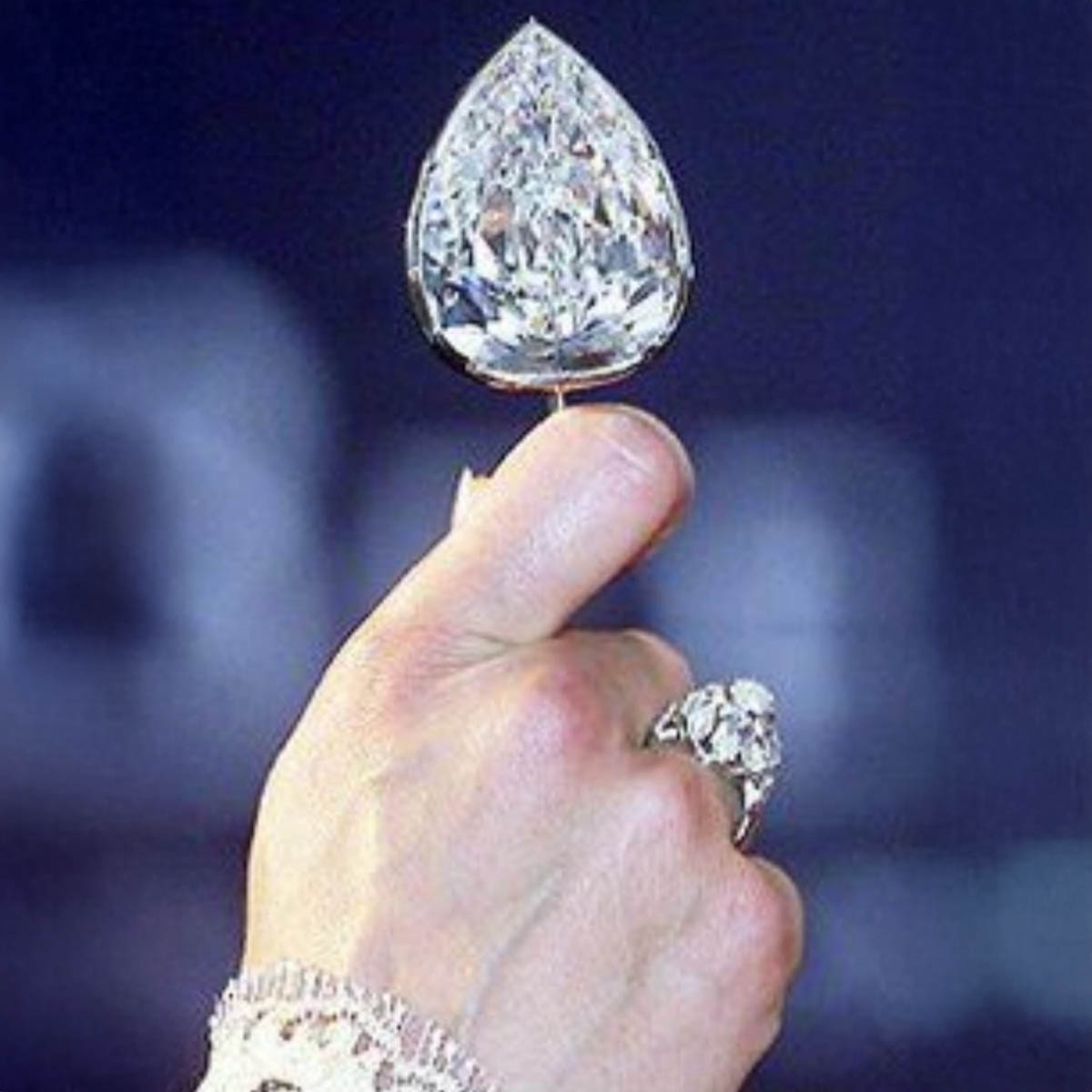
What emerged from this painstaking process was a pear-shaped diamond with exceptional symmetry, proportions, and light performance. In gemological terms, it represents the ideal across three major axes:
- Carat Weight: At 203.04 carats, the Millennium Star ranks among the largest top-quality diamonds ever cut.
- Colour Grade: Graded D, the highest rating on the GIA scale, it is entirely colourless—a rare trait in diamonds of this size.
- Clarity Grade: Rated Internally Flawless (IF), and reported by some sources as also externally flawless, this diamond is without inclusions or surface blemishes visible under 10x magnification.
This combination of weight, D-colour, and IF clarity is exceptionally rare. It positions the Millennium Star in a league shared by only a tiny handful of stones globally, and perhaps none that match all three qualities at this scale.
| Attribute | Detail |
| Original Rough Weight | 777 carats |
| Polished Weight | 203.04 carats |
| Shape | Pear (Pendeloque) |
| Colour Grade | D (Colourless) |
| Clarity Grade | Internally Flawless (IF) |
| Cutter | Steinmetz Diamond Group for De Beers |
| Origin | Mbuji-Mayi, Democratic Republic of Congo |
| Year of Discovery | 1990 |
| Year of Completion | Circa 1999 |
A Star for the Millennium: De Beers' Branding Masterstroke
The Millennium Star wasn't just cut—it was positioned. De Beers unveiled it as the centrepiece of the "Millennium Jewels" collection, an assembly of twelve extraordinary diamonds designed to mark the year 2000.
By naming the diamond after the milestone year and exhibiting it at the Millennium Dome in London, De Beers embedded it into a global moment of celebration and reflection. This was more than corporate sponsorship—it was a deliberate act of symbolic association. The collection included eleven rare blue diamonds totalling 118 carats, but none rivalled the Millennium Star in magnitude or significance.
Its role as the centrepiece didn't just reflect its value—it amplified it. Framing it within a wider context of rarity and celebration, the diamond stood as a metaphor for modernity, technological prowess, and human achievement at the cusp of a new century.
The Millennium Dome Heist: When Legends Attract Criminal Eyes
On 7 November 2000, the diamond's fame invited a dangerous kind of attention. A gang of criminals, later dubbed "The Diamond Geezers," attempted one of the most audacious robberies in British history: to smash through the walls of the Millennium Dome with a JCB digger, seize the Millennium Star and the blue diamonds, and flee via the Thames in a waiting speedboat.
Their plan, though elaborate, failed spectacularly. The Metropolitan Police Flying Squad, acting on months of surveillance, had substituted the real stones with replicas and lay in wait dressed as cleaners. As the criminals stormed the vault, police swooped in, foiling the attempt in real-time.
The incident transformed the Millennium Star's story from impressive to iconic. It now had a plot twist worthy of cinema—a foiled daylight robbery, complete with disguises, decoys, and dramatic arrests. This chapter in its history significantly boosted its profile, solidifying its place in the public imagination.
After the Heist: Secrecy, Security and Public Fascination
The failed robbery at the Millennium Dome in November 2000 altered the course of the Millennium Star's public life. While its debut had been bold and public, its future became far more cautious.
De Beers' Ongoing Custodianship
The Millennium Star remains under the ownership of De Beers, and this continuity is no accident. For the company, it is far more than an asset—it is a living emblem of their status in the diamond world. To sell it, even for a vast sum, would mean parting with a singular representation of their heritage, capability, and brand authority.
In corporate terms, the Millennium Star is what's known as a "trophy asset"—an irreplaceable icon that delivers brand value far beyond its financial worth. That it has never been offered for sale only increases its mystique.
Withdrawn From Public View
Following the heist attempt, the Millennium Star was largely withdrawn from public display. Exhibiting such an object now involves extraordinary logistical challenges, insurance considerations, and heightened security risks. Any future appearance must be justified not only by public interest but also by the ironclad assurance of its safety.
Paradoxically, this scarcity of visibility has fuelled the diamond's mystique. Like a reclusive celebrity, each potential reappearance becomes an event in itself, amplifying intrigue and desire.
A Story That Will Not Fade
Since 2000, the Millennium Star has generated rumours of private viewings, sales offers, and museum requests, but none have been confirmed. It is this balance between visibility and seclusion—between legend and reality—that sustains its allure.
It remains unclear whether the diamond will one day be sold, exhibited, or kept permanently hidden. In a world where ownership of such an object is a symbol of ultimate prestige, even speculation becomes part of the legacy.
More Than a Gemstone: Symbolism and Cultural Weight
The Millennium Star is not just revered for what it is, but for what it represents. It stands at the intersection of science, marketing, global events, and modern myth-making.
A Confluence of Forces
Three core elements underpin the diamond's cultural significance:
- Gemological perfection: With its D-colour and Internally Flawless clarity, the Millennium Star is a rare feat of nature, refined by the best of human skill.
- Timing: Its unveiling to mark the year 2000 gave it global relevance, tying it to a moment of collective transition and optimism.
- Drama: The thwarted heist gave the diamond a narrative worthy of fiction. The story became not just one of beauty, but of danger, planning, and foiled ambition.
The result is a modern legend: a stone whose story resonates with audiences far beyond the world of gemology.
A New Type of Famous Diamond
Unlike historical stones such as the Koh-i-Noor or the Hope Diamond, whose fame comes from royal ownership or ancient tales, the Millennium Star is a product of the modern world. Its narrative is shaped by corporate storytelling, security drama, and international branding, reflecting today's values around luxury, risk, and spectacle.
| Diamond | Carat Weight | Colour | Clarity | Cut | Notable Context |
| Millennium Star | 203.04 ct | D | IF | Pear | Modern masterpiece; foiled 2000 heist |
| Centenary Diamond | 273.85 ct | D | FL | Heart | De Beers 100th anniversary centrepiece |
| Koh-i-Noor | 105.6 ct | D (est.) | IF (post-cut) | Oval | Imperial crown jewel with complex history |
| Winston Legacy | 101.73 ct | D | FL | Pear | Sold at auction for $26.7 million (2013) |
| The Rock | 228.31 ct | G | VS1 | Pear | Largest white diamond ever auctioned (2022) |
The Millennium Star's legend is defined less by dynasties and more by modern institutions—De Beers, the media, and the police. It represents a new archetype of fame, where narrative is forged by publicity, technology, and dramatic confrontation.
Valuation: How Much Is Perfection Worth?
Because the Millennium Star has never been sold publicly, it has no confirmed market value. But attempts have been made to estimate what it might fetch—if it ever came to auction.
Speculative Figures and Benchmarks
During the 2000 heist coverage, the Millennium Star was rumoured to be insured for £100 million, with the entire Millennium Collection valued between £200–£350 million. However, these figures must be treated with care: insurance valuations are cautious, while media reports during criminal events tend to inflate for effect.
For context, the Winston Legacy, a 101.73-carat D-Flawless diamond, sold for $26.7 million in 2013. The Millennium Star is twice that size, with equal or better characteristics. In this ultra-elite tier, prices do not scale linearly—value per carat often increases with size and rarity.
Were it ever offered at auction, the Millennium Star could be expected to set new global records—not just for price, but for attention.
What Drives the Value?
- Carat Weight: Very few D-colour diamonds exceed 200 carats.
- Clarity: Internally Flawless clarity at this scale is extraordinary.
- Provenance: De Beers ownership, its role in the Millennium Collection, and the dramatic heist attempt give it a unique cachet.
- Symbolism: As a cultural icon, it appeals to collectors not just for investment but for legacy.
- Market Scarcity: In this category, there are no true comparables. That alone drives interest and value.
In the luxury world, especially among ultra-high-net-worth individuals, such an object transcends pricing logic. It becomes a statement of power, access, and timeless taste.
Lasting Significance: A Modern Myth in Diamond Form
Two decades after its debut, the Millennium Star remains one of the most discussed and admired diamonds in existence. It has not faded from view—it has matured into legend.
A Masterpiece of Craftsmanship and Vision
The diamond is the ultimate product of what happens when natural rarity meets human brilliance. Its journey from rough to radiant demanded intense planning, cutting-edge technology, and exquisite craftsmanship. It is, quite literally, a sculpted miracle.
Symbol of Resilience and Rarity
That it survived an attempted theft without a scratch only enhances its status. The story is no longer just one of creation—it is one of protection and perseverance. It reflects a world where security, intelligence, and cooperation (between police and the private sector) are vital to preserving culture's most precious treasures.
Cultural Icon, Forever Relevant
The Millennium Star's narrative continues to evolve. Whether it appears again in public or remains forever under lock and key, its legend is secure. It speaks to our fascination with beauty, risk, and rarity—the very forces that have shaped human obsession with gems for centuries.
It is a story of excellence without compromise, born at the turn of the millennium and carried forward by the power of story.
Continue Reading
The Hatton Gazette
Delivered weekly to your inbox
Subscribe for the latest from Hatton.