When choosing sapphire engagement rings Hatton Garden offers exceptional options for couples seeking something beyond the traditional diamond solitaire. A sapphire engagement ring is a considered choice that provides colour depth, historical resonance, and connection to a longer tradition of bridal jewellery than the 20th-century diamond narrative. Sapphire engagement rings in Hatton Garden make sense for exactly this buyer, because the quarter has traded corundum stones since the 1940s and 1950s through specialist dealers with genuine sourcing relationships in Sri Lanka, Burma and Madagascar. Hatton Garden occupies the EC1N postcode between Chancery Lane and Farringdon stations, under 5 minutes from the Farringdon Elizabeth line exit, and coloured gemstone dealers are clustered around Greville Street and Ely Place alongside the diamond trade. The purpose of what follows is to help a first-time sapphire buyer understand origin, treatment, certification and setting choices before the first consultation, so the appointments in the quarter move productively.
What a Sapphire Engagement Ring Actually Is
A sapphire engagement ring is centred on a stone from the corundum family, typically blue, scoring 9 on the Mohs hardness scale and therefore suitable for daily wear. Sapphire comes in a full spectrum of colours beyond blue, including yellow, pink, violet and the rare orange-pink padparadscha. Value is driven by origin, colour saturation, clarity, cut and treatment history, with unheated Kashmir, Burma and Ceylon stones commanding significant premiums.
Corundum, the mineral family that sapphire and ruby both belong to, ranks second only to diamond for hardness at 9 on the Mohs scale. In practice this means a sapphire centre stone can sit in an engagement ring worn every day for decades without the wear patterns that softer stones develop. Sapphire will not scratch against glass or against most household surfaces, and the setter's work holds its geometry under normal wear. This durability is part of why sapphire was the bridal stone of choice across European royal houses from the medieval period onwards, long before diamond took that position in the 20th century.
Colour range matters more than most first-time buyers realise. The classic royal blue sapphire dominates the bridal imagination, but the trade also handles cornflower blue, which is a slightly lighter and more open-toned shade; teal sapphires, increasingly popular since 2020, which sit between blue and green; pink sapphires, which have become a significant bridal category over the last decade; yellow and golden sapphires, which read warm and work well with yellow gold settings; and the rarest of all, the padparadscha sapphire, an orange-pink stone named from the Sinhalese word for a lotus flower. Each colour has its own pricing logic, its own origin geography and its own matching setting conventions.
Origin and Why It Matters for Sapphire Engagement Rings Hatton Garden
Origin premium is the defining feature of the fine sapphire market. The trade recognises three historical origins at the top of the value hierarchy. Kashmir sapphires, mined in the Himalayan region between 1881 and the early 20th century, exhibit a velvety cornflower blue that has never been fully matched from any other source and trade at prices that reflect their scarcity; new Kashmir material is essentially unavailable. Burmese sapphires, typically from the Mogok region, show a slightly more saturated royal blue with a touch of violet and remain in limited but current production. Ceylon sapphires, from Sri Lanka, cover the widest colour range and the widest price range, with top-quality unheated Ceylon stones commanding serious premiums and commercial Ceylon material available at accessible prices.
Secondary origins that the Hatton Garden trade handles regularly include Madagascar, which has produced increasing volumes of high-quality blue sapphire since the mid-1990s; Australia, which produces mainly darker and greener-toned blues; Montana, which produces distinctive teal and silver-grey sapphires; Thailand and Cambodia, which have historically produced darker commercial material; and Nigeria, Tanzania and other African sources that contribute to the general sapphire supply. A buyer who comes in with a specific colour preference will typically be shown stones from 2 or 3 origins, because colour within the sapphire family depends on origin in ways that matter more than for diamonds.
For a bridal purchase, the origin question is a matter of personal priority rather than a universal rule. A buyer who values rarity and is prepared to pay for it will look at Kashmir or top-end Burma. A buyer who wants the classic royal blue at a sensible price will typically land on a mid-range Ceylon. A buyer looking for something distinctively modern will often choose Madagascar for a clean cornflower blue, or Montana for a teal or grey-toned stone. None of these is the right choice in absolute terms; all are the right choice for a specific buyer and a specific budget.
Heat Treatment and Disclosure in the Hatton Garden Trade
Heat treatment is the single most important disclosure question in coloured stone buying. The majority of sapphires on the market, perhaps 90% of commercial production, have been heat-treated to improve colour saturation and clarity. The treatment involves controlled heating to high temperatures under specific atmospheric conditions, and the result is stable and permanent. A heated sapphire behaves identically to an unheated one in daily wear and in setting. The trade distinction between heated and unheated matters for two reasons, which are value and disclosure.
Unheated sapphires command a premium that varies by origin and colour grade. For top-end Burmese or Ceylon material, an unheated stone can price at 2 to 5 times the heated equivalent, reflecting both rarity and collector demand. For commercial material from Madagascar or Thailand, the unheated premium is smaller. A bridal buyer who is not specifically pursuing collector-grade material does not necessarily need unheated, but should expect the jeweller to disclose treatment status unprompted. Reputable Hatton Garden jewellers treat disclosure as non-negotiable and state heat treatment on the sales receipt alongside the other stone specifications.
Other treatments to ask about include beryllium diffusion, which can alter a sapphire's colour permanently but is detectable by specialist laboratory testing and should always be disclosed; lattice diffusion, which is a more superficial treatment affecting only surface layers; and oiling or resin filling, which is rare in sapphire but common in emerald and occasionally relevant for sapphires with reaching fractures. Fracture-filled sapphires are generally not recommended for engagement ring use because the filler material can degrade under cleaning solvents and ultrasonic cleaning equipment.
Certification and Which Laboratory Reports to Trust
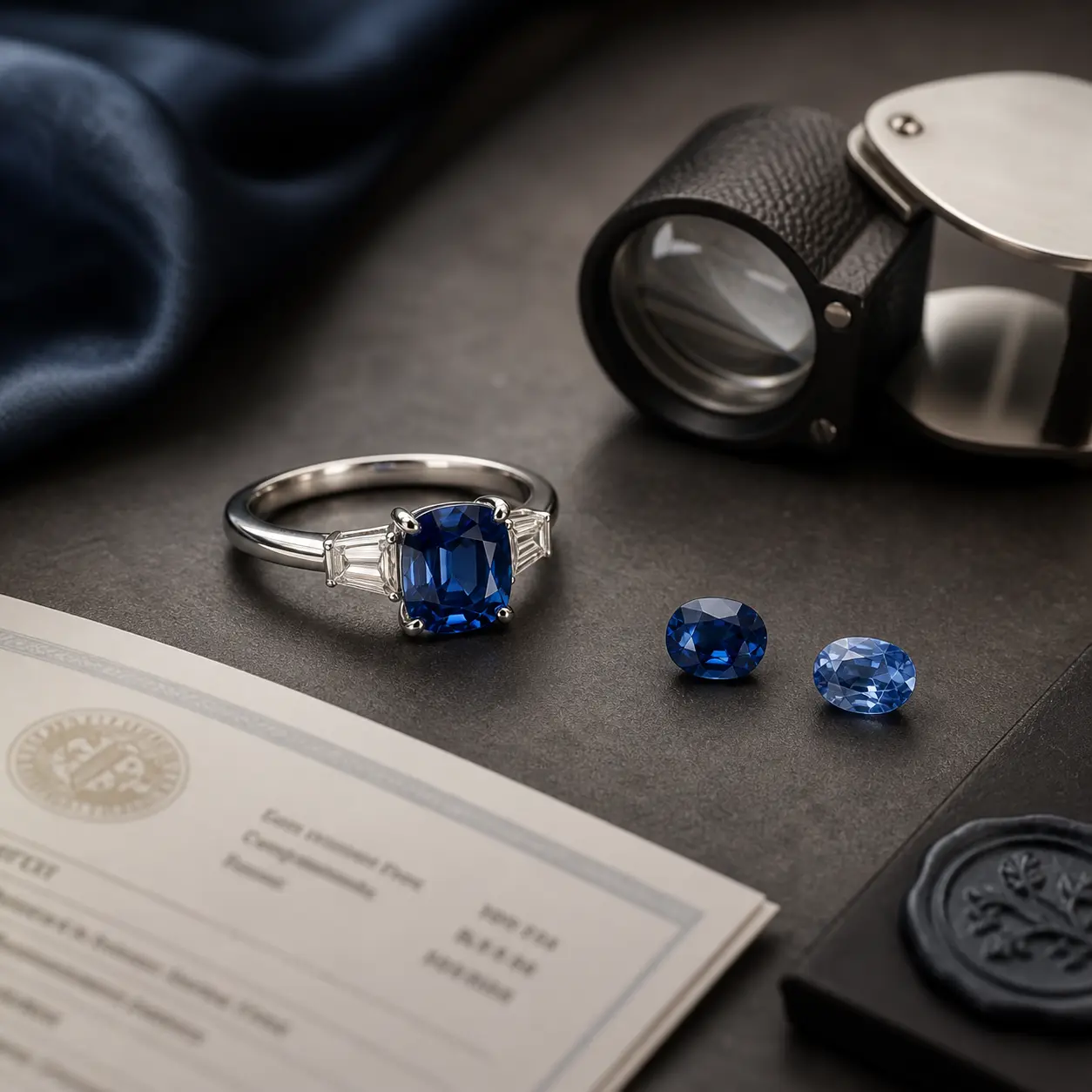
Sapphire certification is more specialised than diamond certification, and the laboratories matter more. The four leading coloured gemstone laboratories are Gübelin in Lucerne, GRS in Bangkok, SSEF in Basel and AGL in New York. For high-value bridal purchases, particularly stones above £5,000 or from named origins at the top of the hierarchy, an origin report from one of these four laboratories provides genuine authentication and market confidence. GIA also issues coloured stone reports that cover basic characteristics and often origin, and these are widely accepted in the trade for mid-range purchases.
An origin report carries more weight than a standard identification report because the origin determination is made by gemmological comparison with reference stones held by the laboratory. Kashmir origin is the most difficult to confirm and requires matching inclusion patterns, trace element chemistry and fluorescence response against known Kashmir material. Burma origin requires similar matching against Mogok reference samples. Ceylon origin is more straightforward because the trace element signatures are relatively distinctive. For a buyer purchasing a high-value origin sapphire, the Hatton Garden jeweller should offer an independent laboratory report and be willing to send the stone for testing if one is not already available.
For commercial sapphire purchases below £3,000, laboratory certification is often optional and the jeweller's own identification and disclosure may be sufficient. The distinction between a £2,000 Madagascar sapphire and a £2,000 Thailand sapphire is real in colour and saturation, but does not necessarily justify the £400 to £800 cost of a Gübelin or SSEF origin report. For mid-range purchases the sensible position is a GIA identification report stating the basic characteristics and any treatments, with the jeweller's own stated origin noted on the sales receipt.
Setting Choices for Sapphire Engagement Rings Hatton Garden
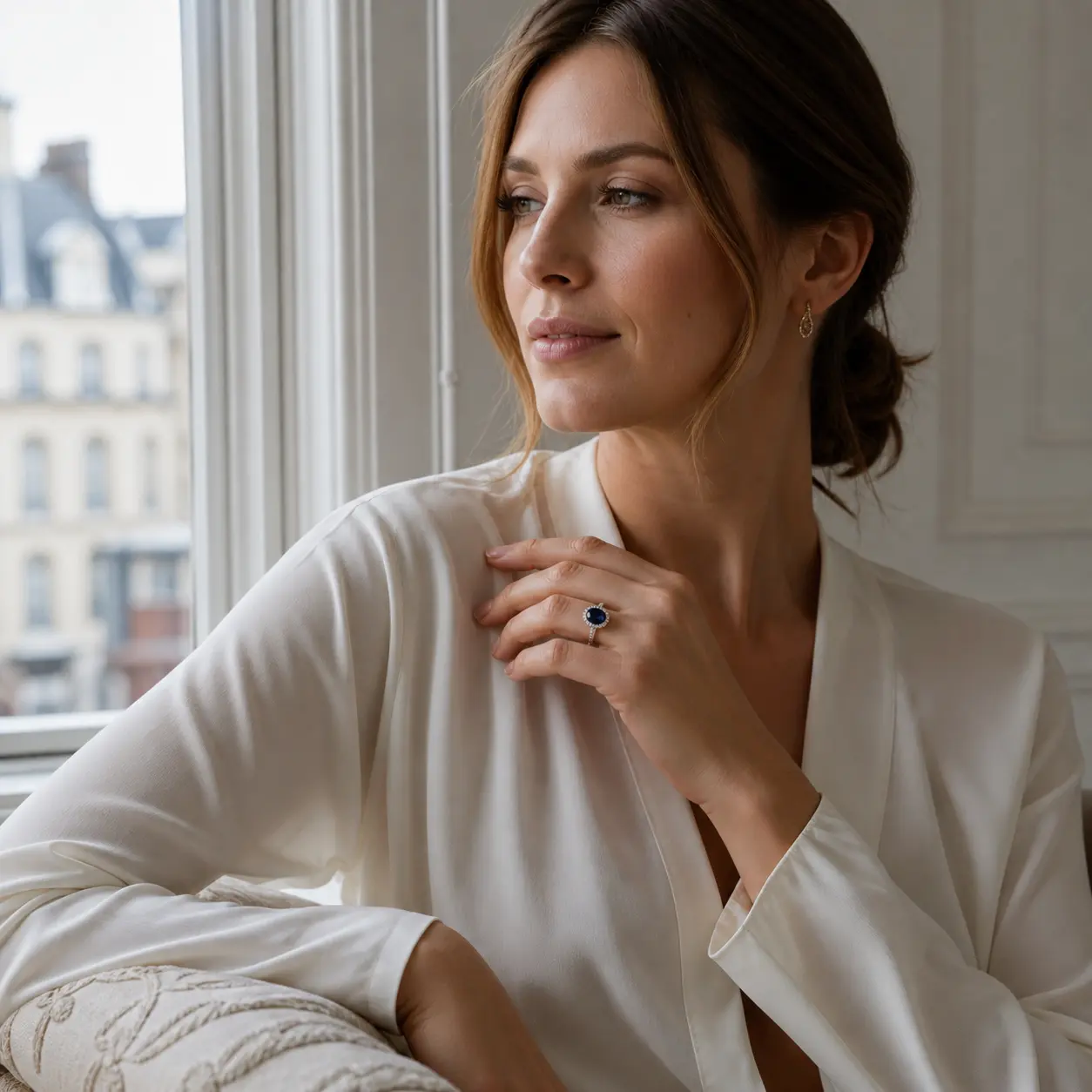
Sapphire sets beautifully in a range of engagement ring styles, and the setting choice is driven by the stone's shape and colour rather than by bridal tradition alone. A cushion-cut royal blue Ceylon sapphire in a halo setting, with diamond melee surrounding the centre stone, is one of the most recognisable sapphire engagement ring formats and works particularly well at 1 to 2 carat centre weights. An oval sapphire in a 3-stone setting with diamond side stones reads as a classic bridal statement, echoing Princess Catherine's engagement ring which was Princess Diana's before her, and remains a consistent seller in the quarter across budget ranges. A round sapphire in a solitaire setting is the cleanest modern format and lets the stone's colour speak without ornamentation.
Fun fact: Sapphire engagement rings predate diamond engagement rings by several centuries in European royal tradition; King Edward I's betrothal ring to Eleanor of Castile in 1254 featured a blue sapphire, nearly 700 years before De Beers'
1947 marketing campaign established diamond as the default bridal stone.
Metal choice interacts with sapphire in ways worth planning. White metals, whether platinum 950 or 18ct white gold, provide a neutral frame that lets the sapphire's blue colour dominate and tend to read as the most contemporary approach. 18ct yellow gold creates a warmer, more vintage-influenced pairing that works particularly well with Ceylon and Burmese blue stones and with yellow sapphires; it was the metal choice for most Art Deco and earlier sapphire engagement rings. 18ct rose gold pairs distinctively with pink and padparadscha sapphires and has grown in popularity for coloured stone bridal pieces since about 2015. The choice should be tested against the specific stone under natural light at the showroom window; colour perception shifts meaningfully between metal tones and the difference is worth seeing in person.
Planning Your Sapphire Engagement Ring Purchase in Hatton Garden
For a buyer approaching a sapphire engagement ring in Hatton Garden in 2026, the right starting position is to understand that sapphire buying is origin-led and disclosure-led in a way that diamond buying is not. Book 2 or 3 appointments with reputable coloured stone dealers in the quarter, arrive with a preferred colour and an indication of budget range, and ask each jeweller to show stones from 2 or 3 different origins at the agreed budget. Request treatment disclosure in writing on the sales receipt, and request an independent origin report for any high-value Kashmir, Burma or top-end Ceylon purchase. For mid-range purchases, a GIA identification report and the jeweller's own stated origin are reasonable. Plan the commission 3 months ahead of the intended proposal date to allow for bespoke setting work and Assay Office hallmarking. The quarter handles sapphire well when the buyer arrives prepared.
Continue Reading
The Hatton Gazette
Delivered weekly to your inbox
Join 12,000+ Hatton insiders


