Walk the stone lanes of Hatton Garden and you will feel a shift. The district long associated with lineage and locked cabinets now hosts a quieter, more agile force in antique jewellery. At 33, Ismael "Ishy" Khan has built Ishy Antiques as an appointment-only studio backed by transparent testing, a strong public voice, and a digital shopfront that teaches as much as it sells. For affluent buyers who research online before they invest in engagement rings or luxury watches, this is the modern benchmark. Khan's model blends scholarly care with clean, contemporary presentation. He replaces hushed mystique with verification and story. The effect is simple. Clients understand what they are buying, why it matters, and how to wear it now. The following analysis explains how Ishy Antiques works, how the collection is curated, and how its approach is influencing today's heritage market across the UK.
The architect behind the studio
Ishy's path did not begin in a West End salon. It started in Surrey auction rooms where a teenage curiosity became a disciplined practice. Early trades built instinct. Years of study built a structure. That self-made route forms part of the trust he commands. Buyers respond to it because it replaces distant authority with human experience. He learned the market by sifting trays, reading assay marks, and weighing risk, not by inheriting a window on a busy street. The result is a dealer who can decode a closed-back Georgian ring with the same ease as he explains a portrait-cut diamond on television. That blend of learned skill and public clarity defines the brand.
A philosophy of accessible history
The studio is founded on a clear principle. History should be wearable. Price points are structured so a first-time collector can start with a Victorian pendant or a slim gold chain and return later for a rarer old cut diamond ring. That removes the fear that often surrounds antique buying. Instead of one grand purchase that silences curiosity, clients can build a small, personal edit. Over time, those pieces form a coherent collection that reflects taste rather than trend. The idea is not to flood a jewellery box, but to help it grow with intent.
Proof before poetry
Romance sustains heritage. Proof sustains value. Every Ishy Antiques piece is described with testing that meets the expectations of serious buyers. Diamonds are checked by professional laboratories to confirm whether they are earth-mined or lab-grown. Gold is verified with XRF Niton analysis and corroborated with traditional acid testing where appropriate. Descriptions explain settings, alterations, and period repairs. Clients see what has been added and what has survived intact. That clarity removes anxiety from high-value decisions and gives each jewel a documented standing.
The power of public expertise
A large part of the studio's reach comes from Ishy's on-screen work as a jewellery specialist for the BBC. On programmes such as Antiques Roadshow and Antiques Road Trip, he translates technical language into plain speech. Carat, colour, cut, closed-back foiling, Georgian paste, Victorian enamel: terms that often sound opaque are broken down with calm precision. Viewers then meet the same person at the studio. That alignment of broadcast presence and private client work compounds trust. It is not celebrity for its own sake. It is demonstrable expertise under public scrutiny.
Address prestige without a shopfront
The business occupies LG14, 16-16a Record Hall, EC1N 7RJ, inside the traditional grid of Hatton Garden. That address signals credibility across the trade. Yet there is no street-level showroom. Appointments are held in a private office. The model reduces overheads while increasing focus. Time is spent on sourcing and client care rather than guarding glass. A quiet room, good light, and a tray of rings do more for a serious decision than a mirrored wall could ever do. For buyers used to private viewings in other luxury categories, the experience feels natural.
Appointment only as a service model
The studio works by appointment, so each consultation is unhurried and tailored. A typical visit begins with context. What styles are you drawn to. Which eras. How do you wear your jewellery day to day. The discussion then moves to pieces. You might compare a Victorian double heart locket with an Edwardian platinum cluster. You may handle a Georgian star-mount ring alongside a crisp Art Deco target. Stones are shown under different lights, loupe work is encouraged, and the fit is checked properly. The pace is calm. Decisions are informed, not nudged.
Digital first engagement that educates
The studio's social channels carry more than stock photos. Posts explain hallmarking, show fluorescence in diamonds, and walk through the difference between old mine cuts and later brilliants. The website presents short, clear notes that help readers evaluate condition and originality. This content does not drown the buyer in jargon. It equips them to ask better questions. That raises the level of conversation and shortens the distance between interest and confidence.
From late Georgian to early Deco
The core of the collection sits between late Georgian and early Art Deco. The range is not random. It is a set of periods that complement modern wardrobes while retaining their own language.
Georgian pieces often use high-carat gold with closed-back settings, foiled stones, and sentimental motifs. You will see celestial themes, hairwork, and refined engraving. Victorian jewels increase the symbolism with hearts, hands, arrows, and forget-me-nots, often using mother-of-pearl, rock crystal, and enamel. By the 1920s, geometry and light take over. Platinum mounts, crisp lines, and baguettes frame the hand with quiet strength. Ishy's edit spans these eras with intent, selecting pieces that wear cleanly today while remaining true to their time.
Signatures that define the edit
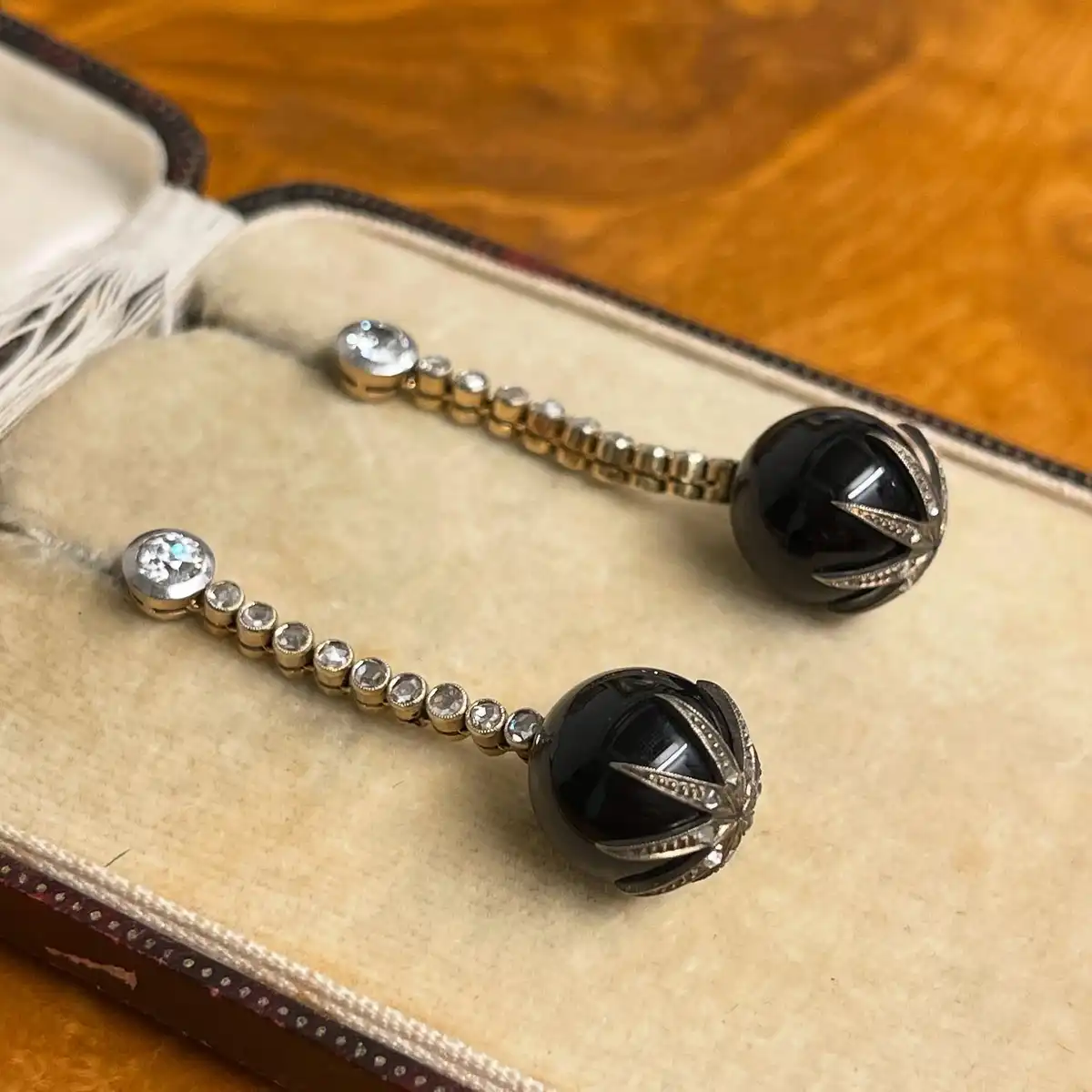
Several threads run through the trays. First, layerable history. Slim chains, carved pendants, and characterful charms allow clients to build daily combinations. Second, sentimental and celestial motifs. Toi et Moi rings, starburst brooches, and heart lockets remain in demand because they carry meaning without saying a word. Third, unusual materials and cuts. Pool of Light earrings in rock crystal, portrait cuts, and crisp enamel work bring texture to a collection that already has depth.
Rejuvenation as a creative practice
The studio does not manufacture new lines. It does something more interesting. It revives historic fragments with care. The collaboration with Jewellery Hannah, known as the IxHcollab, began with a tray of antique enamel stars that lacked settings. Hannah was given full creative control, and the result was a limited run of contemporary rings that retained the character of the plaques while providing structural integrity for daily wear. The series sold out within days. Ishy assumed the technical risk during conversion, proving a principle. A fragment in a safe brings no joy. A considered revival turns history into something you can live with.
Representative pieces that capture the brief
The inventory changes, but certain types act as anchors. A Georgian garnet ring with a tiny old cut diamond in a star mount captures the poetry of the period. An enamel star from the collaboration shows how a recovered element can become a fresh favourite. A Victorian mother-of-pearl hand pendant embodies the century's sentiment and craft. A fine platinum Art Deco ring shows the clean architecture that suits a modern hand. Antique Indian pieces with enamel and emeralds appear from time to time, widening the lens to global craftsmanship. Each supports the same aim. Historic detail that wears with ease.
How the BBC effect works
Broadcast expertise does more than raise profile. It sets an evidence trail. When a specialist dates a brooch live, explains wear in claws, and identifies a later re-shank, the audience learns how professionals think. Owners then approach the studio with realistic expectations and a healthy respect for process. That saves time and improves outcomes for both sides. It is efficient trust.
Influence without borrowed fame
A common question is whether A-list clients wear these pieces. The brand does not trade on red carpet moments. Its influence rests on the dealer's own standing. In a market that now values the expert behind the item, Ishy's signature matters. His curation acts as endorsement. For buyers who prize authorship and provenance, that is more persuasive than a passing photo.
Collaborations that elevate supply
Strategic work with respected Hatton Garden peers extends the range. Co-branded edits highlight signed jewels from houses like Cartier and Boucheron when appropriate and available. These partnerships allow distinctive drops without diluting focus. They combine the reach of a public expert with the depth of established stockholders, raising the quality of what clients can consider in a single visit.
A buyer's path to ownership
There are three main routes into the collection. First, an appointment in London for a private viewing. Serious decisions often benefit from seeing how a ring sits on the finger and how a locket lies on a chain. Second, the website, which presents pieces with clear photographs, accurate measurements, and honest notes on condition. Third, periodic events in the USA and elsewhere, announced through the studio's channels, give international clients a chance to handle stock in person. Each route is built around the same promise. Clear information, verified materials, and measured guidance.
Practical checks that matter to UK buyers
Affluent clients in the UK expect clean documentation for high-value jewellery. The studio explains whether a piece carries a current UK hallmark or a period mark and clarifies how gold fineness has been confirmed. Receipts specify testing methods and any material updates such as new shanks, strengthened settings, or discreet size adjustments. Insurance valuations are prepared with the same restraint as the descriptions. The language is factual. The numbers are justified. That approach supports peace of mind for those adding personal jewellery or building a family collection.
Engagement rings that pair history with daily wear
Many clients arrive with engagement ring research already underway. Antique options bring character that modern catalogues rarely match. A Victorian cluster of old-cut diamonds offers soft fire and a gentle profile. An Edwardian platinum ring blends strength and delicacy. A target ring from the Art Deco years adds graphic presence that photographs cleanly. The studio helps buyers assess height, claw wear, and stone security for daily comfort, then discusses sympathetic resizing where needed. The result is a ring with a story that can be worn with confidence.
Luxury watch buyers in a heritage mood
Although the studio focuses on jewellery, many clients who track luxury watches also look for historic rings and pendants that sit well beside a steel sports watch or a slim dress watch. The common thread is craft and provenance. A mid-century bracelet or a Georgian seal fob used as a pendant brings balance to a wrist-led wardrobe. For couples, pairing a vintage watch with an Art Deco ring makes a disciplined statement that reads as considered rather than themed.
Caring for antique pieces
Good care extends life and preserves value. The studio advises simple routines. Remove rings for gym work, gardening, and heavy lifting. Keep foil stones away from prolonged moisture. Store enamel items separately so hard edges do not rub. Bring pieces back for periodic checks of claws and settings. If polishing is requested, it is kept light so edges remain crisp and evidence of age is not erased. The aim is stewardship, not relentless refresh.
Price transparency and value
Prices reflect period, condition, materials, and workmanship, not hype. A fine Georgian ring in original condition with strong foiling will command a premium because supply is naturally finite. A well-made Art Deco piece in platinum with balanced proportions sits at a logical step above later mounts of a similar look. The studio explains these relationships so buyers can judge where they sit on the curve of rarity and budget. Clarity around value earns repeat visits.
Frequently seen questions in the studio
Is resizing safe for antique rings? Often, yes, if handled by a bench that understands period metals and solder. Will a closed-back ring suit daily wear. It can, with mindful care and proper checks on foil and seal. Do lab-grown diamonds appear in conversions? Where a conversion calls for supplementary stones, the studio is open about origin so clients can decide based on ethics and budget. Can a locket be made secure for regular use? Yes, with careful hinge and clasp checks and sympathetic reinforcement if needed.
What distinguishes this collection now
Three traits stand out. Selection with intent. Each piece earns its place. Education as service. Content teaches without talking down. Verification as habit. Testing and accurate notes sit at the centre, not as afterthoughts. Together, these traits move the heritage market towards clearer standards and a calmer buying experience.
The wider Hatton Garden context
The district offers varied routes for collectors. Historic workshops like Hirschfeld's retain deep bench skill. Family houses with large online catalogues provide broad choice across eras and styles. Focused specialists concentrate on Georgian through Art Deco with tight edits and careful sourcing. Modern boutiques blend antique with signed contemporary pieces and bespoke work. Ishy Antiques sits among them as a digital-first curator whose authority is publicly tested and whose studio experience feels private and deliberate. The presence of such varied peers strengthens the area and gives clients multiple paths to find the right piece.
How to shortlist with confidence
Start with how you wear jewellery. Daily rotation or occasional statement. Note the metal colour you reach for most. Consider height on the finger if you work at a keyboard. Decide whether symbolism matters to you, or whether line and proportion lead your choices. Bring those answers to an appointment. You will move faster through trays and arrive at something that feels inevitable rather than improvised.
The future of curated heritage
The expert-curator model will grow. Buyers want visible knowledge, documented materials, and a voice they can understand. Ishy Antiques shows how that looks in practice. Transparent testing builds the floor. Strong communication builds the bridge. Considered curation builds the case. The reward is a jewel that connects present life to a precise moment in the past without weighing the wearer down.
Fun fact: The term "toi et moi" dates to the 18th century and was popularised when Napoleon gave Josephine a two-stone ring with an old mine diamond and blue sapphire.
Closing thoughts for UK buyers
If you are weighing a Georgian ring against a new piece, or deciding between old cut diamonds and a modern round brilliant, think in two lines. First, how will it live with you every day? Second, how it will read in 10 years as your eyes become sharper. A jewel that answers both lines is rarely a mistake. Ishy Antiques builds its trays around that idea. The studio does not ask you to choose between history and wearability. It shows you where they meet.
Conclusion
Searchers arriving with an interest in antique jewellery, engagement rings, or Art Deco pieces will find a clear path at Ishy Antiques. The model respects history yet fits modern life. It treats proof as standard and story as essential. The appointment format removes noise and keeps attention on proportion, condition, and fit. For affluent UK buyers who value calm expertise and pieces with character, this is a disciplined way to acquire objects that will travel with you through time. Think of it as a library you can wear. Each volume has a spine, a date, and a voice. Your only task is to choose the ones that speak back.
Continue Reading
The Hatton Gazette
Delivered weekly to your inbox
Subscribe for the latest from Hatton.