The most common mistake first-time buyers make after collecting a finished engagement ring in Hatton Garden is treating the purchase receipt as a valuation document. It is not. A purchase receipt records what you paid. An independent valuation records what an insurer would need to pay to replace the piece, in the current market, with a like-for-like specification, on the open market. The two figures can differ by 20% to 40% in either direction, and the difference matters every year your annual jewellery insurance premium is calculated and every time you make a claim. Independent ring valuation is the post-purchase service that closes that gap, and Hatton Garden has the concentration of qualified independent valuers and the trade depth to provide it. Knowing how to commission a valuation, what to look for in the report, and how often to refresh it is the practical knowledge every serious buyer needs.
What an independent valuation actually does
A formal jewellery valuation is a documented professional opinion of the value of a piece for a stated purpose. The most common purpose is insurance replacement, sometimes called insurance retail replacement, which gives the figure your household or specie policy would need to pay to replace the piece at current retail levels. Other valuation purposes include probate, fair market value for resale, donation valuation, and divorce settlement. The figure can vary substantially between purposes for the same piece, which is why a valuation must always state its purpose clearly on the document. Independent ring valuation for insurance is the most common use case in Hatton Garden, and it is the one we focus on here.
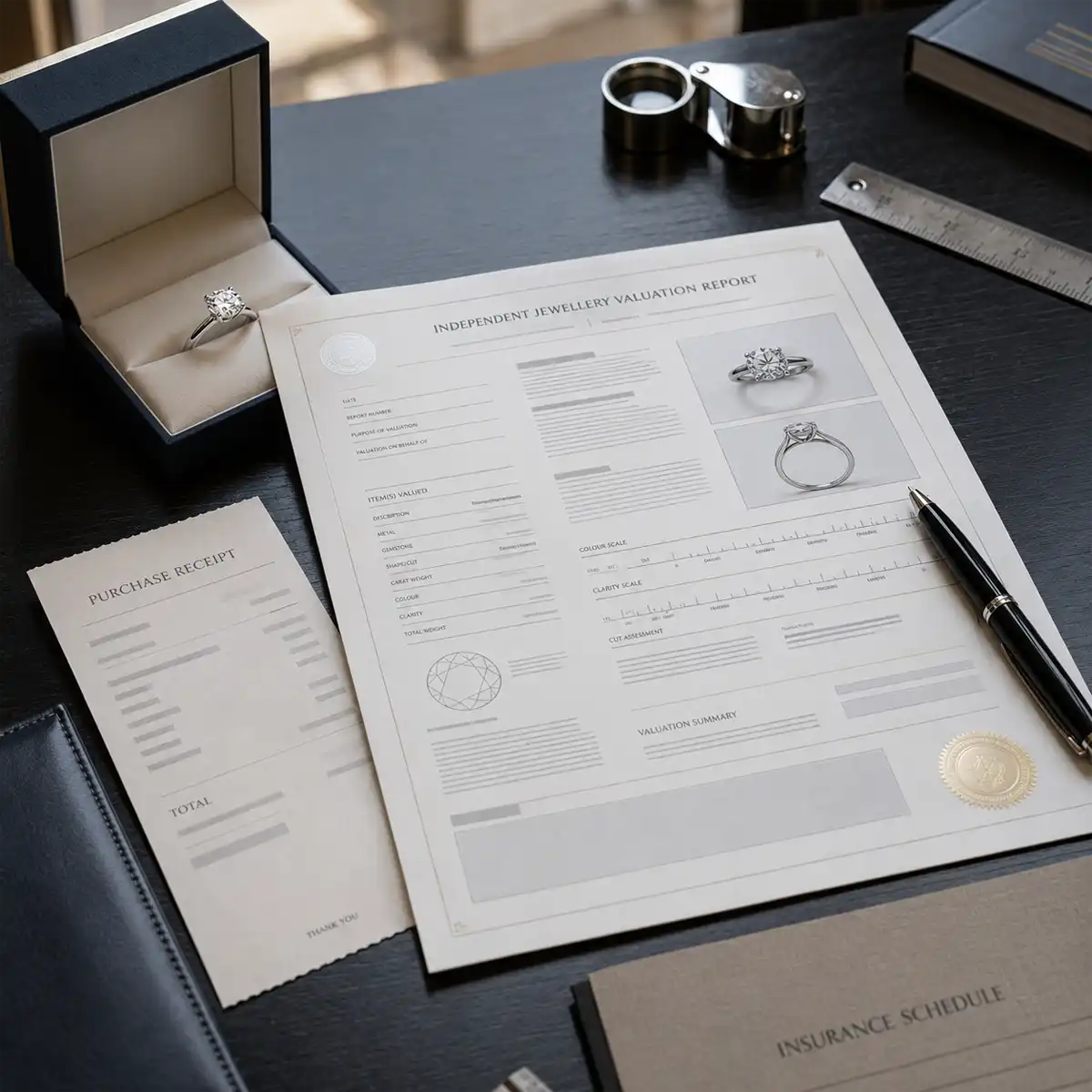
The valuer's job is to identify the piece accurately, describe it in enough detail that it could be replaced like for like, assess the stones and the metal independently of any prior documentation, photograph it from multiple angles, and arrive at a defensible replacement value supported by current market data. A good valuation report runs to several pages and includes the piece description, all measurable specifications, photographs, the valuer's qualifications and signature, and an explicit statement of valuation purpose and date. It is a working document for an insurer, not a marketing piece.
Why the valuer should not be the selling jeweller
The single most important principle in valuation is independence. The valuer should not be the same business that sold you the piece. A selling jeweller has a commercial interest in a high valuation figure, which can flatter the perceived value of the purchase, but a high valuation also increases the insured-sum and the premium the buyer pays every year for the life of the policy. The insurer in the event of a claim is not bound by an inflated valuation; they will replace the piece at the actual market level, not the inflated figure, which means the buyer has been paying excess premium for years without protection. Conversely, an undervaluation leaves the buyer underinsured.
The independent valuer has no such conflict. Their fee is for the work, not the figure, and their professional reputation depends on figures that hold up against the market. NAJ-registered valuers, the practitioners certified by the National Association of Jewellers under the Institute of Registered Valuers standard, are required to follow documented methodology and to refresh their qualifications regularly. The IRV credential is the recognised UK standard, and an IRV valuer's report is the document insurers expect to see for high-value pieces. Hatton Garden has several IRV-registered practitioners, some operating from independent valuation premises in the quarter and some practising on a peripatetic basis from professional offices across central London.
How a Hatton Garden valuation appointment works
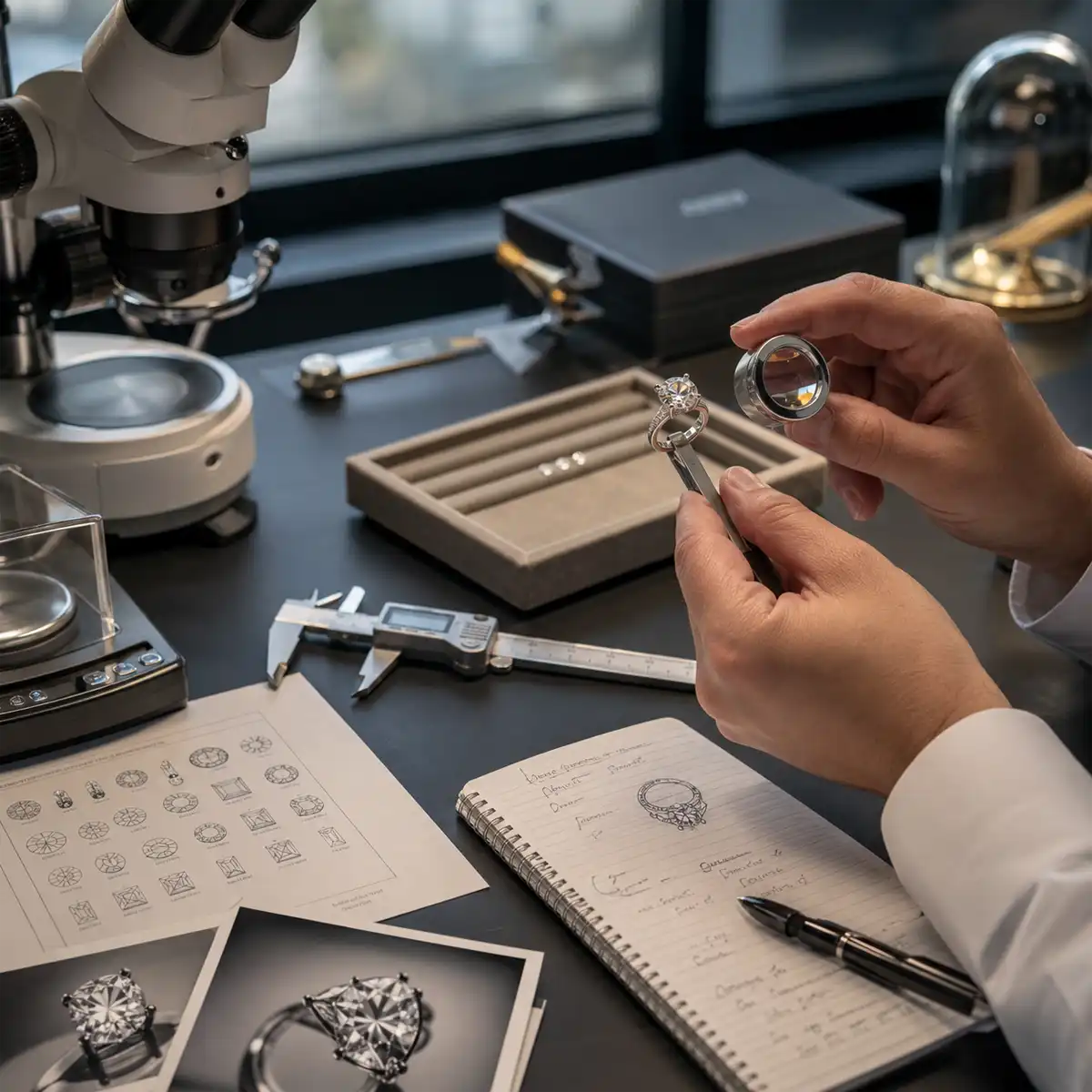
The typical independent valuation appointment in Hatton Garden takes 45 minutes to 90 minutes for a single piece, depending on complexity. The piece is examined under magnification, the stones are gauged and weighed where loose-stone access is possible, the metal is tested if any uncertainty exists about fineness, the hallmarks are read and recorded, and detailed photographs are taken. For a piece with original purchase documentation and certification, the valuer cross-references the originals against the piece in front of them and notes any discrepancies. The report is typically delivered within 5 to 10 working days of the appointment, with the original sent to the buyer and a copy retained by the valuer for their records.
The fee for an insurance replacement valuation in Hatton Garden typically depends on piece complexity and the valuer's professional standing rather than being a fixed price, and buyers should request a fee quote in advance with the valuation purpose stated. Some valuers offer fixed-fee structures for straightforward pieces and tiered fees for complex multi-stone or antique work. The fee is paid for the valuation regardless of the figure that emerges, which is the practical guarantee of independence.
What to look for in the valuation report
A serious insurance valuation report should include the following components, and a buyer should check that all are present before accepting the report. A clear statement of valuation purpose, with the date and the valuer's signature. The valuer's full qualifications and professional registration number. A detailed description of the piece, including the metal type and fineness, the stones with their measurements and assessment grades, the setting type, and any maker's marks or hallmarks read in person. Photographs from at least three angles, with the piece displayed against a neutral background and with a scale reference. An assessment of the centre stone supported by either an original certificate referenced by report number or by the valuer's own gemmological assessment.
The report should also include a clear statement of replacement value with the basis explained. A figure stated as insurance retail replacement should reference the current market for like-for-like replacement, and the report should note any factors that affect the figure, such as the rarity of a coloured stone of specific origin or the period status of an antique piece. A report that gives a single figure with no supporting methodology is a weak report and should be returned for revision or replaced with a stronger valuer's work.
How often to refresh the valuation
Insurance valuations should be refreshed every three to five years as standard practice, and immediately after any significant market shift or repair to the piece. Gold and platinum prices have moved substantially across 2024 and 2025, with gold reaching new highs in spot terms, which means any valuation written before mid-2024 is likely to be materially behind the current replacement cost on a metal-heavy piece. Diamond prices have moved less consistently, with natural diamond replacement values relatively stable and lab-grown diamond replacement values having fallen substantially, which has implications for valuations written before the lab-grown pricing shift fully worked through the market.
A buyer should make a calendar note for valuation refresh at the time the original is issued. The refresh is typically less expensive than the initial valuation, because the piece description, photographs, and stone assessments are mostly carried forward and only the market reference needs updating. A 2025 refresh of a 2020 valuation on a gold-heavy piece is likely to show a substantially higher replacement figure than the original, reflecting the metal price movement, and a buyer who has not refreshed is likely underinsured against current replacement cost.
When the valuation and the receipt disagree
It is common for an independent valuation to come in either higher or lower than the original purchase price. A figure higher than the purchase price typically reflects the Hatton Garden pricing structure, where the buyer paid less than the open-market retail equivalent for the reasons discussed in our pricing article. A figure lower than the purchase price can reflect inflated retail pricing at the point of sale, market changes since the purchase, or specific characteristics of the stones that affect their replacement value. Neither outcome is necessarily a problem, but both deserve discussion with the valuer.
A valuation that comes in substantially below the purchase price on a piece bought recently is worth investigating carefully. Ask the valuer to walk you through the reasoning and the market references used. A 2024 or 2025 valuation on a 2024 purchase that shows a 30% gap is a question to put to the original jeweller. Most reputable Hatton Garden jewellers will discuss the gap professionally and explain their pricing, and most will support the buyer in understanding the independent figure. A jeweller who reacts defensively to the question is one to note for future reference.
Fun fact: The National Association of Jewellers Institute of Registered Valuers standard, introduced in its modern form in 2010, requires registered valuers to maintain continuing professional development hours every year and to be subject to peer review of their work, making the IRV the most rigorous independent jewellery valuation credential in the UK market.
Common questions about jewellery valuation in Hatton Garden
A snippet-ready answer for buyers researching the post-purchase valuation process reads as follows. An independent jewellery valuation in Hatton Garden is a documented professional opinion of replacement value commissioned from a valuer who is not the selling jeweller. NAJ-registered valuers holding the IRV credential are the recognised UK standard, and a valuation appointment typically takes 45 to 90 minutes per piece with a written report delivered within 10 working days. Insurance valuations should be refreshed every three to five years and immediately after market shifts in gold or platinum prices.
Buyers sometimes ask whether the original certification from GIA, IGI, or another lab is enough on its own. The honest answer is no. The lab certificate covers the stone but does not value the finished piece, and the figure required for insurance is the replacement value of the entire ring including setting, workmanship, and current market. The lab certificate is an input to the valuation, not a substitute for it.
Conclusion
A buyer who commissions an independent ring valuation within three months of collecting a Hatton Garden purchase has done the single most important post-purchase task. Ask the selling jeweller for IRV-registered valuer recommendations but commission the work yourself rather than going through the jeweller. Read the report carefully when it arrives, check that the piece description matches the ring in your hand, verify the stones and metal references against any original documentation, and use the replacement value as the insured-sum on your jewellery policy. Make a calendar note for refresh in three to five years, and refresh sooner if metal prices move substantially. The independent valuation costs a small fraction of the piece itself and protects the buyer's interest for the lifetime of the policy. This is the foundation of long-term ownership.
how the Hatton Garden heist changed jewellery security
Continue Reading
The Hatton Gazette
Delivered weekly to your inbox
Subscribe for the latest from Hatton.