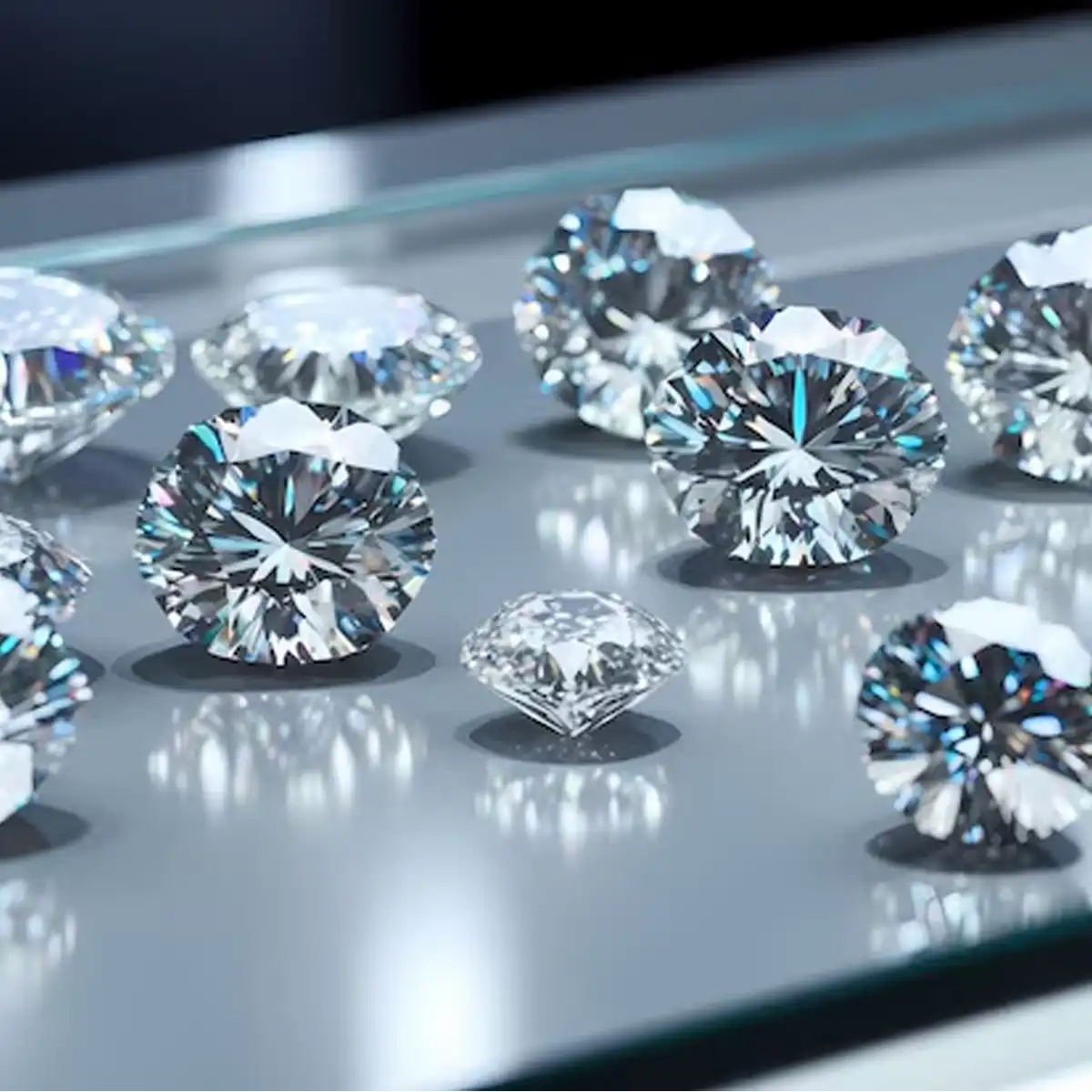
Walk the streets of Hatton Garden in 2025, and you feel a quiet tension between continuity and change. Behind traditional shopfronts and in state-of-the-art workshops, the same questions surface at every consultation. Lab-grown diamonds are now visually indistinguishable and chemically identical to mined stones. They sparkle under the loupe, score a perfect 10 on the Mohs scale, and carry grading reports that mirror the language of the 4 Cs. The science is no longer the point of contention. The real questions concern value, legacy, and the purpose of a jewel that may live on a finger for decades and be passed down through generations.
Clients ask whether Hatton Garden engagement rings set with laboratory stones deliver genuine long-term value. Collectors ask whether a purchase made today will appreciate or at least hold its price. Bench jewellers weigh the precision benefits of controlled-growth crystals against the narrative power of a gem formed over geological time in the earth. This feature unpacks the debate for buyers who want both clarity and confidence. It explains how the market has moved, what the workshop cares about, and why the conclusion for 2025 is less a verdict of replacement and more a case for informed co-existence.
Market transformation: The 2025 figures that matter
The share of lab-grown engagement rings has surged, driven by cost savings that typically range from 60% to 80% compared with a natural diamond of equivalent cut, colour, and clarity. That headline explains consumer adoption speed better than any other factor. Price elasticity in engagement purchasing is extremely real. When a 1.50-carat laboratory stone sits beside a 0.90-carat mined stone at the same budget, many buyers instinctively gravitate toward the larger carat weight.
Hatton Garden mirrors this shift but with essential nuances. Most retailers now offer a complete line of lab-grown diamonds while continuing to stock mined stones and vintage pieces. At the premium end, bespoke houses and antique specialists still lean towards natural or period gems. The reason is not technical parity. It is the interplay of provenance, scarcity, and future liquidity. A GIA certificate on a rare natural stone anchors price history in a way that a recent IGI-certified laboratory stone cannot yet replicate.
The uncomfortable truth of price depreciation
Laboratory production is industrial and iterative. As Chemical Vapour Deposition becomes more efficient and as supply scales, unit costs fall. Retail prices have adjusted in response since 2020 and continue to do so as supply chains improve. The effect is simple. A natural diamond can retain or increase its value over long cycles. A lab-grown stone behaves like a technology product that becomes cheaper to make. For investors and buyers who care about potential resale, this is the decisive difference.
None of this undermines the purchase for those who value size, brightness, and near-term affordability. It does, however, frame expectations. A lab-grown diamond is best viewed as a luxury consumer good that delivers beauty and scale today rather than as an investment asset designed to preserve capital over decades.
Technical detail and craftsmanship: What changes in the workshop
From the bench perspective, origin is secondary to cut potential, structural integrity, and how a stone behaves in setting. On those criteria, laboratory stones often present real advantages.
Manufacturing CVD and HPHT in practice
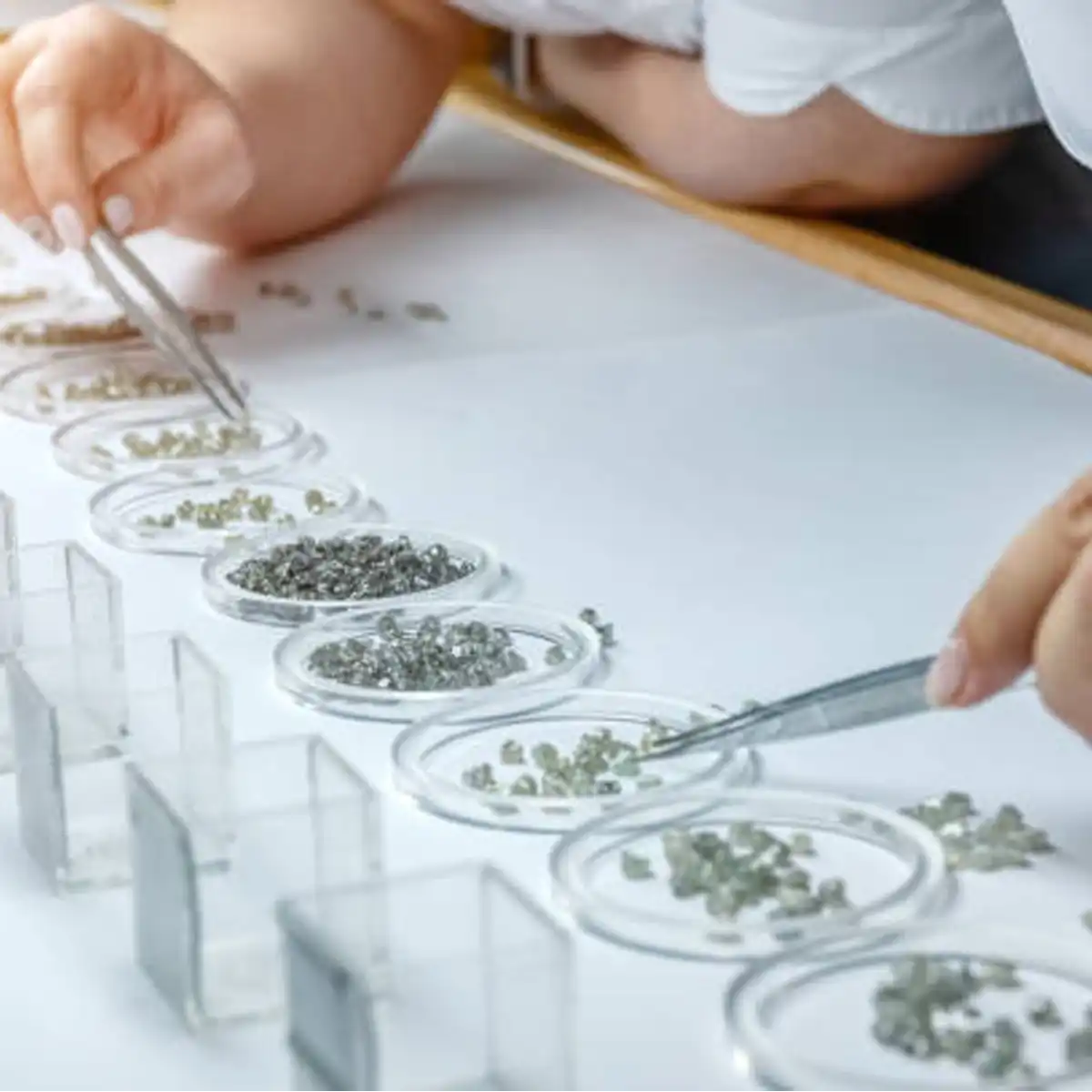
Two growth methods dominate. High-pressure, High-Temperature conditions replicate conditions in the mantle. CVD grows diamond layer by layer in a reactor. In 2025, CVD supplies the majority of stones seen in urban ateliers. Growth lines and internal strain patterns may be visible under specialised equipment, which is why responsible disclosure and laser inscription are non-negotiable. For setters and polishers, the consistent quality of a good CVD crystal supports exacting symmetry and crisp facet junctions.
The bespoke touch precision at scale
Controlled growth can mean fewer unpredictable inclusions and a more consistent crystal habit. That steadiness suits micropavé and ultra-precise halo work where even a fraction of a millimetre matters. In custom projects, lapidaries can pursue Hearts and Arrows patterns with less waste and tighter tolerances. For clients, this translates to sharper scintillation and the clean geometry sought in contemporary designs.
Certification and trust
Both natural and laboratory stones are graded on the 4 Cs. The GIA remains the reference for mined diamonds, while the IGI has become the primary grader for lab-grown. Clear labelling is a legal and ethical requirement. Reports must state the origin and include wording such as "Laboratory-Grown." Each stone should bear a laser inscription that matches the grading report. Reputable retailers in Hatton Garden will also itemise origin on invoices and on digital product pages to preserve transparency throughout the life of the jewel.
Value and succession: What genuinely lasts
The family heirloom challenge
Antique and period jewels embody survival and rarity. A Georgian cluster or an Art Deco step-cut carries a story that cannot be duplicated. Natural diamonds with documented provenance have long price histories and a community of auction houses and dealers who understand them. That ecosystem reinforces value through cycles.
The investment position in 2025
For buyers who want potential capital preservation, rare mined stones and certified antique pieces remain the relevant categories. Laboratory stones do not meet that brief. They excel elsewhere. They expand design possibilities within accessible budgets. They let a client prioritise carat size or a specific modern look without stretching beyond comfort. Measured against those goals, they are excellent buys.
Sustainability and ethics: The dual perspective
Ethical arguments have influenced the uptake of lab-grown stones because they avoid the extraction of natural stones. The picture is more complex when energy inputs are considered. Laboratory growth consumes significant power, especially HPHT, while CVD depends on continuous reactor operation. The natural diamond sector has tightened standards on responsible sourcing, with chain-of-custody programmes and origin reporting now common among reputable suppliers.
For buyers who care deeply about ethics, the anchor is not a single origin claim but documented transparency across the supply chain. Request disclosure, look for reputable certifications, and work with retailers that publish their sourcing policies. In short, focus on verifiably responsibly sourced diamonds rather than easy slogans.
Price and budgeting: How to weigh options without regret
A rational budget conversation begins with intent. If you want the largest possible stone at a set spend, a lab-grown engagement ring will deliver scale. If you want a piece that may hold value for a future trade or upgrade, a mined stone with strong grading and excellent cut quality is the safer path.
Think in total ring budgets, not just per-carat costs—mounting, metal weight, and setting complexity all matter. Micropavé and fine halos favour the consistent melee available in laboratory origin. Solitaires and three-stones that echo historic silhouettes often feel most at home with mined centres and carefully matched side stones.
Popular comparison example
A £4,000 budget could secure a 1.60 carat G VS1 lab-grown round with Ideal cut in a classic platinum solitaire, or a 0.90 carat F VS2 mined round with Excellent cut in the same mount. The visual presence differs markedly. The long-term value profile does not. Choose with eyes open to both truths.
Design and wearability: What suits lab-grown and what suits mined
Where lab-grown shines
Contemporary, graphic designs benefit from laboratory uniformity and plentiful availability. Think knife-edge solitaires, low-profile bezels, double halos, and sleek tennis bracelets with tight colour and clarity matching. For daily wear, consider settings with protective bezels or semi-bezels that sit low on the hand and reduce snagging.
Where natural owns the brief
Pieces conceived as future heirlooms tend to lean towards mined stones and significant coloured gems. Transitional-cut diamonds for vintage-inspired rings, Asscher and emerald cuts with dramatic step reflections, and one-of-a-kind three-stone compositions play to the romance and scarcity baked into the mined narrative. If you envision an auction catalogue entry decades from now, mined is the logical centrepiece.
Clarity on disclosure: What to see on paper and on the stone
Your documentation should include
- Grading report that states the origin with precise wording.
- Matching laser inscription on the girdle that repeats the report number and identifies laboratory origin when relevant.
- An itemised invoice that records whether the stone is natural or laboratory-grown.
- Metal hallmark and maker's mark for the ring itself.
If a retailer cannot produce the above, step back. Transparent paperwork protects you at sale, at resize, and at any future valuation.
Maintenance and protection Care guides for long life
Diamond is exceptionally hard but not indestructible. Whether mined or laboratory-grown, a ring deserves basic care.
- Clean at home with warm water, gentle detergent, and a soft brush.
- Avoid abrasive cleaners that can haze metal or dull pavé.
- Check claws annually, primarily on low-profile settings and micropavé bands.
- Ensure you purchase at value and update valuations when metal prices or comparable retail values change.
The same workshop skills secure both origins. A competent setter treats a laboratory stone with the same respect as a mined one.
How to buy in Hatton Garden: A practical path to confidence
- Define your objective. Decide whether you care most about size, sparkle, longevity of value, or a balance.
- Set the budget in full. Include mount, metal, and potential resizing costs.
- Compare like with like. View mined and lab-grown in the same lighting and the same mount style.
- Read the reports. Look for Excellent cut in mined stones and top-tier symmetry and polish in both origins.
- Confirm disclosure. Check the IGI or GIA report, the laser inscription, and the ring documentation.
- Choose a design that suits your lifestyle. Low settings travel better. High cathedral shoulders show more stone but require more care.
- Work with a bench-led retailer. In Hatton Garden, the difference often rests in the workshop, not the window.
Fun fact: The historic pavements of Hatton Garden have supported the diamond trade since the 17th century, yet the first commercial lab-grown diamonds did not appear until the mid-20th century in industrial applications before entering fine jewellery much later.
Frequently asked buyer questions: Short answers with real utility
Are lab-grown diamonds real?
Yes. They are pure carbon crystals with the same optical, physical, and chemical properties as mined stones.
Can I insure a lab-grown engagement ring?
Yes. Reputable insurers treat them like any other diamond, based on purchase value and documentation.
Will a lab-grown diamond pass a tester?
Yes. Diamond testers read thermal and electrical conductivity. Both origins pass.
Can I upgrade later
You can always redesign a setting. For trade-in value, mined stones have a clearer secondary market. Discuss upgrade policies with your retailer before purchase.
Does lab-grown mean flawless?
No. Growth can introduce inclusions and colour just as in nature. Grading still matters. Prioritise cut quality for beauty, on the other hand.
The Hatton Garden perspective: Co-existence rather than replacement
For clients of Smith Green Jewellers, the advice in 2025 is pragmatic. Laboratory stones offer scale, brightness, and modern design freedom at an accessible budget. They are excellent for clients who want visual impact, ethical confidence through full disclosure, and immediate savings without compromising sparkle. Natural diamonds retain an irreplaceable role as symbols of legacy, potential stores of value, and anchors of antique and collectable jewellery. They remain the intuitive choice for those who prize rarity and long price histories.
Both paths can be correct. The key is alignment between purpose and purchase. If you want a dramatic 2.00 carat solitaire with impeccable Hearts and Arrows symmetry at a defined spend, a laboratory origin serves you well. If you want a jewel that your heirs may consign to auction decades hence, mined origin remains the stronger brief.
Conclusion: How to decide with confidence
The 2025 debate is not a binary contest but a more precise segmentation of purpose. Lab-grown diamonds democratise scale and precision, bringing larger stones and ambitious settings within reach. Natural diamonds continue to represent rarity, longevity, and the narrative of deep time. Hatton Garden has adapted to offer both with full disclosure and workshop-led quality.
Choose as you would choose a tailored suit. Fabric, cut, purpose, and future wear all matter. If the goal is immediate presence and contemporary design, a laboratory origin fits easily. If the goal is permanence and intergenerational meaning, natural origin carries the story you want. As the old saying goes, buy well and buy once.
Continue Reading
The Hatton Gazette
Delivered weekly to your inbox
Subscribe for the latest from Hatton.