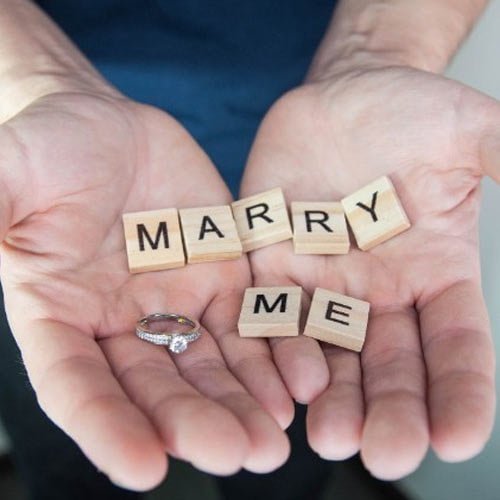
Western marriage proposals follow a familiar script: a quiet word with the family, a knee lowered to the ground and, of course, a sparkling ring. Many couples shopping in Hatton Garden, London's historic diamond quarter in EC1N, pause to wonder where these proposal traditions actually come from. The jewellers around Greville Street and Leather Lane field the question often, usually while a buyer chooses an engagement ring. The customs carry real history, some charming and some best left in the past. Understanding their origins makes it easier to keep what feels meaningful and quietly retire what no longer fits modern life.

Why people ask permission
The tradition of asking a parent for permission to marry dates from an era when women could not enter legal contracts of their own and were treated, in law, as dependants. The gesture began as a transaction rather than a courtesy.
Today that framing is rightly seen as outdated, yet the custom survives in a gentler form. Many couples treat it as a sign of respect and a warm way of welcoming a wider family into the celebration.
Why one knee
Lowering to one knee is read as a ceremonial and openly vulnerable gesture, signalling the weight of the moment. It echoes older traditions of kneeling to show devotion and sincerity.
There is a practical side too. The position holds the ring at a flattering angle, letting the stone catch the light just as the question is asked.
Why a ring at all
Rings began as a betrothal gift and a visible sign of commitment, with the circle long understood as a symbol of continuity. Wealthier families used precious metal and stones, while poorer couples once exchanged humble tokens such as thimbles.
Customs continue to shift. More people now choose rings for partners of any gender, and a growing number explore bespoke jewellery design so the piece reflects their own story rather than a template.
Choosing a ring in Hatton Garden
With dozens of independent shops between Farringdon, Holborn and Chancery Lane, the quarter remains the natural place to begin. Specialists here can source loose stones, advise on settings and explain certification before you commit.
Ask for a GIA or IGI report on any diamond and look for the London Assay Office hallmark on the band. Whether you want a classic solitaire or something entirely your own, the makers near Camden and Holborn are well placed to help.
Fun fact: Couples without means once exchanged thimbles, and some later sliced off the top to fashion a simple wedding band.
Continue Reading
The Hatton Gazette
Delivered weekly to your inbox
Subscribe for the latest from Hatton.