Buying a diamond ring can be difficult because two stones that appear almost identical at first glance can have very different characteristics and prices. Carat weight tends to receive the most attention, but size alone says relatively little about how attractive a diamond will look once it is set in a ring.
A better approach is to understand the basic quality factors, decide which characteristics matter most to you, and check the documentation before committing to a purchase. Whether the ring is for an engagement, anniversary, or another occasion, these seven checks can help you compare your options more confidently.
1. Understand the Four Cs Before Comparing Prices
The traditional starting point for evaluating diamonds is the Four Cs: cut, color, clarity, and carat weight. These characteristics interact, so concentrating exclusively on one can produce misleading comparisons.
Cut affects how effectively a diamond interacts with light and is particularly important to its visual appearance. Color grades indicate the presence or absence of color in diamonds within the standard color-grading range, while clarity considers internal characteristics and surface features. Carat describes weight rather than a diamond's physical dimensions.
The best balance depends on priorities. A slightly lower clarity grade, for example, may have little visible effect if inclusions cannot easily be seen without magnification. Meanwhile, sacrificing too much cut quality in order to obtain a heavier diamond can produce a stone that appears less lively.
Compare diamonds as complete packages rather than assuming the largest carat figure automatically represents the strongest purchase.
2. Consider Where and How You Are Buying
Diamond rings are sold through independent jewelers, large chains, specialist dealers, and online stores. Each purchasing environment has advantages, but it also changes what needs to be checked before payment.
Buying digitally has become normal across almost every consumer category. The same smartphone can be used for banking, travel reservations, entertainment through a mobile casino app, and purchases worth thousands of dollars. A high-value jewelry transaction, however, deserves more scrutiny than an ordinary online order.
Check whether the seller provides detailed grading information, clear photographs or videos, secure payment options, insured shipping, and an understandable returns policy. Determine how long you have to inspect the ring after delivery and whether resizing or customization affects your right to return it.
For an expensive purchase, also establish what happens if the package is lost or damaged in transit. The seller should be able to explain the process rather than leaving responsibility unclear.
3. Check the Diamond Grading Report
A grading report provides independent information that can help buyers evaluate whether a diamond matches the characteristics claimed by the seller. The Gemological Institute of America established the widely used Four Cs system and provides detailed explanations of the factors used to assess diamond quality.
For significant purchases, ask which laboratory issued the grading report and verify the report number through that organization's official database when possible. The document should correspond to the diamond being sold rather than merely illustrating what a similar stone might receive.
A report can contain considerably more information than the basic Four Cs. Depending on the diamond and laboratory, it may include measurements, proportions, polish, symmetry, fluorescence, and diagrams showing clarity characteristics.
Remember that a grading report is not necessarily the same thing as an appraisal. Grading describes characteristics of the diamond, while an appraisal generally estimates monetary value for a particular purpose, such as insurance.
4. Look Beyond Carat Weight
Carat is easy to understand because it provides a single number, which is partly why it dominates many conversations about diamond rings. But two diamonds with the same carat weight can look noticeably different.
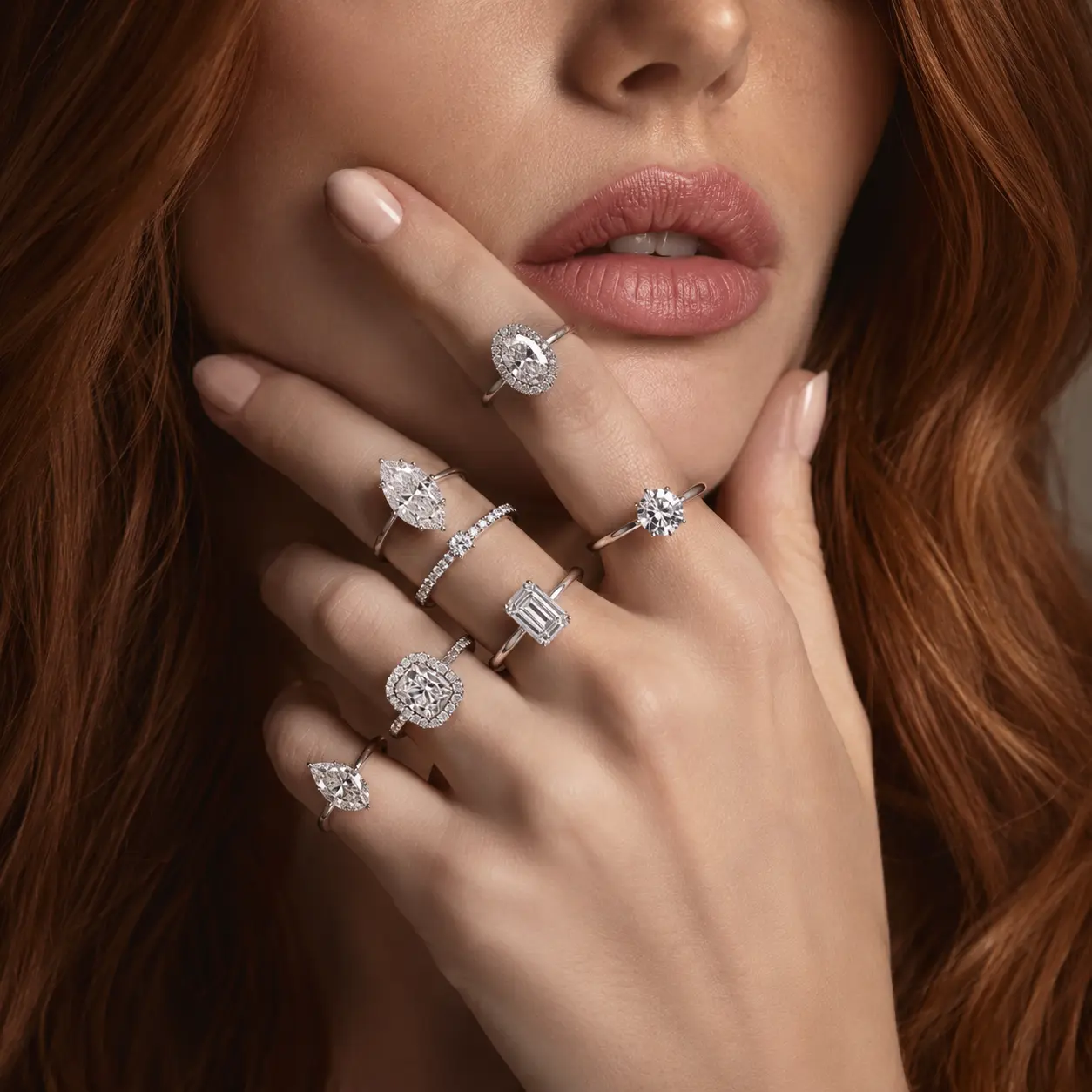
The way weight is distributed affects visible size. A poorly proportioned stone may carry additional weight in areas that contribute little to its face-up appearance. Shape also influences perceived size, with elongated forms such as oval, pear, and marquise diamonds often presenting differently from round stones of comparable weight.
Setting design can alter perception too. A halo can make the overall ring appear larger, while a delicate band may emphasize the center stone. Conversely, a heavy setting can visually compete with a smaller diamond.
Instead of asking only how many carats a diamond weighs, look at its actual measurements and proportions. Decide whether your priority is physical weight, visible size, brilliance, or a balance among these factors.
This approach can also reveal better value around popular carat thresholds, where relatively small differences in weight may produce larger differences in price.
5. Inspect the Setting and Metal
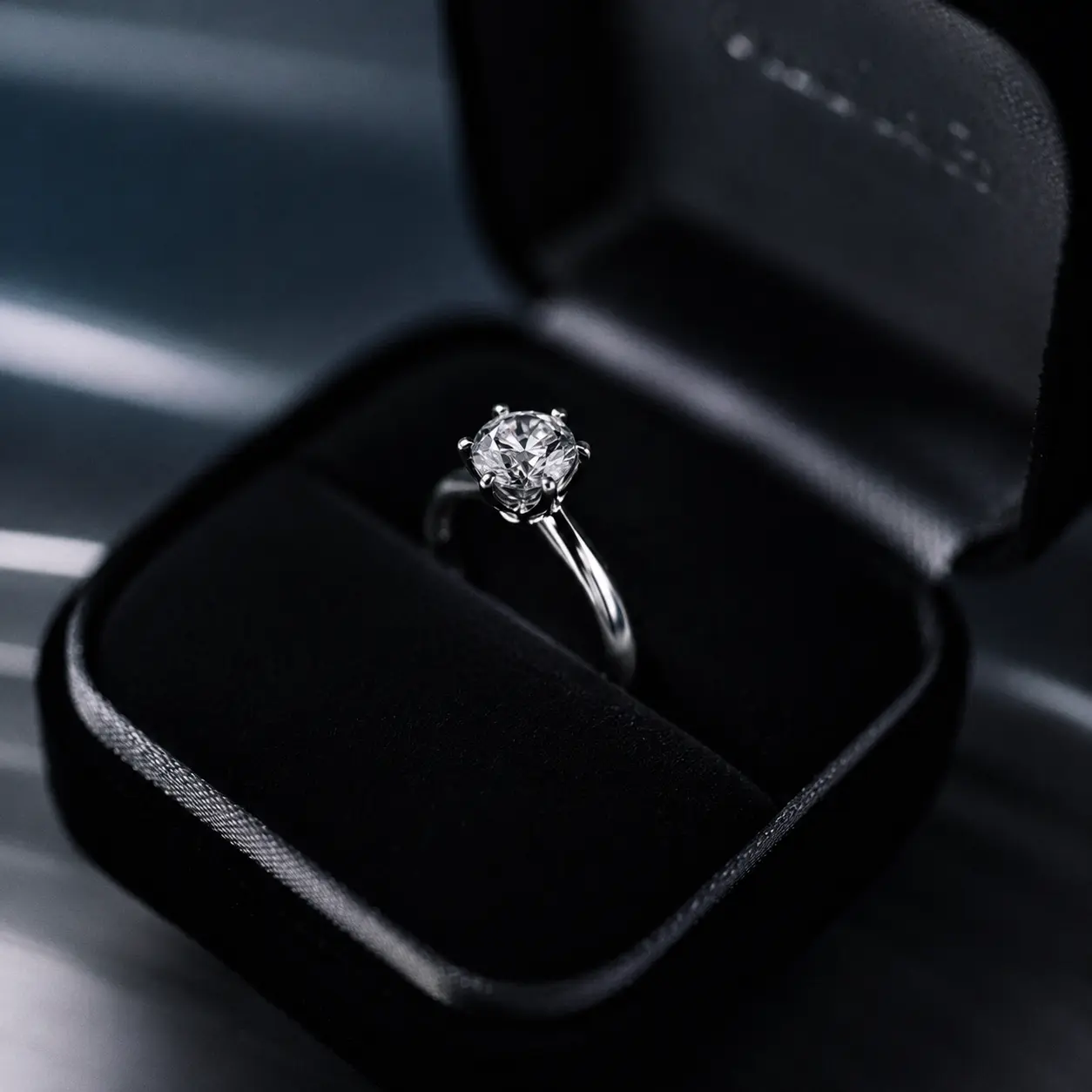
A beautiful diamond still needs a secure setting. Prongs should hold the stone firmly without appearing uneven or unnecessarily obstructing it. Depending on the design, bezel and other setting styles can provide different combinations of security and appearance.
Consider how the ring will actually be worn. Someone who regularly works with their hands may prefer a lower-profile design that is less likely to catch on clothing or objects. An elaborate high setting may be attractive but less practical for certain lifestyles.
Metal choice matters as well. Platinum, yellow gold, white gold, and rose gold differ in appearance, maintenance, durability, and price. White gold may require periodic maintenance to preserve its preferred finish, while platinum develops its own surface characteristics with wear.
If the ring will eventually sit beside a wedding band, consider the two pieces together. Certain settings prevent another ring from sitting flush, something that may not be obvious when viewing the engagement ring by itself.
6. Know Whether the Diamond Is Natural or Laboratory-Grown
Laboratory-grown diamonds have significantly expanded the choices available to buyers. They have essentially the same chemical composition and crystal structure as natural diamonds, but their origin and market pricing differ.
The distinction should always be clearly disclosed. Buyers should know exactly what they are purchasing rather than relying on ambiguous terms that imply one origin while describing another.
Laboratory-grown diamonds can make larger sizes or higher specifications accessible within a particular budget. Natural diamonds may appeal to buyers who place importance on geological origin, rarity, or traditional preferences.
Neither decision should be based solely on assumptions about what an engagement ring is ‘supposed’ to contain. Consider budget, personal values, appearance, and expectations around long-term ownership.
Most importantly, ensure the documentation accurately identifies the diamond's origin.
7. Check the Return, Resizing, and Insurance Details
The final checks should concern what happens after the purchase. Ring sizing is not always perfect on the first attempt, particularly when the purchase is a surprise. Ask whether resizing is included, how many adjustments are possible, and whether the design limits how much the size can be changed.
Read the return policy before paying. Customized or engraved rings may have different conditions from standard inventory. Understand deadlines and whether refunds are provided to the original payment method or only as store credit.
For a valuable ring, insurance may also be worth considering. Keep receipts, grading documentation, photographs, and any appraisal required by the insurer. Find out whether coverage includes loss, theft, accidental damage, and incidents occurring while travelling.
A diamond ring should not be judged by a single specification or by how impressive it looks under jewelry-store lighting. Quality, documentation, practical design, seller policies, and the needs of the person wearing it all matter.
Checking those details before purchasing makes it easier to distinguish genuine value from impressive marketing and choose a ring that still feels like the right decision long after the initial excitement has passed.
Continue Reading
The Hatton Gazette
Delivered weekly to your inbox
Join 12,000+ Hatton insiders