Most buyers walk into a diamond purchase with the order of importance upside down. They ask first about carat weight, then reach for the highest clarity grade they can afford, and treat cut as a detail. After 20 years around the Hatton Garden trade, I would reverse that completely. The 4Cs are not a scoreboard where higher is always better. They are a set of trade-offs, and the real skill is knowing which to spend on and which to let go.
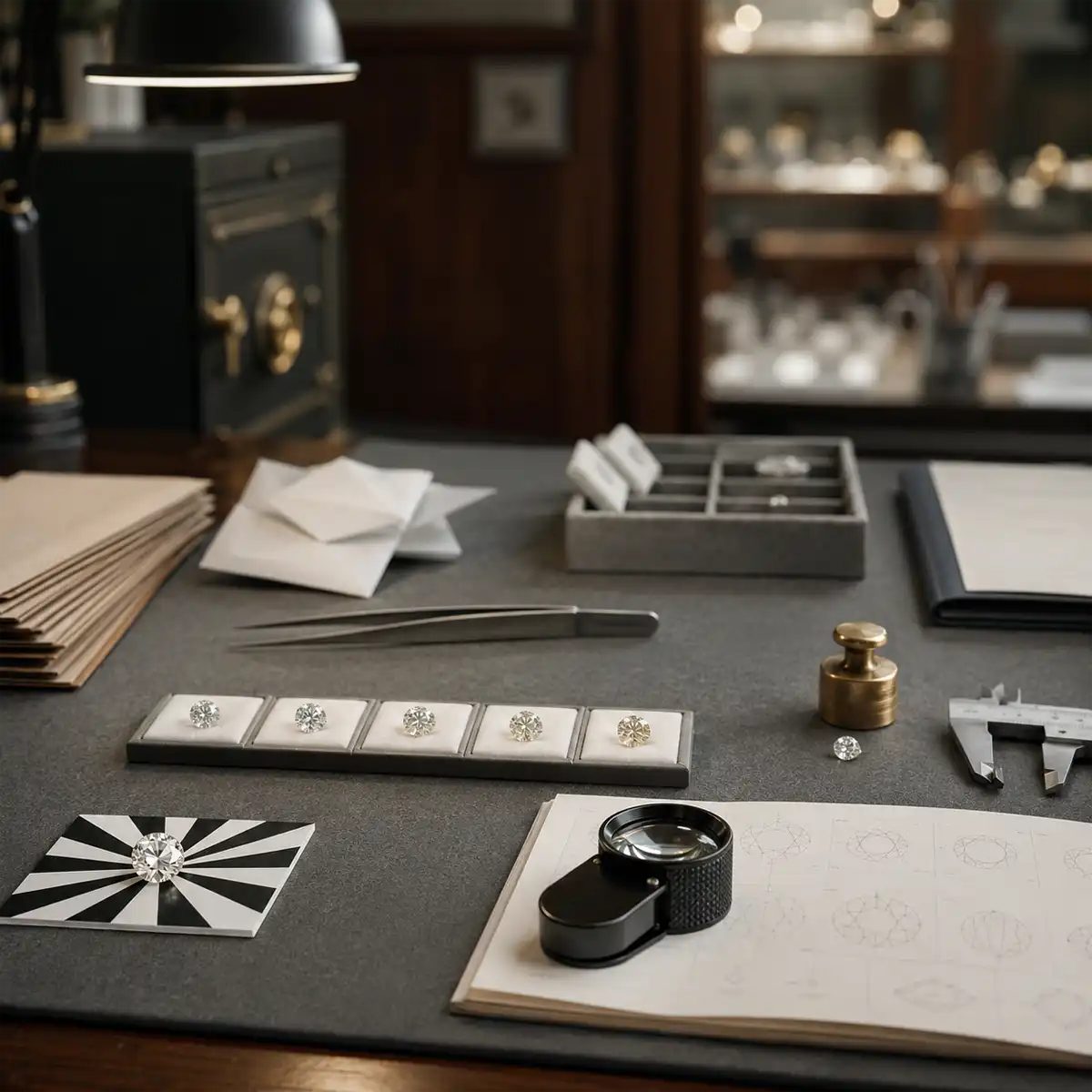
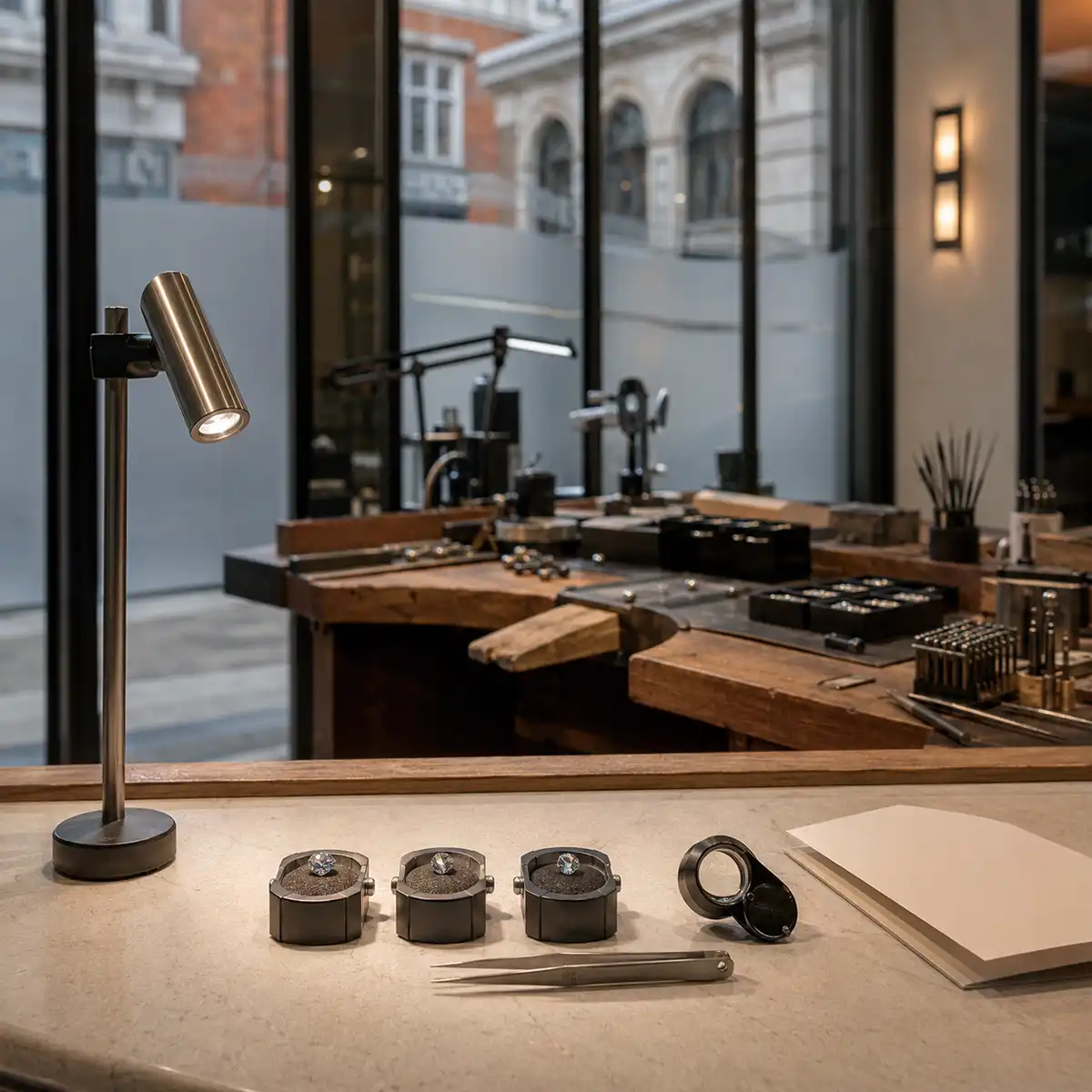
That judgement is easier to make in Hatton Garden than almost anywhere in London. A short walk from Chancery Lane station, on the benches off Greville Street and in the rooms near Farringdon, you can put two stones side by side under the same loupe and the same light. A grading report describes a diamond. Seeing it does something a report cannot.
What the 4Cs actually mean for a Hatton Garden buyer
The 4Cs are cut, colour, clarity and carat, and they describe four separate things a diamond can be judged on. Cut measures how well the stone returns light. Colour measures how little colour it shows. Clarity measures internal and surface flaws. Carat measures weight, not size. The point is not to maximise each one but to decide where your money buys visible difference and where it buys a certificate.
Fun fact: the GIA colour scale begins at D rather than A because earlier, looser grading systems had already used A, B and C, and the new scale started lower deliberately to break with them.
Why cut should usually come first
Cut is the one C that human hands control rather than nature, and it does more for how a diamond looks than any other factor. A stone can be high colour and high clarity and still look dull if it is cut to save weight rather than to return light. A well-cut diamond, by contrast, will face up brighter and more lively than its grades alone suggest.
For a round brilliant, look past the single word grade and ask for the table and depth percentages. A stone cut for maximum brilliance sits within a fairly narrow range, and a jeweller in the quarter can show you why a stone outside that range leaks light through the bottom. Spend here first. Cut is where a smaller budget still buys real beauty, and where overpaying on the other Cs is most often wasted.
How to read colour and clarity as a trade-off
Colour and clarity are where buyers burn money chasing grades no one will ever see. On colour, the difference between a D and a G is invisible to almost everyone once a stone is set, particularly in a white metal such as 950 platinum. Many experienced buyers settle around G to H, take the saving, and put it into cut or size.
Clarity works the same way. A diamond graded SI1 is not flawless, but if its inclusions sit where they cannot be seen with the naked eye, it is what the trade calls eye-clean, and it looks identical to a far costlier VVS stone in the ring. Ask to see the stone loose and ask where the inclusions are. A flaw under a claw is a flaw you will never notice.
Where carat fits once cut is settled
Carat is weight, and weight is not the same as the size your eye reads. A well-cut stone of slightly lower weight can face up as large as a heavier stone that has been cut deep to hold its grams. This is why buying on carat alone, the most common starting mistake, so often produces a heavy, dull stone.
There is also the question of magic numbers. Prices jump at round weights such as 1 carat and 2 carats, because demand clusters there. A stone just under a round weight, say 0.90 or 1.90, can look almost identical to the eye and cost meaningfully less per stone. A Hatton Garden jeweller working from wholesale stock can often find exactly that stone for you.
Here is the short version a buyer can act on. Spend first on cut, because it drives how the diamond actually looks; take a sensible colour around G to H and an eye-clean clarity such as SI1 or VS2; then put the remaining budget into carat, buying just below a round weight where the saving is real and the size difference is not.
How natural and lab grown change the 4Cs maths
The same 4Cs apply to lab-grown diamonds, but the maths underneath them has shifted. By 2025 the lab-grown market had matured and settled into a clear, much lower price tier, which means a buyer choosing lab-grown can reach for grades that would be extravagant in a natural stone. The trade-offs loosen because the price pressure does.
That is a genuine choice, not a trick, but it should be made with the facts in view. Natural diamonds hold a resale and value-retention position that lab-grown stones do not, and through 2026 rising gold and platinum prices have moved more of the total cost into the metal and setting regardless of which stone you pick. Neither path is wrong. The point is to know which one you are on before you let the grades pull your budget.
The single question worth asking
If you ask a jeweller only one thing, ask to see the stone loose and unmounted with its full report in your hand. A mounted diamond hides its own weaknesses, a setting can lift apparent colour, and a verbal grade with no paper behind it tells you nothing you can check later. The jeweller's willingness to hand you the loose stone and the report, and to point out the inclusions rather than around them, tells you as much about the seller as about the diamond.
A clear next step
Before you commit, book time with two or three jewellers in the quarter and bring the same budget figure to each, so you compare like with like rather than promise with promise. Ask to see every serious candidate loose, with its GIA report, and ask for the cut details on any round brilliant. Decide your priorities in advance: cut first, a sensible colour and an eye-clean clarity next, carat last and just below a round weight. A buyer who applies the 4Cs as trade-offs rather than a wish list leaves Hatton Garden with a better stone for the money, and with the confidence of having seen exactly what they bought.
Continue Reading
The Hatton Gazette
Delivered weekly to your inbox
Join 12,000+ Hatton insiders