The most common mistake buyers bring to the Hatton Garden coloured stone counters is diamond logic. Twenty years around this trade teaches that ruby and emerald in Hatton Garden are judged by different rules from diamonds, and by different rules from each other. There is no 4Cs ladder to climb here; there is colour, origin, treatment and honesty, and the buyer who understands those 4 words holds their own in any showroom in the quarter.
The quarter earns its role in this purchase structurally. Off Greville Street and along Hatton Garden itself, dealers trade loose rubies and emeralds with supply lines reaching the source markets directly, which means stones can be compared side by side before a setting is even discussed. This is buyer education, not investment commentary; what follows covers how each stone is actually judged, what treatments are normal, and which paperwork belongs with which price.
Why Buy Ruby and Emerald in Hatton Garden
Ruby and emerald reward in-person buying more than any diamond does, because their value lives in colour that photographs poorly and inclusions that must be seen. Hatton Garden concentrates loose stone dealers, setters and workshops within a few streets, so a buyer can compare stones, take advice and commission a setting without leaving EC1N.
The 2 stones also anchor opposite ends of the durability spectrum, which shapes everything downstream. Ruby is corundum at 9 on the Mohs scale, a stone built for daily wear. Emerald is beryl at 7.5 to 8 but with a fractured internal character that makes it far more delicate than its hardness suggests. The same buyer, budget and design brief lead to genuinely different advice depending on which stone is on the table.
It is also worth naming what sits at the top of this market, because it recalibrates expectations usefully. Fine unheated rubies are among the most valuable gems on earth per carat, routinely outpacing white diamonds of equivalent size at the top of the market, and exceptional Colombian emeralds are not far behind. Nobody browsing the quarter needs to shop at that altitude, but knowing the ceiling exists explains why treatment and origin move prices so dramatically at every level below it.
How the Trade Judges a Ruby
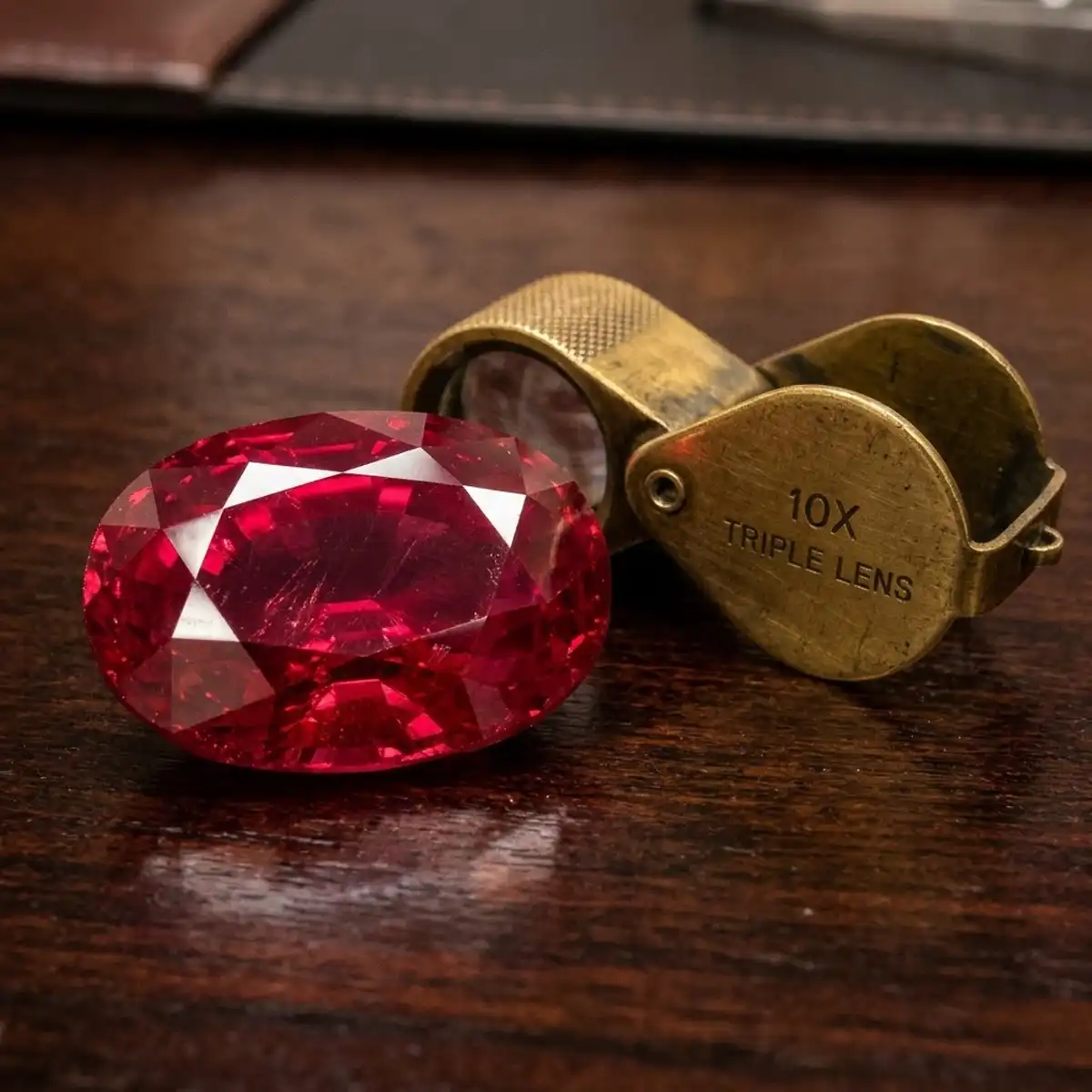
Colour carries most of a ruby’s value, and the vocabulary is precise. The red comes from chromium, and the most prized register is the pure, slightly fluorescent red the trade calls pigeon blood, a term the major laboratories now apply formally to qualifying stones. Burmese material from the Mogok region has historically defined that standard, while Mozambique has become the dominant modern source, supplying fine rubies that compete on colour at more approachable levels.
Treatment is the second axis. Heat treatment is longstanding, stable and normal for ruby, and it must be disclosed; an unheated stone with laboratory confirmation commands a substantial premium for the same reason unheated sapphires do. The disclosure that matters even more sits further down the market. Lead glass filled rubies are heavily fractured stones rebuilt with glass, permanently fragile and vulnerable to household chemicals, and they belong in a different price category entirely. Any ruby offered without a clear written treatment status is a stone to walk away from.
Inclusions are read differently here than in diamonds. Fine rutile silk can improve a ruby, softening the colour across the stone and feeding its glow, and its condition also tells a laboratory whether the stone has seen high heat. A flawless-looking ruby at a friendly price is not a bargain; it is a question that needs a laboratory answer before it needs a deposit.
How the Trade Judges an Emerald
Emerald reverses several ruby rules. The green comes from chromium or vanadium, and origin still shapes price, with Colombian material from the historic Muzo and Chivor mining districts setting the classic standard and Zambia established as the major modern source with a slightly cooler, bluish green. Colour saturation and evenness carry the value; clarity expectations are lower than for any other major gem.
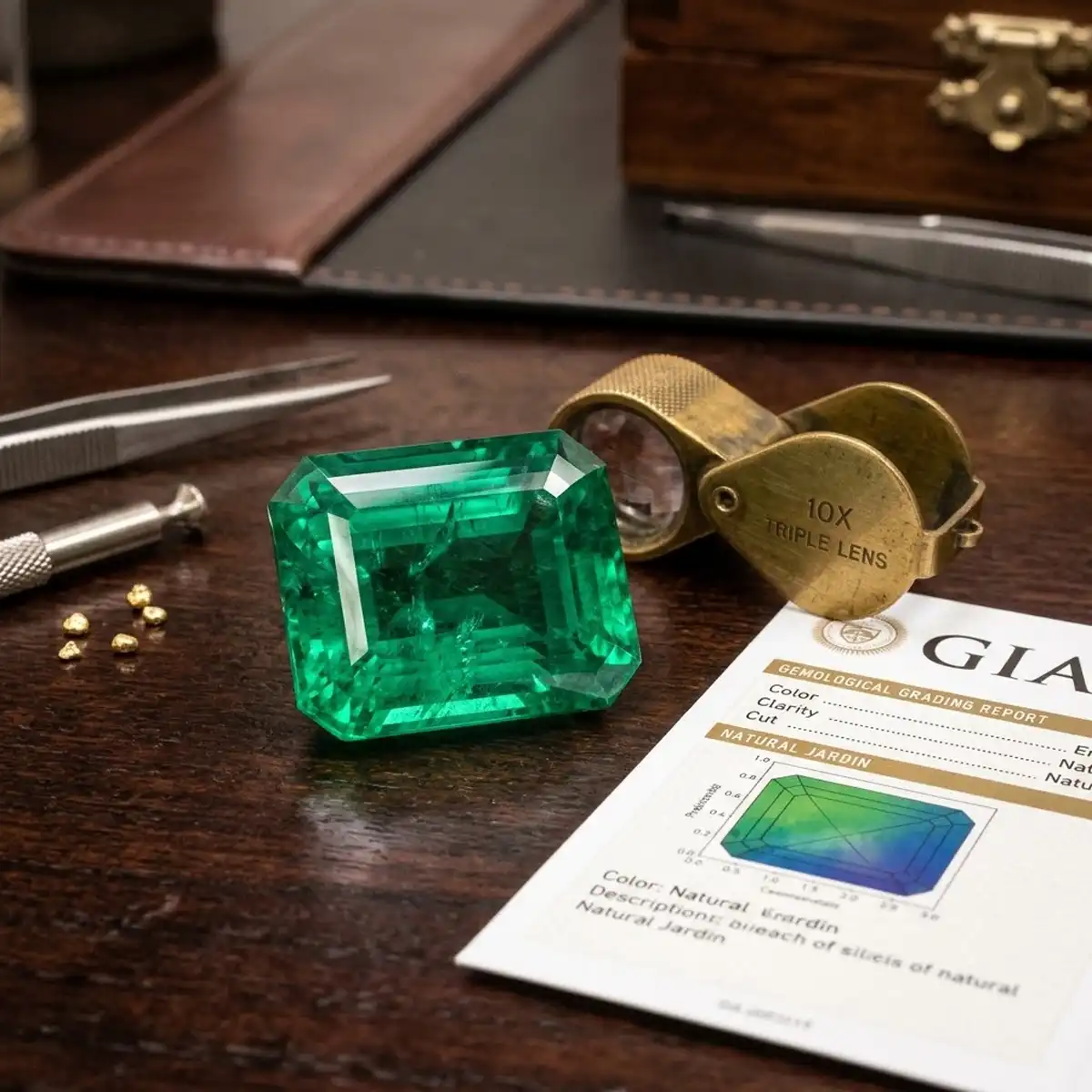
Inclusions are so characteristic that the trade gave them a name. An emerald’s internal landscape is called its jardin, and stones without one are rare enough to invite questions rather than celebration. What matters is that the inclusions do not threaten the stone structurally, which is a judgement an experienced dealer makes by eye and a laboratory confirms under magnification.
Fun fact: Emerald dealers call a stone’s internal inclusions its jardin, the French word for garden, which makes Hatton Garden an oddly fitting place to study them.
Treatment in emerald is nearly universal and openly graded. Most emeralds are clarity enhanced with oil or resin filling their surface-reaching fractures, a practice centuries old, and the better laboratories grade the degree as minor, moderate or significant, with price following that scale. The care instruction that follows is absolute; an emerald never goes into an ultrasonic cleaner, because the vibration strips the enhancement and can open the fractures it was hiding.
One more identity question applies to both stones. Synthetic ruby has existed since the early 1900s, when the flame fusion process made laboratory corundum commercially available, and synthetic emeralds grown by flux and hydrothermal methods followed decades later. These are real corundum and real beryl, which is precisely why the eye cannot separate them from mined stones and a laboratory can. The practical consequence reaches into inherited and vintage jewellery too; a ruby in a mid-century ring is not natural merely because the ring is old, and a proper report settles the question either way before anything is reset or insured.
The Paperwork That Belongs With Each Stone
Certification for the big coloured stones means origin and treatment analysis, not quality grades. For a significant ruby, a report from Gübelin, SSEF or GRS stating origin and treatment status is the document that supports the price, and the pigeon blood term only means something when one of those laboratories has applied it. For emerald, the report should state the degree of clarity enhancement in plain words. [INTERNAL LINK: coloured gemstone lab reports | how gemstone lab reports protect Hatton Garden buyers]
Proportion applies exactly as it does elsewhere in the coloured stone market. A modest stone needs an accurate invoice with written treatment disclosure; a serious one needs independent paperwork before purchase, with the report number matched to the invoice and the stone’s stated dimensions checked against the gem in front of you. A dealer’s willingness to submit a stone for a fresh report, and the speed of that answer, remains the most reliable character test the quarter offers.
Viewing habits complete the discipline. Ask to see a ruby in daylight, where the chromium fluorescence that feeds the pigeon blood glow shows itself honestly rather than under lamps chosen to force it. Ask to see an emerald against a plain white background as well as on the black tray, which flatters saturation. Neither request is unusual in the quarter, and a dealer’s ease with both is its own small certificate.
Settings and Wear for Opposite Temperaments
Ruby takes whatever life throws at it. At 9 on the scale with no cleavage problem, it suits claw settings, daily wear and the full range of engagement ring designs, with platinum claws the default recommendation for a stone that will be worn hard. The only caution is the lead glass composite category, which no setting choice can rescue.
Emerald asks for engineering. The step-cut rectangle known as the emerald cut was developed around this stone’s temperament, its cut corners removing the sharp angles where a brittle gem chips first, and that logic should extend to the mount. A bezel or a protective claw arrangement with the stone set slightly low serves an emerald ring far better than a high, exposed solitaire, and a workshop that says so unprompted is one to trust. [INTERNAL LINK: engagement ring settings explained | engagement ring styles and settings in Hatton Garden]
Booking the Consultation With the Right Questions
Approach the quarter, a 2-minute walk from Chancery Lane station, with appointments at 2 or 3 dealers and the same discipline for each. Ask to see stones in daylight as well as under the counter lamps, since both ruby red and emerald green shift with lighting. Bring a clear budget, and expect pricing on consultation rather than from a list; these stones vary too much for published figures to mean anything honest.
Timing follows the quarter’s standard rhythm, with bespoke commissions running 6 to 10 weeks from design approval to collection. Sourcing a fine unheated ruby or a minor-enhancement Colombian emerald can add weeks in front of that, so for a Christmas 2026 proposal the conversations should begin by September 2026. The stones worth waiting for are precisely the ones that cannot be rushed.
The One Question That Reveals the Most
Buyers should arrive with a single question rehearsed. What treatment has this stone had, and which laboratory confirms it. For ruby, the answer separates unheated, heated and glass filled, which is the entire price architecture in 1 sentence. For emerald, it should name the degree of enhancement without hesitation. Check the report number against the invoice, confirm the setting has been chosen for the stone’s temperament rather than the catalogue photograph, and put the timeline in writing. Handled this way, buying ruby and emerald in Hatton Garden stops being an act of faith and becomes what the quarter’s trade has always made possible for those who ask properly, an informed purchase of the 2 most demanding stones in the business.
Continue Reading
The Hatton Gazette
Delivered monthly to your inbox
Subscribe for the latest from Hatton.