After 20 years around the Hatton Garden trade, the most useful correction I can offer a buyer looking beyond diamonds and sapphires is this. The real question is not which stone is prettiest; it is which stone survives the way you live. Alternative engagement ring stones vary far more in wearability than in beauty, and the quarter is one of the few places where that difference can be examined honestly, loose stone by loose stone, before any money moves.
The setting for that examination matters. Along Hatton Garden itself and off Greville Street, dealers trade in loose morganite, aquamarine, alexandrite and tanzanite alongside the classic big 3, which means a buyer can compare candidates under the same lamp on the same afternoon. What follows sets out how each stone behaves on a hand, what treatment disclosure to expect, and which questions separate a sound purchase from a future repair bill.
Why Buy Alternative Engagement Ring Stones in Hatton Garden
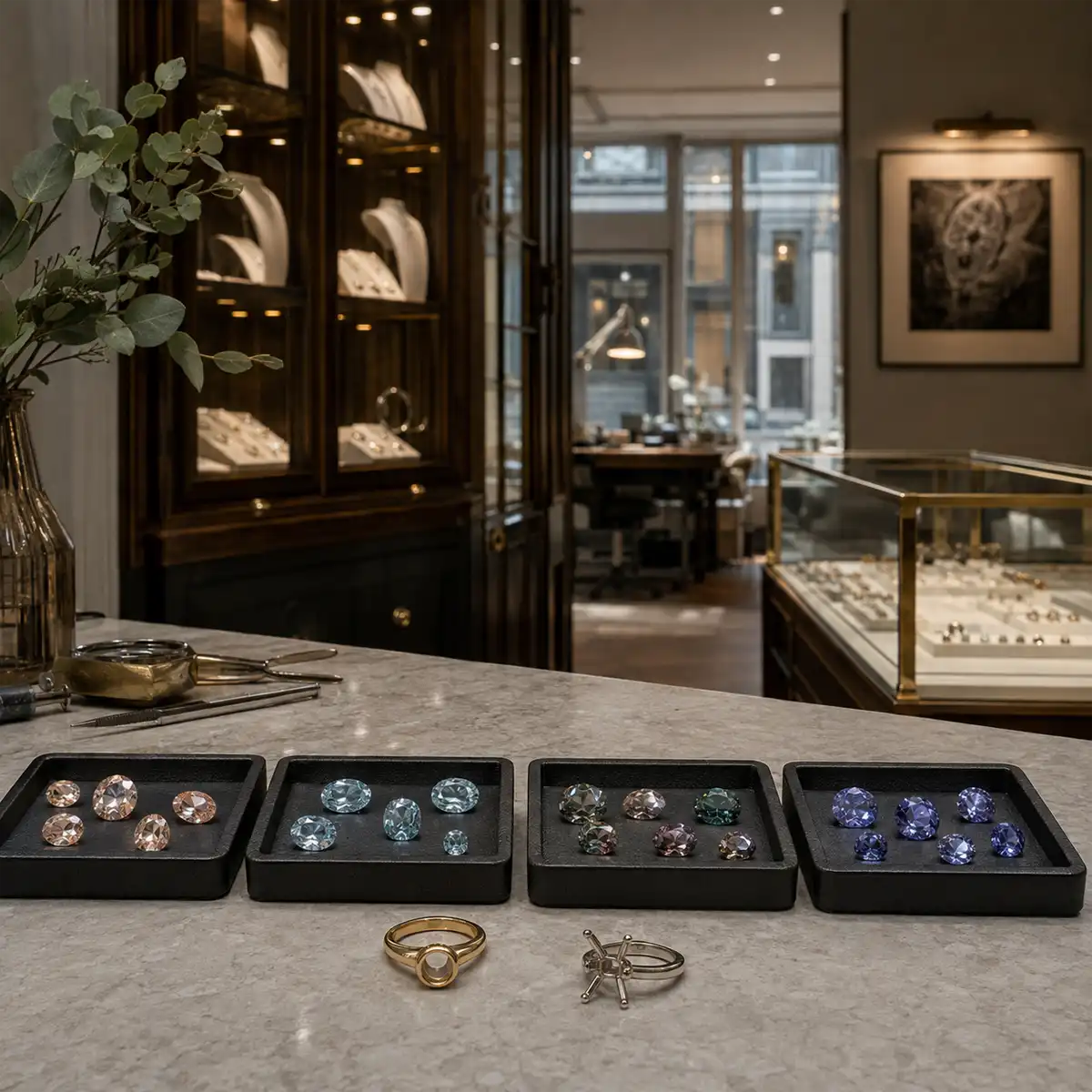
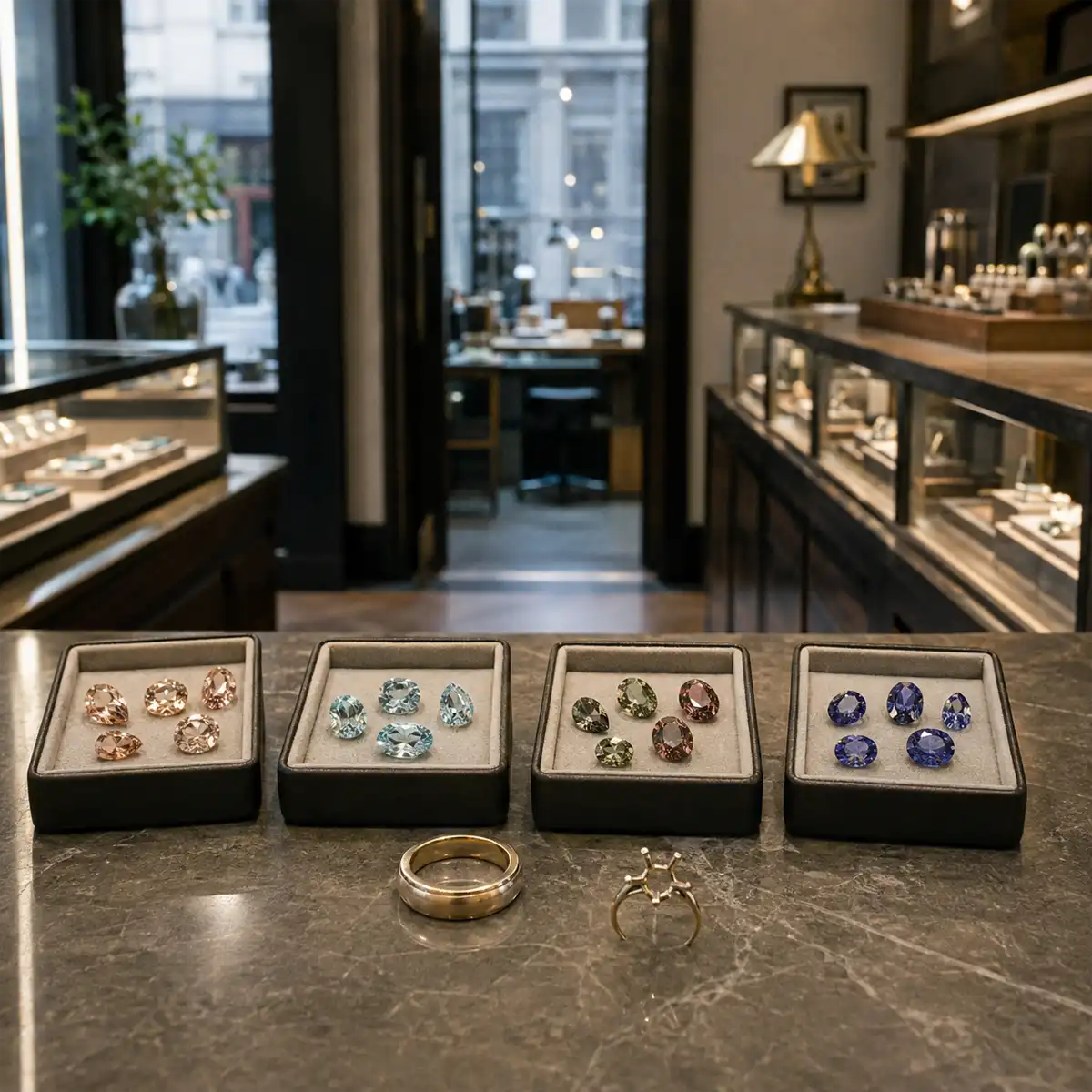
Alternative engagement ring stones suit buyers who want colour, individuality or value beyond the diamond and sapphire mainstream. The 4 most requested are morganite, aquamarine, alexandrite and tanzanite. Hatton Garden suits this purchase because its dealers trade loose coloured stones, so durability, colour and cut can be compared in person before committing to a setting.
The trade-off the mainstream avoids is durability. Diamond measures 10 on the Mohs scale and corundum, meaning sapphire and ruby, measures 9. Every stone in this article sits below that, some comfortably, some precariously. None of this makes them poor choices; it makes setting choice, wearing habits and honest advice part of the purchase rather than an afterthought.
The Hardness Question Answered in Wear Terms
Mohs numbers only matter once translated into daily life. At 8.5, alexandrite is a genuinely hard stone that handles everyday wear on a par with sapphire for most owners. Morganite and aquamarine, both members of the beryl family, sit at 7.5 to 8; they wear well but pick up surface abrasion over years of desks, gym bags and car doors, and they reward periodic professional polishing.
Tanzanite is the honest conversation. At 6 to 7 on the scale, with perfect cleavage in one direction, it can chip from a sharp knock that a sapphire would shrug off. The trade treats it as an occasional-wear stone or one for protective settings, and any dealer who sells it for daily wear without saying so is prioritising the sale over the client. There is a bench detail worth knowing too; tanzanite should never go into an ultrasonic cleaner, because the vibration can exploit that cleavage invisibly before it fails visibly.
Hardness also measures the wrong risk if read alone. It describes scratch resistance, not toughness, and the 2-part company constantly at the bench. An emerald is harder than a tanzanite on paper yet often more fragile in practice because of its internal fractures. Ask the dealer about both properties for the specific stone in front of you; the quality of that answer is a reliable proxy for the quality of everything else they have told you.
The 4 Stones Compared Honestly
Morganite is pink to peachy-pink beryl, coloured by manganese, and it built its modern popularity on the pairing with rose gold. Stones are typically eye-clean, faces are large for the money, and the soft colour flatters most skin tones. Its practical quirk is housekeeping; the pale body colour shows skin oils and dulls noticeably between cleans, so it suits an owner who will actually maintain it.
Aquamarine is the blue member of the same beryl family, typically high in clarity, cool in tone and calm in character. Most commercial aquamarine has been gently heated to shift greenish material towards pure blue, a stable and accepted treatment that should still be disclosed. It reads elegant rather than showy, and it takes an emerald cut particularly well, where its clarity becomes the point.
Alexandrite is the connoisseur’s option, a chrysoberyl that shifts from green in daylight towards red under incandescent light. Fine natural stones with a strong colour change are genuinely rare and priced accordingly, with quotes provided on consultation. The buyer’s risk is substitution; laboratory-created alexandrite and colour-change corundum both exist in quantity, so a natural stone of any significance should carry a report from a recognised laboratory before it carries a deposit. [INTERNAL LINK: coloured gemstone lab reports | how gemstone lab reports protect Hatton Garden buyers]
Tanzanite is the romantic outlier, a blue-violet zoisite with a single commercial source, the Merelani Hills of Tanzania. Virtually all of it is heated to develop the blue from brownish rough, a routine and stable treatment. It is strongly trichroic, showing different colours down different crystal axes, and here trade knowledge earns its keep; a cutter chooses between the more valuable pure blue face-up colour and the weight retention of a violet orientation, so 2 stones of identical grade on paper can look meaningfully different in the hand. Insist on seeing tanzanite face-up in daylight before comparing prices.
Colour vocabulary is worth acquiring before the appointments begin, because each of these stones is judged on its own axis. Morganite is priced on the depth and purity of its pink, with stronger colour commanding more than the pale commercial norm. Aquamarine follows saturation, and the trade name Santa Maria describes the deep blue at the top of the market. Alexandrite is judged on the strength and completeness of its colour change, which reports describe in percentage terms. Tanzanite rewards size in an unusual way; saturation deepens markedly in larger stones, which is why small tanzanites rarely show the colour that made the stone famous.
Fun fact: Tanzanite was only identified in 1967, in the foothills of Mount Kilimanjaro, and it was Tiffany & Co that named the new blue stone after Tanzania, its only commercial source.
Three further names deserve a place on the shortlist even though they sit outside the big 4 requests. Spinel measures 8 on the scale, wears superbly and spent centuries being mistaken for ruby; the Black Prince’s Ruby in the Imperial State Crown is in fact a red spinel. Tourmaline, at 7 to 7.5, offers the widest colour range of any species commonly set in rings. Tsavorite, the green garnet, delivers emerald colour with far better toughness than emerald itself. A dealer who volunteers these options unprompted is thinking about your decade, not their week.
Treatments and Disclosure Before Any Deposit
The pattern across these stones is consistent. Heat treatment is routine for tanzanite and common for aquamarine, stable in both cases, and legitimate when disclosed. Morganite is sometimes heated to clean up orange tones. Alexandrite’s risk is not treatment but identity, natural versus laboratory-created versus lookalike. UK consumer law requires accurate description, and a written note of species, treatment status and origin claims on the invoice costs the dealer nothing if the stone is what they say it is.
Paperwork should scale with price. A modest morganite needs an accurate invoice, not a Swiss report. A significant alexandrite needs independent laboratory confirmation of natural origin, and a fine unheated tanzanite claim, which is rare, needs the same. The proportionality judgement is identical to the one sapphire buyers face, and it is the single most transferable skill in coloured stone buying.
Everyday habits close the gap that hardness numbers leave open. Take any coloured stone ring off for the gym, the garden and anything involving grit or impact; abrasion is cumulative and invisible until it is not. Book a claw and setting check once a year, which most quarter workshops treat as quick, routine work. And clean beryl stones with warm water, mild soap and a soft brush rather than harsher methods, remembering that the ultrasonic prohibition on tanzanite is absolute. None of this is burdensome; it is the same relationship an owner has with a good watch, and it is the difference between a ring that ages and a ring that degrades.
Settings That Protect Softer Stones
Setting choice does more for these stones than for any diamond. A bezel, where metal encircles the stone completely, is the natural home for tanzanite and a sensible upgrade for daily-worn beryl; it shields the girdle, which is where knocks land. Protective claw variants, with broader talons or a slightly recessed stone, split the difference between light return and security. Tension settings, which grip the stone under pressure between the band ends, belong with diamonds and sapphires only. Metal choice follows the same logic. Platinum claws hold their shape for decades and suit a stone that will be worn hard. An 18ct gold bezel warms morganite and aquamarine beautifully while doing the protective work. Discuss lifestyle honestly in the consultation; a nurse, a climber and a pianist should not leave with the same setting around the same stone, and a good Hatton Garden workshop will ask before you volunteer it.
Booking the Consultation and Timing the Commission
Approach this exactly as you would a sapphire purchase. Book appointments with 2 or 3 businesses, a 2-minute walk from Chancery Lane station covers the ground, and ask to view loose stones in daylight as well as under the counter lamps. Bring a clear budget, images of designs that appeal, and a description of the wearer’s daily routine, which matters more here than in any diamond purchase.
Timing follows the quarter’s usual rhythm. A bespoke commission around a loose coloured stone typically runs 6 to 10 weeks from design approval to collection, and sourcing an unusual stone, a fine alexandrite especially, can add time in front of that. For a Christmas 2026 proposal, open conversations by September 2026; for the Valentine’s peak, work backwards from early February with the same margin.
Watch how the stones are shown as closely as what is said about them. A dealer confident in a coloured stone hands over the loupe, moves the stone from the lit tray to daylight without being asked, and tilts it through the hand so you see the colour hold or shift. For tanzanite, ask to see the stone from the side as well as face-up, which reveals the trichroism honestly. Ten minutes of this beats a month of browsing photographs, and it is exactly what the quarter exists to offer.
Making the Choice With Open Eyes
A buyer who wants a ring that looks like nobody else’s, and who will hear an honest sentence about durability without flinching, is exactly who these stones reward. Choose alexandrite for rarity and hardness, aquamarine for clarity and calm, morganite for warmth and value, and tanzanite for colour that nothing else matches, worn with appropriate care. Ask every dealer the same 3 things in writing; the species, the treatment status, and the hardness and toughness of the specific stone. Confirm the setting is chosen for the stone rather than the catalogue. Approached this way, alternative engagement ring stones turn Hatton Garden’s loose stone trade into a genuine advantage, and the ring that results is both distinctive and built to be worn.
Continue Reading
The Hatton Gazette
Delivered weekly to your inbox
Join 12,000+ Hatton insiders