For most of the history of the coloured stone trade, the origin of a great ruby or sapphire was a matter of reputation and trust. A dealer's word, and the eye of whoever was buying, decided where a stone came from and what it was worth. That is no longer how a serious purchase works. Today a coloured gemstone certificate from an independent laboratory does that work, and in Hatton Garden, the dense quarter of dealers and workshops between Holborn and Farringdon, it is the document that separates a confident purchase from a hopeful one.
A few minutes from Chancery Lane station, and along the rooms off Greville Street, the higher-value coloured stones almost always travel with paper. Understanding what that paper says, and what it does not, is the most useful thing a buyer can learn before spending seriously.
What a coloured gemstone certificate actually tells you
A coloured gemstone certificate records what a laboratory found when it examined the stone. At minimum it identifies the species, such as sapphire or emerald, and the weight and measurements. The reports that matter most for value go further and state two things: the geographic origin of the stone and whether it has been treated. Those two findings, origin and treatment, are where most of a coloured stone's value is decided.
This is the difference from a diamond grading report. A diamond report is built around the 4Cs. A coloured stone report is built around identity, origin and treatment, because for coloured stones those are the questions that move the price.
Which laboratories the trade relies on
Not all reports carry equal weight, and the trade knows the difference. For high-value coloured stones, the laboratories most respected for origin and treatment work are Swiss and specialist: Gübelin, SSEF and GRS, alongside AGL in the United States. These are the names that command confidence on an important ruby, sapphire or emerald.
The GIA, best known for diamonds, also issues coloured stone reports and is widely trusted. What matters is matching the report to the stone. An origin call from a recognised origin specialist on a five-figure sapphire is doing real work. A basic identification report on the same stone tells you it is a sapphire, which you probably already knew, and little about why it costs what it costs.
Why origin matters more than buyers expect
Origin drives value in coloured stones in a way that has no real equivalent in diamonds. A sapphire identified as Kashmir, or a ruby identified as Burmese from the Mogok region, carries a premium that a chemically similar stone from another source does not. The historic deposits behind those premiums are largely exhausted, so the supply is fixed and the names carry weight.
Fun fact: the inclusions found inside almost every natural emerald are known in the trade as "jardin," the French word for garden, because under magnification they resemble foliage.
This is why a credible origin report matters. An origin call is a specialist opinion, reached by comparing the stone's inclusions and trace elements against a laboratory's reference collection. When you pay a Kashmir or Mogok premium, you are paying for that opinion as much as for the stone, which is exactly why the laboratory that issued it matters.
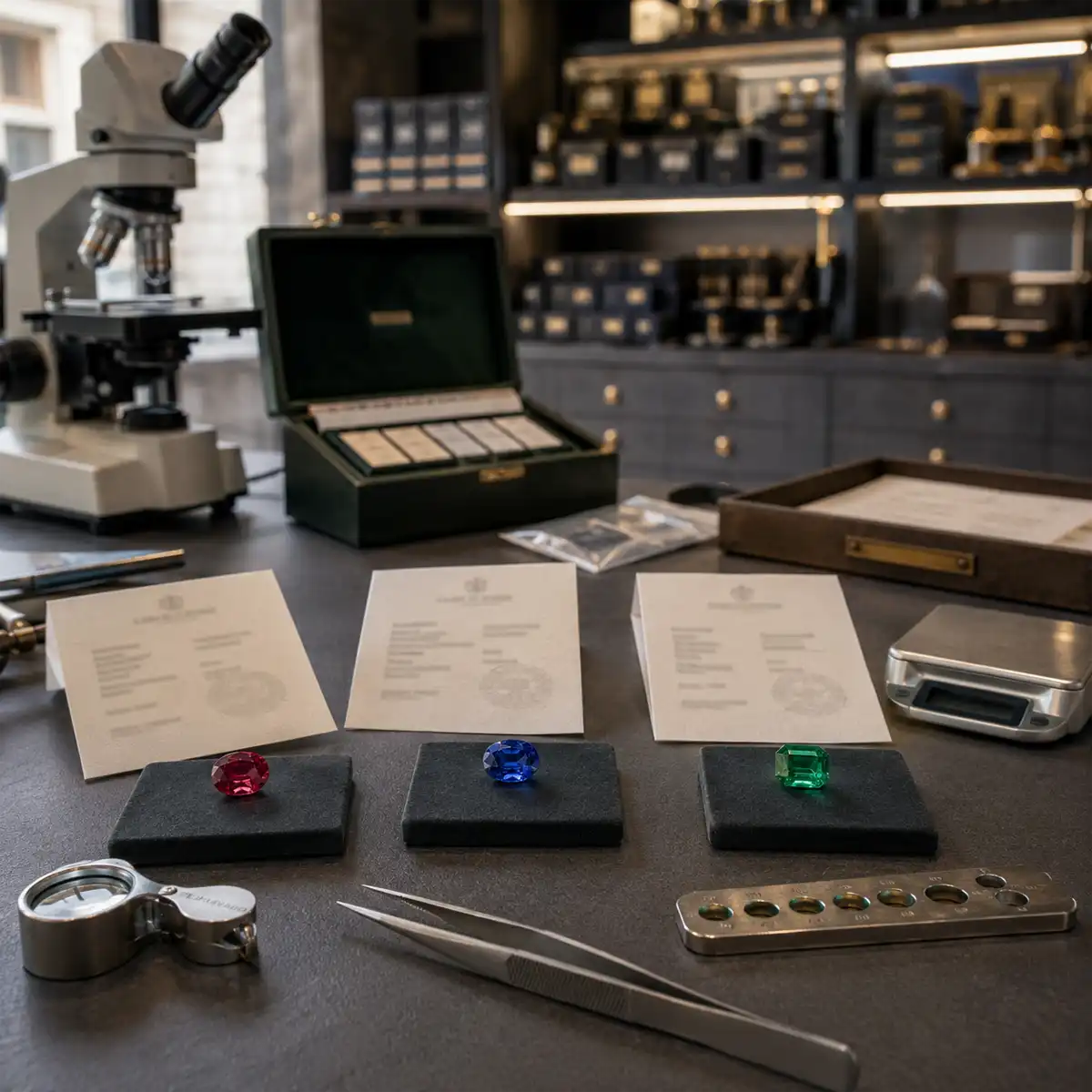
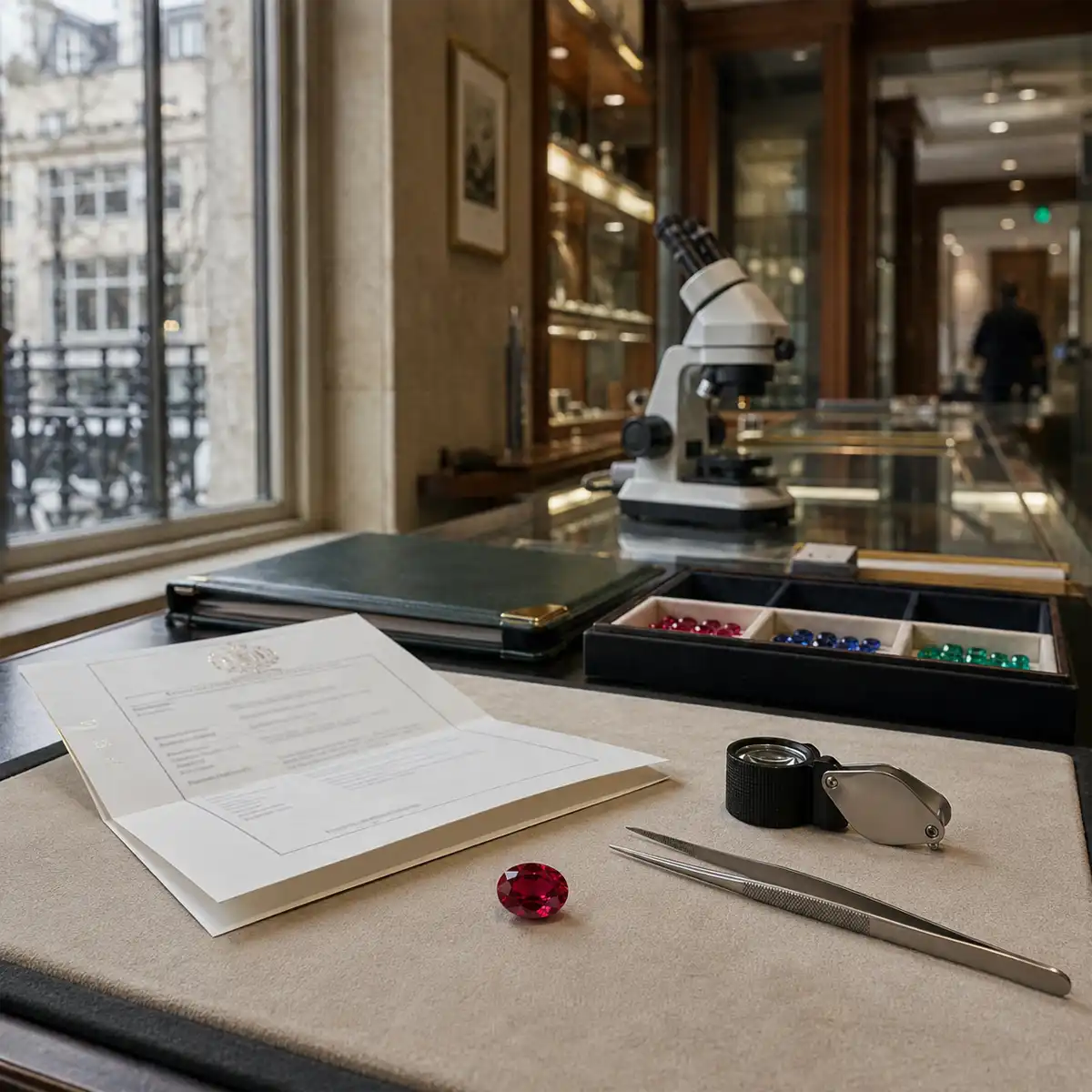
How treatment disclosure changes a stone's worth
Treatment is the other half of the value story, and the one buyers most often miss. Most rubies and sapphires on the market are heat treated to improve colour, which is accepted and disclosed. An untreated, or "no heat," stone of fine quality commands a substantial premium precisely because it is rare. The report should state this plainly.
Emeralds are a separate case. They are routinely clarity enhanced, traditionally with cedar oil, to reduce the visibility of their natural inclusions. A good report grades the degree, often described as minor, moderate or significant. By 2025, with lab-created rubies, sapphires and emeralds widely available and convincing to the eye, treatment and identity reporting had become more important to buyers, not less. The report is how you tell a fine natural stone from a treated one, or from a synthetic one entirely.
What to check before you trust a report
A certificate is only as good as your ability to confirm it. Note the issuing laboratory and the report number, and verify that number independently rather than taking a photocopy on faith. A report should belong to the stone in front of you, with matching weight and measurements, so ask to see the stone loose and check it against the paper.
Treat a few things as warning signs. A report from an unfamiliar laboratory on a high-value stone, a reluctance to let you see the stone unmounted, or a certificate that omits treatment entirely all deserve more questions before any money changes hands.
A clear next step
Before committing to any significant coloured stone in the quarter, ask a dealer one question above all others: which laboratory issued the report, and does it state both origin and treatment. That single answer tells you whether you are looking at a fully documented stone or a partially described one. Bring patience and a willingness to see the stone loose, verify the report number yourself, and do not let a famous origin name rush the decision. A buyer who treats the coloured gemstone certificate as the starting point of due diligence, rather than the end of it, buys far better in Hatton Garden, and pays a premium only where the paper genuinely supports it.
Continue Reading
The Hatton Gazette
Delivered weekly to your inbox
Join 12,000+ Hatton insiders