The first visit to Hatton Garden is the single most useful hour a future engagement ring buyer can spend. Not because anything needs to be bought on that visit, but because the quarter behaves differently from any other retail experience the buyer is likely to have encountered, and a single exploratory visit removes most of the anxiety that comes with the second visit when a serious purchase is being made. The streets are compact. The showrooms are mixed with upper-floor workshops and trade dealers who operate by appointment. The pace is unhurried by retail standards. Knowing how to approach the quarter on a first visit, what to bring, when to come, and what questions to ask without committing to a purchase is what this overview is for. It is the practical context Eleanor wishes every first-time buyer arrived with.
When to visit and how to time the appointment
The best day to make a first exploratory visit to Hatton Garden is a weekday morning, typically Tuesday through Thursday between approximately 10:00 and 12:30. The quarter is less busy than Saturday afternoons, the dealers and showroom staff have time to talk, and there is no pressure to make decisions because most appointments are still being prepared for. Saturdays are the busiest day in the quarter, particularly during engagement season from October through February and during the spring wedding season from March through June. Saturday visits are perfectly possible, but they suit buyers who already know what they want rather than buyers exploring for the first time.
Many of the more serious Hatton Garden jewellers, particularly the bespoke workshops on the upper floors, operate by appointment rather than as walk-in showrooms. For a first visit, walking the main streets and the upper end of Hatton Garden itself is the best approach, with no appointments booked, simply to get a sense of which jewellers and what aesthetic register the buyer responds to. A subsequent visit can be booked with two or three specific jewellers from the first walk, with formal appointments arranged in advance. This two-visit pattern is the most efficient way to use Hatton Garden well and is what most experienced commissioning clients do.
How to get there and where to start
Hatton Garden sits between Holborn and Farringdon in the EC1N postcode, with three Underground stations within walking distance. Chancery Lane on the Central line is the closest at a 2-minute walk from the southern end of Hatton Garden. Farringdon, served by the Circle, Hammersmith & City, and Metropolitan lines and by the Elizabeth line since its 2022 opening, is a 5-minute walk to the northern end of the street. Barbican is a 7-minute walk and serves the eastern approach. The Elizabeth line has made Farringdon substantially more accessible from west London, Heathrow, and the Reading and Shenfield corridors, which has changed who visits the quarter on a casual basis.
The recommended starting point for a first visit is the southern end of Hatton Garden itself, walking up from the junction with Holborn. The street runs roughly north for several blocks, with most of the engagement ring showrooms concentrated along the lower two-thirds. Greville Street crosses Hatton Garden roughly halfway up and carries additional jewellers and antique dealers. Leather Lane sits parallel to the east and carries the daytime market alongside further trade premises. A complete first-visit walk covering Hatton Garden, Greville Street, and the immediate adjacent streets takes 60 to 90 minutes at exploratory pace.
What to bring on the first visit
For an exploratory first visit, the buyer needs surprisingly little. A notebook or phone to record the names of the jewellers whose aesthetic and style register the buyer responds to. A general budget bracket in mind, even if not committed, so that conversations about price ranges can happen meaningfully. A few reference images of styles the buyer or their partner has shown interest in, saved to a phone for showing during conversations. Comfortable shoes for the walking.
For a serious appointment visit booked subsequently, the buyer's preparation list expands. The ring size of the wearer, ideally measured by a separate jeweller or with a sizing kit. A clearer budget, including whether the figure is the total budget or the centre stone budget. A clear sense of the wearer's daily life and lifestyle, which influences setting choice and durability. Any stones or pieces being considered for resetting or remodelling. A list of two or three setting styles or design references that have appealed. A clear sense of timing, including the intended proposal date if there is one, which affects the bespoke commission timeline. Bringing all of this to a serious appointment makes the consultation substantially more productive and helps the jeweller advise rather than guess.
How to approach Hatton Garden jewellers
The quarter operates differently from a high street retail showroom, and the social pattern can disorient first-time visitors. Walking into a Hatton Garden showroom unannounced is fine for ground-floor retail premises that operate as walk-in spaces, and the staff are accustomed to exploratory conversations. Walking into an upper-floor workshop or a trade dealer's premises uninvited is less appropriate, because these are working premises rather than retail showrooms. Look for signage indicating retail welcome rather than trade-only, and call ahead to upper-floor premises before visiting.
The conversation register in Hatton Garden is more direct and less rehearsed than in a luxury brand showroom. Buyers can ask blunt questions about pricing, about how the workshop operates, about where stones are sourced from, and about what the workshop's commission process actually involves. Reputable Hatton Garden jewellers expect these questions and answer them clearly. The buyer who treats the first conversation as information gathering rather than purchase pressure will get more useful answers than the buyer who feels they need to commit to something. Most jewellers in the quarter understand that serious commissions follow careful research, and they are patient with the process.

Questions to ask without committing
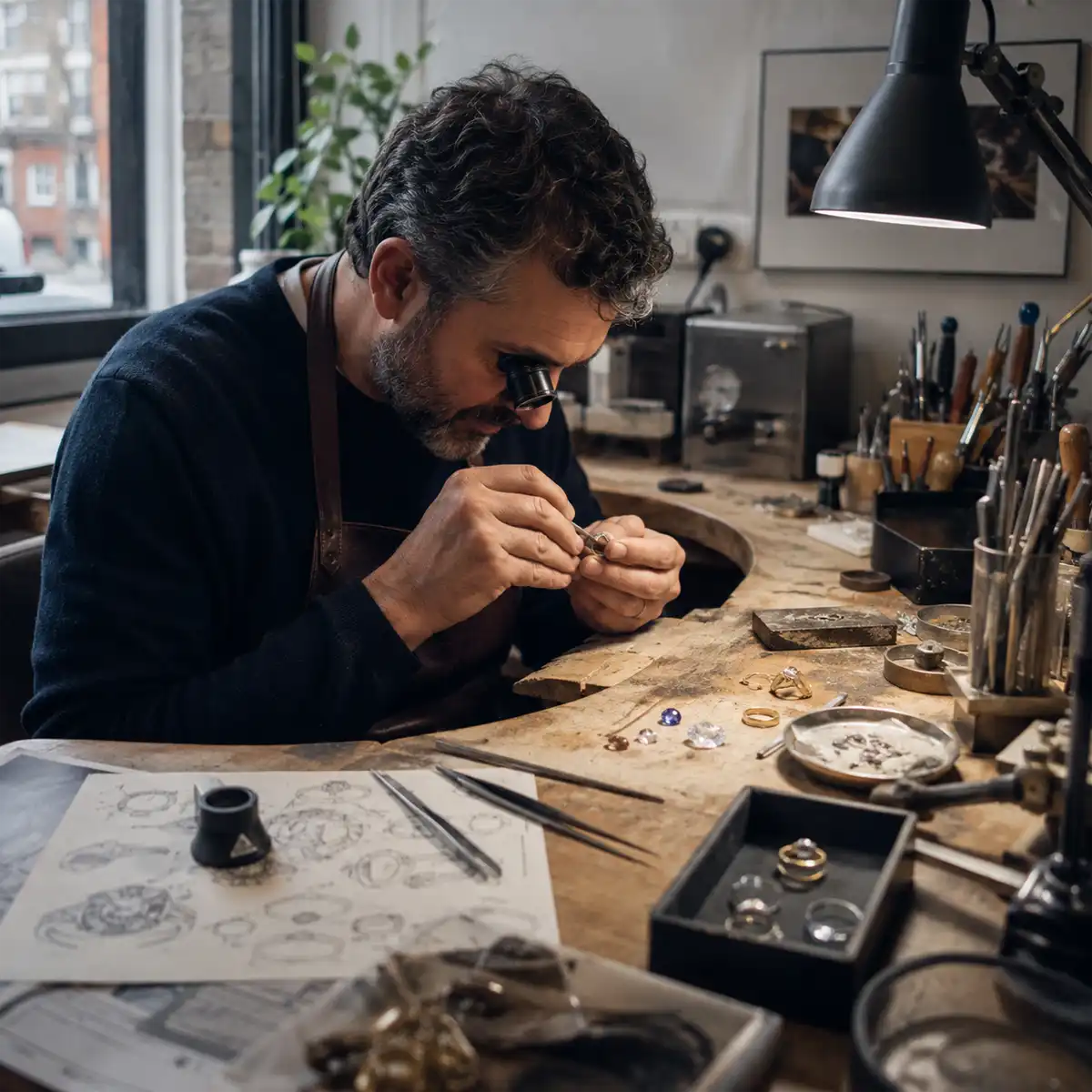
A useful list of questions for a first exploratory conversation includes the following. Tell me about the workshop, where the bench work is done, and who would be making my piece. Tell me about your design process, how a typical bespoke commission moves from brief to collection, and what the lead times are. What is your approach to sourcing stones, both natural and lab-grown, and what certifications do you typically work with. What is your aftercare policy, including resizing, cleaning, and any annual checks? Are you a member of any trade associations or do you hold any certifications such as RJC, Fairtrade Gold licensing, or NAJ membership? Can I come back with my partner for a more detailed consultation when we are ready to commission.
Each of these is an information-gathering question that helps the buyer decide whether this jeweller is the right fit, without committing to a purchase. A jeweller who answers them confidently is a jeweller worth a second appointment. A jeweller who is evasive or who immediately tries to redirect to a sales conversation is one to note and not return to. The questions are entirely reasonable and reputable Hatton Garden jewellers will treat them as the normal first conversation they have with serious commissioning clients several times a week.
What a first visit reveals about the quarter
A 90-minute walk through Hatton Garden reveals several things that no online research can convey. The aesthetic range of the quarter is substantially wider than any single online aggregator suggests, from contemporary minimalist showrooms through traditional formal jewellers to specialised antique dealers. The pricing range is similarly broad, with engagement rings available from approximately £1,000 at the entry level through to commissions running into six figures at the high end. The visual character of the streets, with the upper-floor workshops, the trade signage, and the small showroom fronts mixed in with refurbished modern shopfronts, gives the quarter a working character that contemporary luxury retail does not replicate.
This is the practical reason to visit before booking serious appointments. A buyer who has walked Hatton Garden once has a sense of which jewellers feel right aesthetically and which feel off-key, which is information that genuinely cannot be gathered from photographs alone. Combined with the second-visit information gathering described above, the first-visit-plus-appointment pattern produces a commission decision that is grounded in direct experience of the quarter rather than online research alone.
Fun fact: Hatton Garden takes its name from Sir Christopher Hatton, the Elizabethan courtier and Lord Chancellor to whom Elizabeth I granted a lease on the gardens of the Bishop of Ely's London palace in 1576, with the modern jewellery trade beginning to concentrate in the area from the late 17th century onwards.
Common questions about a first visit to Hatton Garden
A snippet-ready answer for buyers researching how to approach the quarter reads as follows. A first visit to Hatton Garden is best made on a weekday morning between 10:00 and 12:30, with no appointments booked, to walk the main streets and identify two or three jewellers whose aesthetic register suits the buyer. A second visit with booked appointments at the chosen jewellers is more productive than trying to make decisions on a single visit. Chancery Lane, Farringdon, and Barbican stations all serve the quarter, with Farringdon offering Elizabeth line access from west London. Most upper-floor workshops operate by appointment rather than walk-in.
Buyers sometimes ask whether they should visit the quarter alone or with their partner. The answer depends on whether the engagement is a surprise or a joint decision. For surprise commissions, a solo first visit allows the buyer to gather information and prepare options before a final solo decision. For joint commissions, visiting together from the first walk allows both partners to respond to the quarter's atmosphere.
Conclusion
The most useful preparation for serious engagement ring shopping in Hatton Garden is the apparently low-stakes first visit that buyers often skip in their hurry to compare prices online. Take a weekday morning, walk the main streets from the southern end of Hatton Garden up through Greville Street and back, note the two or three jewellers whose register feels right, and resist the temptation to commit on the first visit. Book follow-up appointments at the chosen jewellers for a return visit with full preparation, including ring size, budget bracket, style references, and any inherited stones. Approach the appointments as information conversations rather than purchase pressure, and ask the questions that reveal how each workshop actually operates. Understanding why Hatton Garden is structurally cheaper than the high street is part of the preparation, but so is understanding how the quarter feels in person. The first visit gives the buyer that grounding, and the rest of the buying process becomes substantially less stressful as a result.
why Hatton Garden costs less than the high street
ethical engagement rings in Hatton Garden
Hatton Garden engagement rings on screen
Related reading: Why Hatton Garden costs less than the high street brands, How to Buy an Engagement Ring in Hatton Garden EC1.
Continue Reading
The Hatton Gazette
Delivered weekly to your inbox
Join 12,000+ Hatton insiders