The moment a buyer walks into Hatton Garden with an inherited ring in a small velvet pouch is one of the most interesting in the trade, because the conversation that follows is unlike any other in the quarter. There is no catalogue to choose from. There is a stone with a history, often a setting that has aged, and a person trying to decide whether to reset, recut, melt the metal down for credit, or leave the piece untouched as it is. The bench jewellers and diamond specialists in EC1 see this conversation every week, and the honest assessment of what is possible and what is not requires 20 years of trade experience to give well. Remodelling an inherited diamond is one of the most rewarding commissions a Hatton Garden workshop undertakes, and one of the most prone to disappointment when the buyer's expectations have not been calibrated against reality.
What the stone can actually tell you
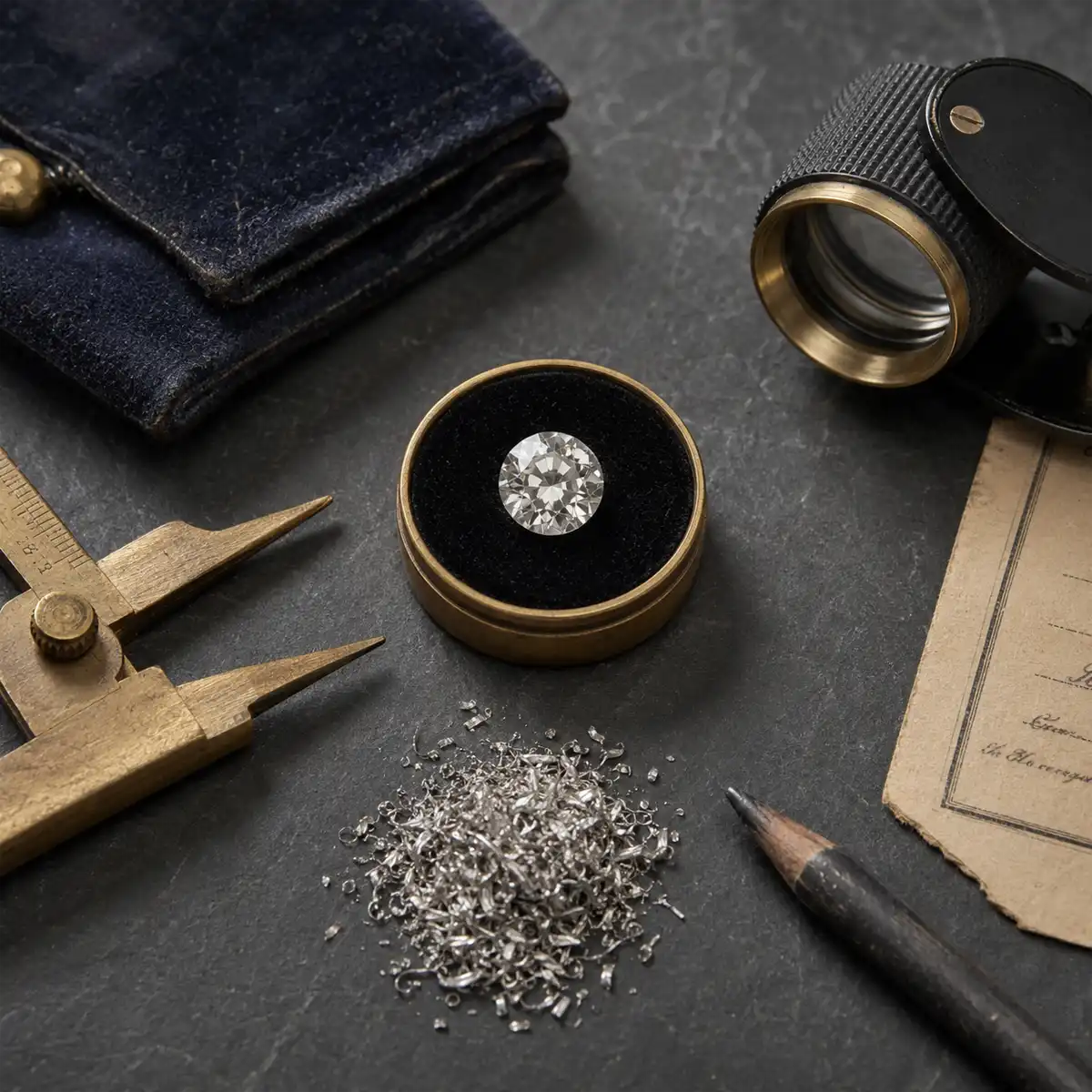
The first half-hour of a remodelling consultation in Hatton Garden is spent assessing the stone independently of the setting it currently sits in. The diamond specialist will measure the stone, weigh it where it can be done safely without unsetting, examine it under 10x magnification, and form a working opinion of the cut style, the colour grade, the clarity grade, and any treatments that may have been applied. An inherited diamond is almost always a natural stone, often pre-dating modern grading practice, and the cut style is the most useful starting point for the conversation.
A diamond cut before approximately 1950 will typically be an Old European cut, an Old Mine cut, or a transitional cut. These are not modern round brilliants, and the visual character of the stone is fundamentally different. Old European cuts have a smaller table, a higher crown, larger facets, and a different light return pattern from modern stones. They are not worse than modern stones; they are aesthetically distinct, and many buyers prefer them once they understand what they are looking at. A modern round brilliant cut from the second half of the 20th century has the proportions standardised by the Tolkowsky ideal-cut research and produces the white-light flash and rainbow fire that buyers associate with diamond performance today. The cut style of the inherited stone determines a great deal about whether remodelling, recutting, or simple resetting is the right path.
What recutting can and cannot fix
Recutting an inherited diamond is the most aggressive option and the one most often misunderstood by buyers. Recutting means literally removing material from the stone to alter its proportions, typically to modernise an old cut towards modern brilliant proportions or to remove an inclusion that affects the clarity grade. The trade-off is yield. Recutting an Old European cut to modern round brilliant proportions typically loses 10% to 25% of the carat weight, sometimes more depending on the original proportions. A 1.50-carat Old European cut may emerge from recutting as a 1.15-carat modern round brilliant, and the buyer needs to be prepared for that mathematics before agreeing to the work.
The harder question is whether recutting improves the stone or only changes it. An Old European cut with strong character can be a beautiful stone in its original form, and recutting it to modern proportions produces a smaller stone with less character. A Hatton Garden cutter with serious experience will often advise against recutting a fine Old European cut and recommend a setting that displays the original cut to advantage instead. The decision depends on what the buyer values, and the workshop should walk the buyer through both options before any commitment is made. Recutting cannot fix every problem. It cannot remove deep inclusions cleanly without losing substantial weight. It cannot turn a poor-colour stone into a better-colour stone. It cannot remove fluorescence. It can change proportions and remove certain surface inclusions, but every modification reduces the weight and every loss is permanent.
Resetting without recutting
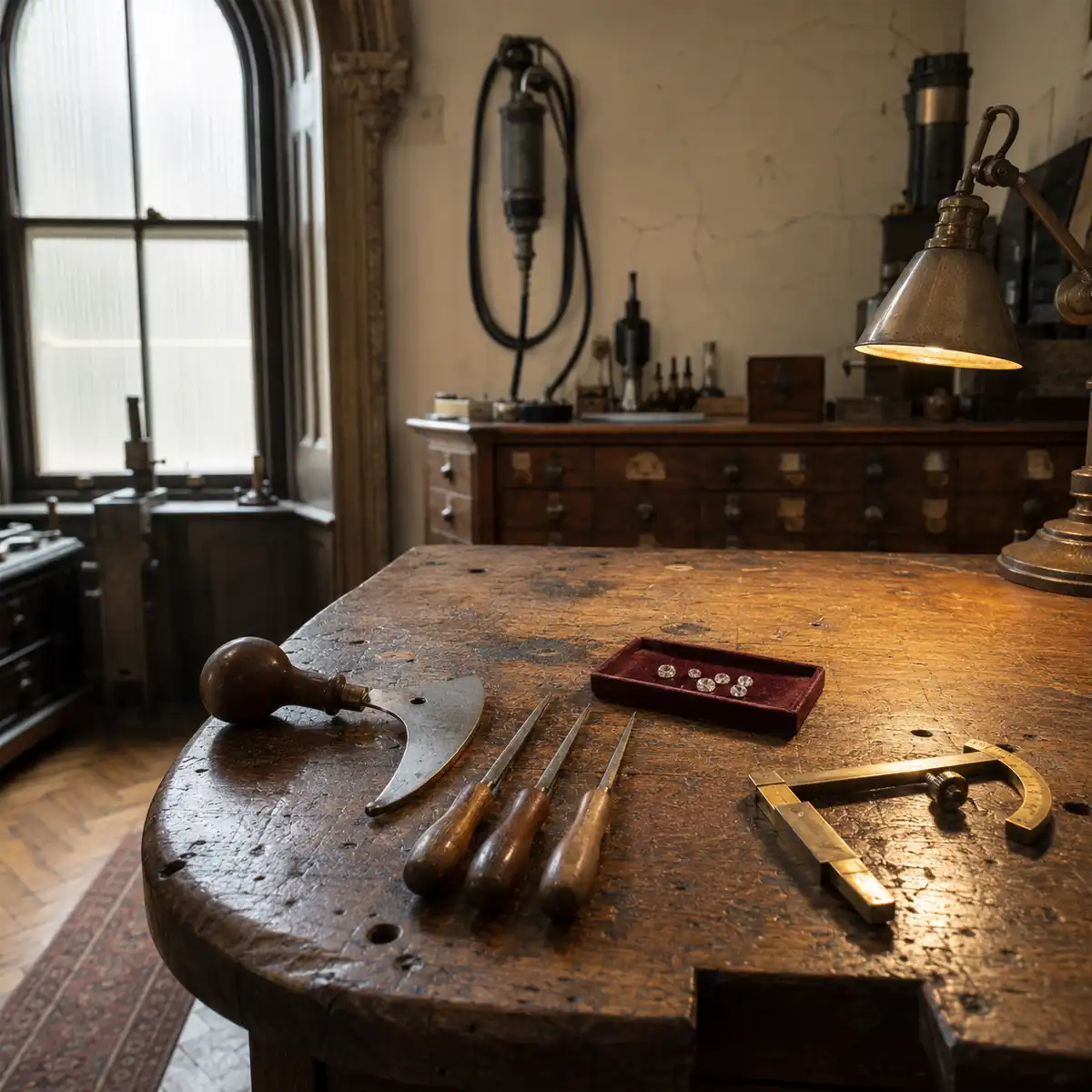
For most inherited diamonds, the right answer is resetting rather than recutting. The stone is unset from its existing mount, the original mount is melted down for metal credit or kept as a family piece, and the stone is reset into a new design built to the buyer's specification. This preserves the carat weight and the character of the stone while updating the setting to a contemporary or buyer-preferred style. A Hatton Garden workshop can produce a completely new setting around an inherited stone in 6 to 10 weeks, with the buyer involved at the design stage, the CAD or wax approval stage, and the final fitting before hallmarking.
The setting choice for an inherited stone deserves careful thought. An Old European cut typically looks best in a setting that does not compete with its character, which means simple solitaire mounts, claw settings with discreet metalwork, and bezel settings that frame the stone without surrounding it with additional diamonds. A halo setting around an Old European cut can work but tends to make the centre stone look smaller in proportion than it really is, because modern accent diamonds in the halo compete with the older stone's softer light return. A buyer who wants a halo style may be better served by resetting the inherited stone in a solitaire mount and using a different piece of inherited or new metal to commission a separate halo ring for another occasion.
The metal credit and what to do with the old setting
The old setting that the inherited stone came from has its own value, and a Hatton Garden workshop will typically offer metal credit against the new commission if the original setting is melted down. The credit is based on the assay-tested fineness and weight of the metal, less a small refining cost. For a Victorian or Edwardian platinum setting, the metal credit can be substantial, because platinum prices have risen significantly across the last decade and an inherited platinum ring carries real value as scrap before any sentimental considerations.
The alternative is to keep the original setting. Many buyers choose this path, particularly when the setting has family significance or aesthetic value as a period piece in its own right. The setting can be kept as a non-wearable family object, or it can be cleaned and restored as a wearable piece in its own right by setting a different stone into it, perhaps a smaller stone, a coloured gemstone, or a stone from a different inherited piece. This is a conversation worth having with the workshop early in the consultation, because the answer affects the whole commission.
Treatments, fluorescence, and the things to check first
A diamond specialist examining an inherited stone will check for several things the buyer may not have considered. Fluorescence is the first, because a stone with strong blue fluorescence behaves differently under different lighting conditions and the buyer should know this before committing to a new setting. Around 30% of natural diamonds show some fluorescence, with strong fluorescence appearing in roughly 5% of stones. It is a feature, not a flaw, but it affects how the stone is best displayed.
Treatments are the second check. Older inherited stones are unlikely to have been treated, because treatment technology for clarity enhancement and laser drilling is largely a post-1990 development. But it is worth confirming, and a reputable Hatton Garden workshop will examine the stone for any signs of treatment as part of the assessment. Independent gemmological assessment, separate from the workshop doing the remodelling, is the standard recommendation for any inherited stone above approximately 1 carat. The independent assessment confirms the cut, the carat weight, the colour and clarity grades, and the absence of treatments, providing a baseline document that supports the new piece's insurance valuation later.
When the stone is not worth remodelling
The honest part of the conversation, and the part that requires 20 years of trade experience to deliver well, is when the workshop tells the buyer that the inherited stone is not worth remodelling around. This happens for several reasons. A small stone with significant internal cracking that will not survive being unset and reset safely. A coloured stone of substantial inclusion that does not have meaningful value on the current market. A piece with sentimental value but limited commercial value, where the cost of remodelling exceeds the resulting piece's worth as jewellery.
A good Hatton Garden workshop will tell you this clearly, and will sometimes suggest alternatives such as keeping the original piece intact, using the metal for a different commission with a new stone, or holding the inherited piece as a family object rather than a wearable ring. This is the conversation the buyer may not want to hear but needs to hear, and it is the strongest argument for taking inherited pieces to a workshop with serious trade experience rather than a high street retailer or an online specialist. The honesty about what the stone is worth is part of the service.
Fun fact: The Old European cut, dominant in diamond production from approximately 1890 to 1930, was developed before electric light became universal and was optimised for candlelight and gas-lamp illumination, which is why these stones show softer fire and broader flashes than modern brilliants and why many connoisseurs prefer them under restaurant and evening lighting.
Common questions about remodelling inherited diamonds
A snippet-ready answer for buyers researching the remodelling process reads as follows. Remodelling an inherited diamond in Hatton Garden typically involves independent gemmological assessment of the stone, unset from its original setting, then designed into a new setting selected to suit the cut style and character of the stone. Old European cuts and Old Mine cuts are best displayed in simple solitaire or bezel settings that do not compete with their character. Recutting to modern proportions is a separate decision that loses 10% to 25% of carat weight and is not appropriate for every stone. A typical remodelling commission takes 6 to 10 weeks from consultation to collection.
Buyers sometimes ask whether they should sell the inherited piece intact rather than remodel. The honest answer depends on whether the buyer values the piece as a family object or as raw material for a new piece they will wear. A workshop will discuss both options openly during the consultation, and the buyer should not feel pressure either way.
Conclusion
A buyer bringing an inherited diamond to Hatton Garden should approach the consultation with the original piece, any family documentation that exists, and an open mind about what the right outcome looks like. Commission an independent gemmological assessment of the stone before committing to remodelling, particularly for stones above 1 carat. Listen carefully to the workshop's honest opinion of the cut style and the right setting to display it. Decide consciously between resetting and recutting, with full understanding of the carat weight implications of recutting. Discuss the original setting's metal credit or family-object alternatives. Allow 6 to 10 weeks for the commission and budget for the independent valuation refresh on completion. The result, done well, is a piece that carries family history into a setting designed for the next 50 years of wear, which is one of the most satisfying outcomes any Hatton Garden commission can produce.
Continue Reading
The Hatton Gazette
Delivered weekly to your inbox
Subscribe for the latest from Hatton.