Long before the modern engagement ring trade arrived, Hatton Garden was already buying and selling jewellery that had lived a previous life. The quarter has dealt in estate and second-hand pieces for generations, and that older current still runs alongside the new showrooms today. For a buyer who values character, history and value together, pre-owned jewellery is one of the most rewarding ways to buy here, provided you know how to look. The pleasure of an older piece comes with a responsibility to check it properly.
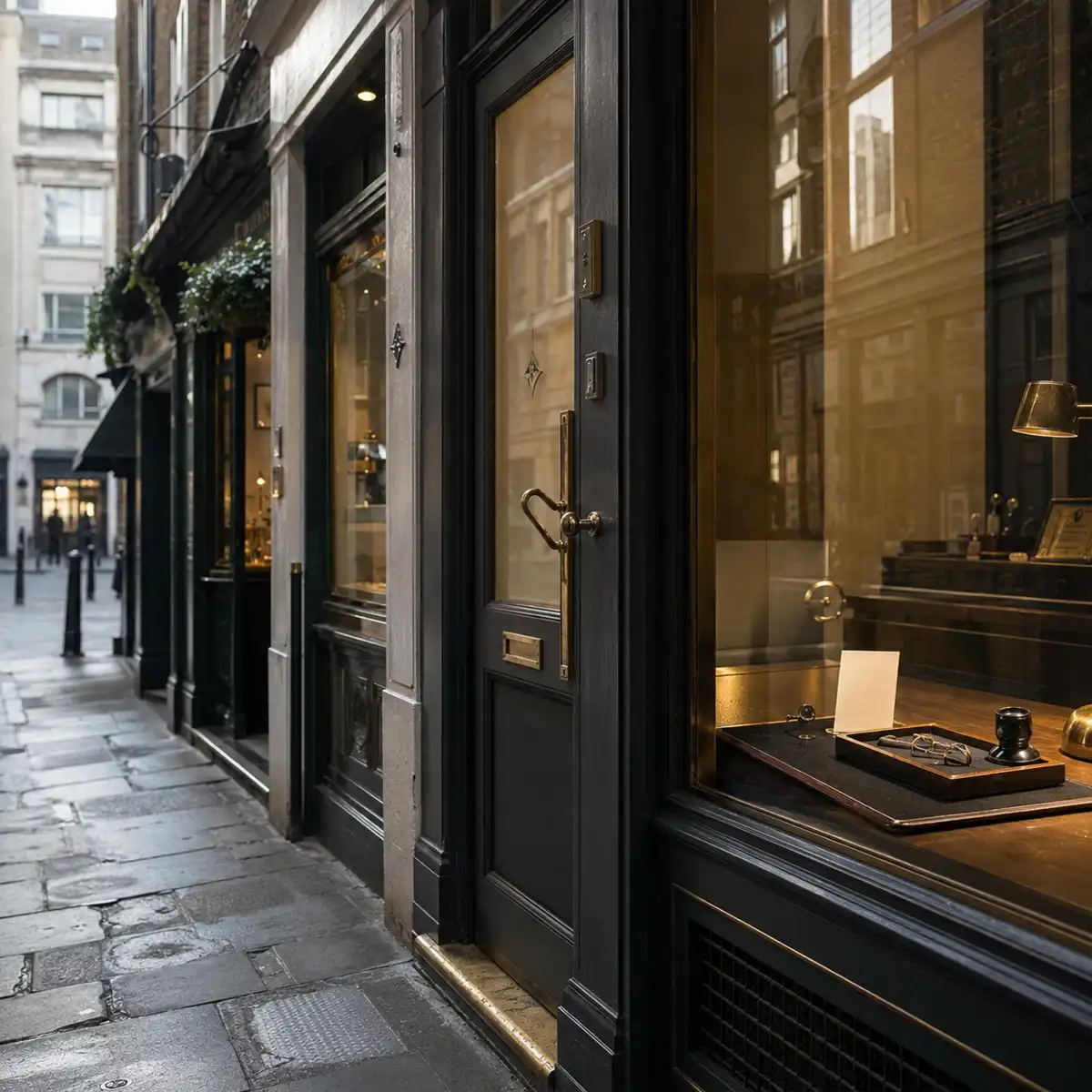
Hatton Garden, the run of dealers and workshops between Holborn and Farringdon, is well suited to this. A short walk from Chancery Lane station, and around Greville Street and Leather Lane, sit dealers who handle estate and antique pieces every week, and who can read a hallmark or a setting the way most people read a page.
What pre-owned jewellery means in Hatton Garden
Pre-owned jewellery simply means a piece that has had a previous owner, whether it is two years old or two hundred. It covers everything from a recent ring sold on, to a Victorian brooch, to a mid-century cocktail piece. The appeal is that you often buy character and value at once, since a pre-owned piece carries none of the new-retail premium and may offer craftsmanship that is hard to find new.
The responsibility that comes with it is verification. An older piece cannot be taken purely on appearance, because age, repair and alteration all leave marks that affect what it is worth.
The difference between estate, antique and pre-owned
The terms are used loosely, and it helps to separate them. Pre-owned and second-hand both simply mean previously owned. Antique has a stricter meaning, generally a piece over 100 years old. Estate is the term that confuses buyers most.
Fun fact: in the trade, "estate jewellery" simply means previously owned, and does not imply the piece came from someone's estate or that it is antique.
Knowing which word applies matters because it shapes both price and expectation. A genuinely antique piece is valued partly for its age and period, while a recent pre-owned ring is valued much as a new one would be, minus wear. A dealer using "estate" to imply age it does not have is worth noting.
What to check before you buy a pre-owned piece
Begin with the hallmarks, the condition and the stones, in that order. The hallmarks tell you the metal and often the age. The condition tells you how much life the piece has left and what repairs it may need. The stones tell you whether they are original, sound and what the dealer claims they are. A careful examination of these three covers most of what can go wrong.
Look closely at the practical wear points. Claws that have worn thin, a shank that has been stretched or sized many times, and chips at the edges of stones all affect both safety and value. A reputable dealer will point these out rather than hope you miss them.
How to read the hallmarks on an older piece
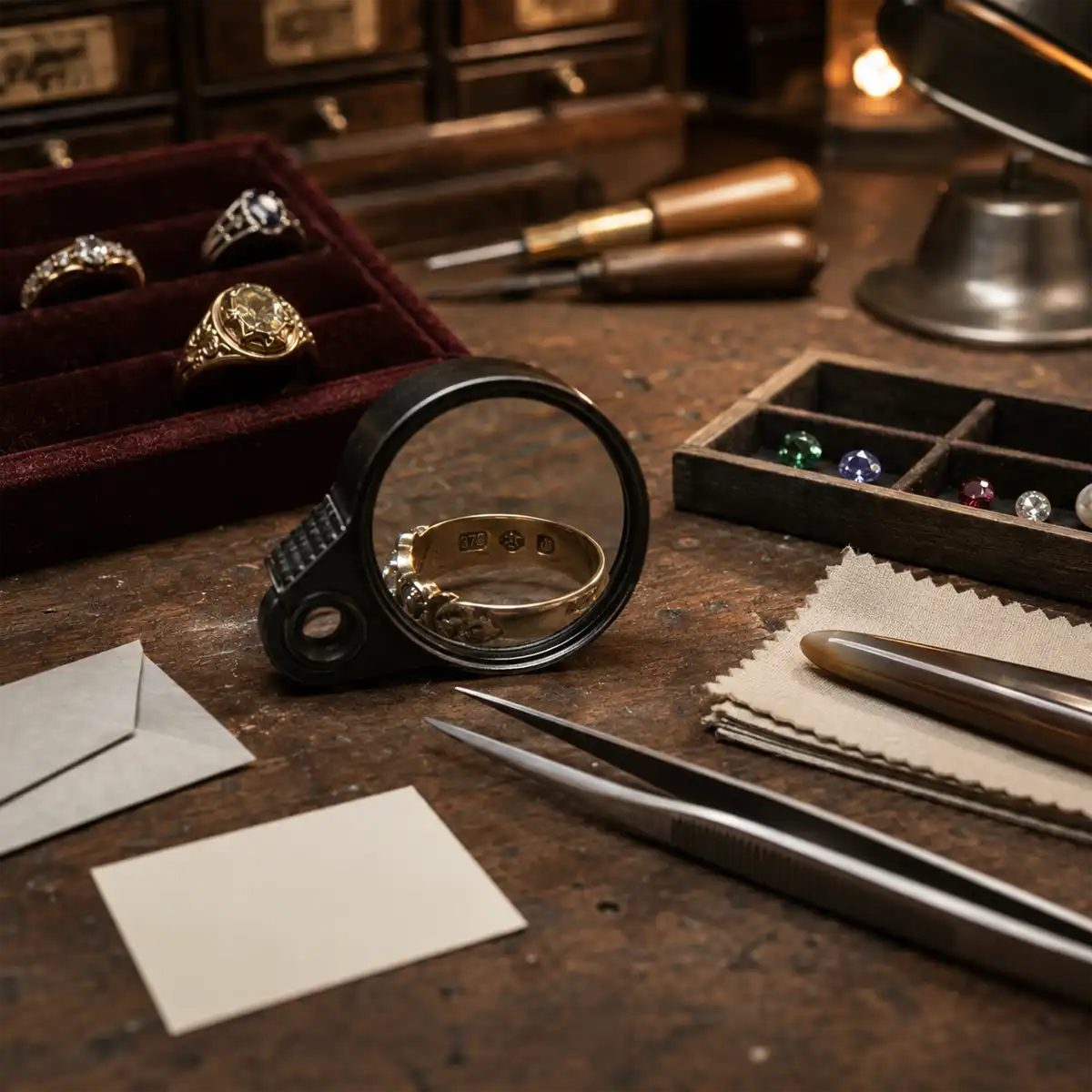
Hallmarks are the most reliable evidence an older piece carries. On a British item they record the metal's fineness, the assay office and, through the date letter, often the year of marking. That date letter is the closest thing to a birth certificate a piece of jewellery has, and it lets you confirm that an item described as Edwardian was indeed marked in that period.
Worn marks are common on older jewellery and are not in themselves suspicious, since decades of handling soften the stamps. What matters is consistency. The marks should agree with each other and with what the dealer tells you. A modern hallmark on a piece described as antique, or marks that contradict the claimed metal, are reasons to ask careful questions before buying.
What certification exists for pre-owned stones
The certification picture for older stones is different from new. Many pre-owned diamonds predate modern grading reports, or carry older ones that used slightly different standards. This is not a problem in itself, but it means you cannot always rely on a recent report. A significant uncertificated stone can be sent for independent grading, and a serious dealer will not object to a sale conditional on that.
Coloured stones bring the added question of treatment. An older sapphire or emerald may never have been tested for treatment, so for a high-value coloured stone an origin and treatment report is worth obtaining. The absence of paperwork is not a reason to walk away, but it is a reason to verify before you pay a premium price.
How to spot a reproduction or altered piece
This is where an experienced eye earns its keep, and where buyers most often come unstuck. A reproduction made to look antique typically gets the details wrong. Machine-perfect, identical elements on a piece claimed to be hand-made, modern hallmarks on a supposedly period item, or a style that does not match its claimed era are all warning signs. Period setting techniques are revealing too, since a closed-back Georgian setting looks quite different from the open-back settings that came later.
Watch also for what the trade calls a marriage, where parts from two different pieces have been joined to make one. Replaced stones, re-tipped claws and heavy solder repairs are not always disclosed, and while many are perfectly acceptable, they change what the piece is and what it is worth. The point is not that repairs are bad, but that they should be known and disclosed.
Why pre-owned can be good value
The value case is genuine, and it rests on structure rather than salesmanship. A pre-owned piece carries no new-retail markup and no brand premium, so you are paying for the metal, the stones and the craftsmanship rather than for a showroom and a marketing budget. For antique pieces, you may also acquire workmanship that would be expensive or impossible to commission new.
Through 2026, with gold and platinum prices high, the intrinsic metal value in an older piece has risen too, which supports its worth. Since 2025, interest in buying pre-owned has grown as more people weigh the appeal of reusing fine pieces rather than buying new. Value still depends on condition, so a worn piece needing restoration is not the bargain it first appears, and the saving must be judged against any work required.
Where pre-owned pieces are found in the quarter
The estate and antique trade is woven through Hatton Garden rather than confined to one shop. Some dealers specialise in period pieces, others carry a mix of new and pre-owned, and the streets around the main run, Greville Street, Leather Lane and the courts off them, are where the older stock tends to gather. Appointment-only rooms often hold the more valuable antique pieces, away from the windows.
This spread is an advantage for a careful buyer. It lets you compare similar pieces across several dealers, which is the best protection against overpaying, and it means a piece you are unsure about can be shown to a second knowledgeable eye nearby before you commit.
What to bring and how to examine a piece
Bring a loupe if you have one, and do not be shy about using it. Examine the piece in good light, turn it to see how it catches the light from different angles, and look at the back as closely as the front, since the reverse often tells the truer story of age and repair. Ask to see any paperwork, and note how willingly the dealer lets you take your time.
For a significant purchase, there is no harm in asking whether you may have the piece independently assessed before finalising. A dealer confident in what they are selling will accommodate a reasonable check, and the response itself is informative.
Your consumer rights when buying pre-owned
Where you buy changes your protection, and this is worth understanding before you hand over money. Buying from a dealer or trader, the Consumer Rights Act 2015 applies, so the piece must be as described and of satisfactory quality, allowing for its age and any disclosed wear. A description that turns out to be false gives you a remedy.
A private sale is different. Buying privately, far fewer protections apply, and the principle of buyer beware carries much more weight. This is one reason an established Hatton Garden dealer, with a reputation and a returns position, offers real advantage over an anonymous private seller for a significant purchase. Ask about the returns policy and get the description in writing.
A clear next step
If you ask a pre-owned dealer one thing above all others, ask them to tell you in writing exactly what has been replaced, repaired or altered on the piece. That single question draws out marriages, replaced stones, re-tipped claws and undisclosed restoration, and an honest dealer will answer it plainly. Pair it with a careful look at the hallmarks, a check on any stones of significance, and a clear understanding of the returns position. A buyer who treats pre-owned jewellery as something to verify rather than simply admire buys far more safely in Hatton Garden, and is rewarded with a piece that carries genuine history and honest value.
Continue Reading
The Hatton Gazette
Delivered weekly to your inbox
Join 12,000+ Hatton insiders